Share the post "Carpal tunnel syndrome"
Whether you’re a weekend cyclist or a high-level athlete, injuries spare no one. They make us sad and grumpy and each deserves an explanatory sheet using the 5Ws and 1H method. The idea behind this series of short articles is to better understand them, adopt good behaviors to avoid them, and know what to do for a better recovery.
I thus propose to cover each time, in the form of the “5Ws and 1H” (What, Who, Where, When, How, How Much, Why) and in as many articles as there are recurring injuries in cycling and triathlon, all possibilities of frustration related to forced rest.
After the knee, the clavicle, saddle sores, spinal pain, iliac artery endofibrosis, Achilles tendonitis, compartment syndrome, today I offer you an explanatory sheet – always using the 5Ws and 1H approach – this time for carpal tunnel syndrome.
By Jean-François Tatard – Photos: CC0 Public Domain, wikipedia, Pixnio.com
WHAT?
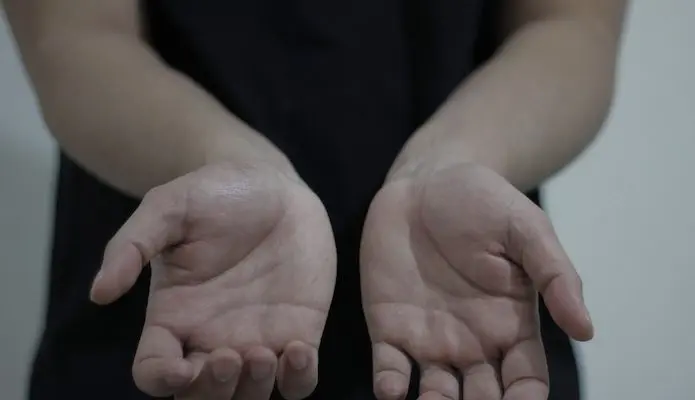
Among wrist pathologies, have you ever heard of carpal tunnel syndrome? It is the most well-known of these pathologies. This syndrome is the result of direct pressure on the median nerve at the wrist. The carpal tunnel is bounded posteriorly by the anterior surface of the carpal bones, i.e., of the hand, and anteriorly by a ligament: the transverse carpal ligament. The median nerve passes through the carpal tunnel with the flexor tendons of the fingers.
In short, carpal tunnel syndrome is a canal syndrome. And its compression alters the sensory and motor function of the hand. The compression can also have different origins: inflammation of the flexor tendons of the fingers and their sheaths can compress the median nerve.

WHO?
Whether they are champion cyclists, amateur racers, or riders of a more modest level, or even cycle tourists, many cyclists experience hand problems at one time or another. Cyclist’s palsy (ulnar neuropathies) and carpal tunnel syndrome account for more than one in three injuries caused by intensive cycling.
WHERE?
The main function of the median nerve is the pincer grip between the thumb and fingers and thumb opposition. It is also responsible for the sensitivity of part of the fingers and part of the hand. As for the symptoms, they generally affect the thumb, index, middle, or ring finger, but can also extend to the entire hand. Cyclist’s palsy occurs when the ulnar nerve is compressed in the heel of the hand area (the part that connects the hand to the wrist).

WHEN?
This is the result of repetitive and prolonged pressure on the handlebars, which leads to nerve compression and causes something resembling numbness, discomfort, and pain in the hands.
HOW?
Hyperflexion of the wrist, often attributable to keeping the hands in the drops of the road handlebars in a low position, can create pressure causing tingling in the little finger or ring finger, sometimes accompanied by hand weakness. This is also one of the reasons why you should observe some rest. Stretches can also be associated with this. Some accompany the relief of symptoms with anti-inflammatories. And contrary to what is heard, surgery is rarely necessary. Moreover, what can really help you feel better beyond rest? The doctor may suggest wearing an orthosis or a splint, stretching exercises as mentioned above, as well as the famous painkillers prescribed as a first-line treatment. However, surgical decompression of the carpal tunnel is sometimes required.

Finally, rest assured, there are fortunately some simple tricks to continue enjoying the pleasures of cycling while minimizing the chances of developing hand problems. Try to modify the angle of your support and reduce the force of the weight resting on your hands and wrists by trying different handlebar positions and readjusting the saddle height. You can also wear cycling gloves to absorb the stress caused by your load.
WHY?
Bone abnormalities will narrow the tunnel. This can lead to a callus, a bony protrusion on one of the bones, arthritic manifestations, or a thickening of the ligament. And in more than 60% of cases, this syndrome is idiopathic, meaning without a precise cause. Finally, in the majority of cases, symptoms disappear with the cessation of activity or shortly after the end of rides, but they can persist for several weeks, even months, and require evaluation by a hand specialist. So keep it simple, www.3bikes.fr is just here to give you leads, because the only real solution if you are concerned is to talk to a specialist.
CONCLUSION
In the next explanatory sheets, I propose to continue reviewing the injuries that most often paralyze us. Next time, we will look at head trauma, digestive pathologies, plantar fasciitis, and shin splints.
=> SEE ALSO: All our Infirmary articles
=> SEE ALSO: All our Coaching articles
Share the post "Carpal tunnel syndrome"