Share the post "Visible Veins: Pathological, Natural, or Doping?"
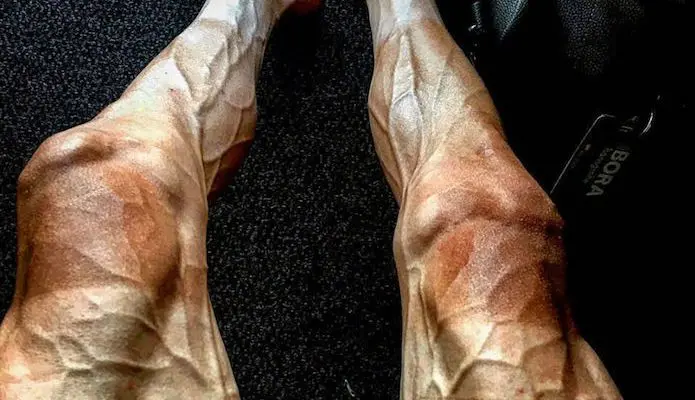
Who hasn’t seen those photos of cyclists with muscles covered in bulging veins? Remember the picture that went viral on social media, showing Peter Sagan’s teammate Pawel Poljanski with particularly visible veins? Should we be worried? Natural? Doping? What are the explanations?
By Jean-François Tatard – Photos: Frédéric Poirier, Instagram/Janez Brajkovič/Pawel Poljanski/Antoine Duchesne
Before looking for answers to our questions, it is worth redefining the role and function of veins. First of all, veins carry blood from the organs back to the heart. They bring the blood back after it has delivered oxygen to the organ. When muscles are very well developed, they need more oxygen, so they have a vascular system adapted to those needs.
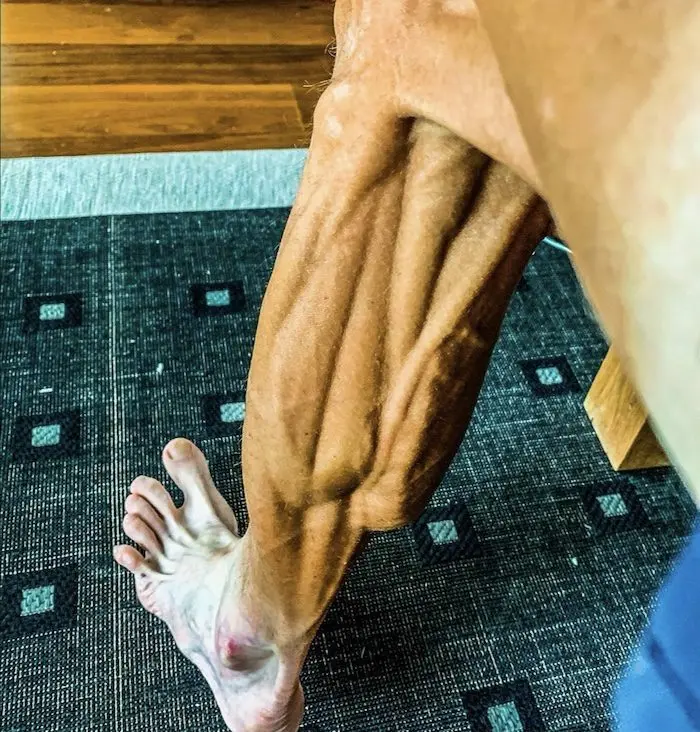
Fat covers the veins
Body fat also reduces how visible the muscles are. In a person of ordinary build, body fat is much higher than in a Tour de France cyclist. This is also why champions’ muscles look so defined: there is no fat covering them. This isn’t necessarily a pathological issue. It mainly comes down to body fat percentages being very low (often around 5%, versus more than 20% in someone of average build).
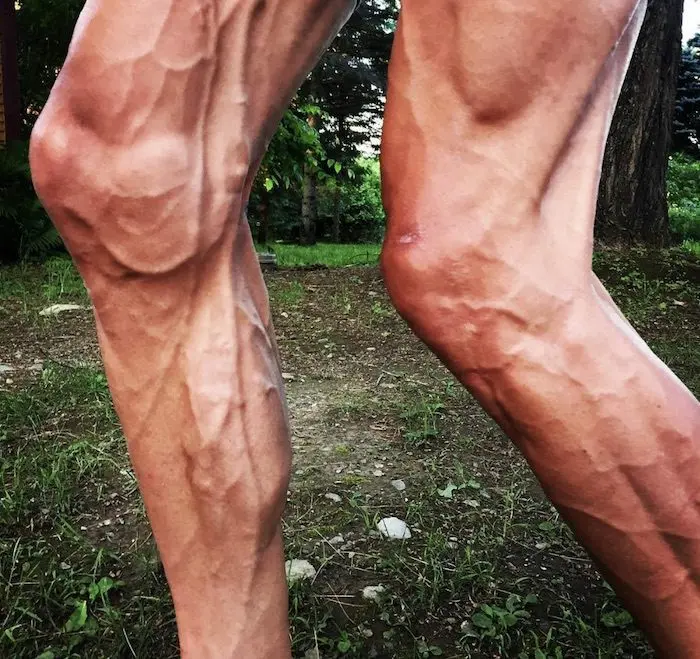
Why so visible?
Among pros, it’s often the case that the venous system looks like a real road map after a race. That reflects a huge amount of muscle work. The day spent pedaling is what produces this major increase in blood flow to the legs. Consider this: flow can be up to 50 times higher than normal! What explains this temporarily phenomenal flow is that the circulatory system is put under severe strain to regulate body temperature. Blood volume rises sharply, and the working muscles need a very large amount of blood at that point.
Varicose veins or athletic veins?
The Mario Bros-style plumbing is often blamed on varicose veins, but most of the time that isn’t the case. Even though American George Hincapie had surgery after his career to correct venous insufficiency, most of the time it is venous engorgement, not the other way around! Endurance sports such as running, triathlon, or cycling gradually increase plasma volume, and most of that plasma volume is stored in the veins of the lower limbs. So reassure Pawel Poljanski’s mom: he has no functional problems whatsoever.
Other leads
Bodybuilders, who are more inclined to deliberately create this “style effect” for image reasons, use little tricks to bring out their veins: they follow a special diet, a diuretic, carbohydrate-rich diet. On top of that come artificial tanning and body oil to better define the tissue.
Physiology and genetics
As always, some people are simply lucky! Some benefit from generous genetics passed down by generous parents. Thin skin, no fat… and large, prominent veins. In short: very low body fat, skin as thin as cigarette paper and, no need to dig deep, a venous system naturally sitting very close to the surface. For everyone else, there may be a bit of magic…
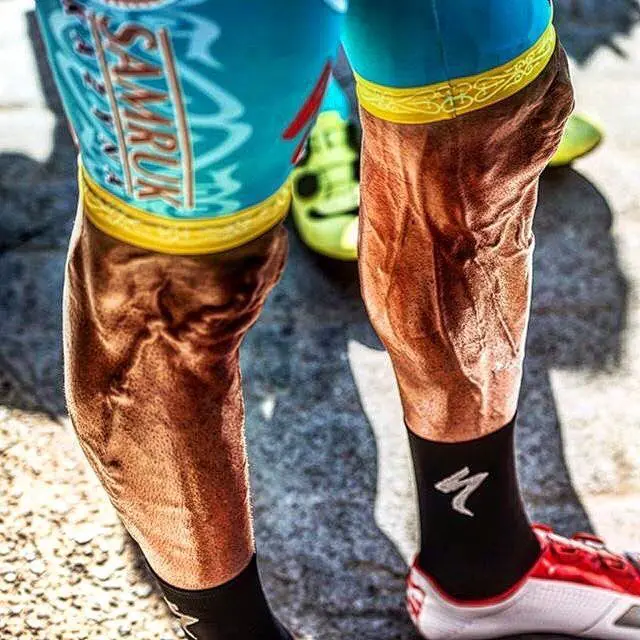
Huggy’s good pipes
Most of the time, it’s a matter of congestion. This is the hallmark of bodybuilders, achieved through cutting. But unfortunately, science has also got involved! To help bring those big pipes to the surface, there are vasodilators of the NO type. These are volumizing supplements designed to increase congestion and the phenomenon of “veinasses”, a phenomenon that is amplified especially by the congestion linked to racing or training. Testosterone, anabolic steroids, and steroids also produce this effect and influence the appearance of these distorted veins. But age, heredity, or poor circulation can also play a role.

Conclusion
Just because you can’t see your veins doesn’t mean you don’t have any. Not having prominent veins doesn’t mean you aren’t fit or that you carry too much body fat. Some people don’t have a surface blood network and will never see their veins. Others, on the contrary, find theirs show too much. Sometimes anabolic steroids are blamed for making cyclists’ veins stand out, and admittedly that can be one lead, since they can lower body fat and reduce the layer of subcutaneous fat. But not everyone whose veins show uses steroids. And on reflection, I prefer to point to thermoregulation, dehydration, congestion, and the atypical physiology of these elite endurance athletes to explain the veinasse.
=> SEE ALSO: All our other CQFD articles
Share the post "Visible Veins: Pathological, Natural, or Doping?"