Share the post "Homeopathy to the rescue of athletes?"
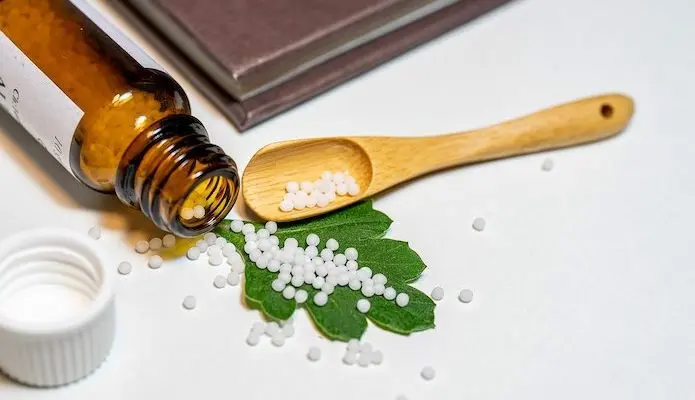
Among medical controversies, if there’s one subject that always sparks debate, it’s homeopathy. But is it a placebo or truly effective? Let’s examine the value of these famous white granules in managing trauma related to our sport…
By Jean-François Tatard – Photos: Frédéric Poirier, Pixabay.com, Flickr.com
It is already interesting to note that this therapeutic approach is safe and respects all ethical rules, especially those that protect athletes from doping. Homeopathy in sports can, in many cases, avoid the use of anti-inflammatory drugs. Indeed, many doctors agree that NSAIDs are used far too easily. Too often, their use is not justified, leading to deleterious consequences for the liver and kidneys.

Complementary therapy
Throughout his career, Dr. Ferrand, now retired but at the time a sports doctor in Asnières in the 92 region, systematically treated all his patients’ sprains, as well as muscle tears and tendinitis, with homeopathy in addition to other therapies. This does not mean that he did not combine the treatment with conventional medicine (physiotherapy, osteopathy, cryotherapy, balneotherapy, etc.).
Protocol for sprains
Depending on the severity of the sprain, functional treatment will consist of combining rest, ice application 3 to 4 times a day, and immobilization with a splint to prevent any lateral movement, as well as elevating the joint in the evening to reduce swelling. And after only 4 days: physiotherapy sessions can begin to quickly restore mobility, which will promote healing. As for homeopathy, it has its place in the inflammatory phase, by limiting bleeding. This will have the benefit of significantly relieving pain. Moreover, I still don’t understand why some doctors still prescribe anti-inflammatory drugs for a sprain. It’s a complete contradiction! Inasmuch as the inflammatory phase is absolutely necessary for the healing of ligaments by macrophages.
| HOMEOPATHIC RECOMMENDATION FOR A SPRAIN In case of a sprain, a homeopath prescribes a homeopathic prescription based on: 1. ARNICA 9CH: 5 granules, 5 times a day for 5 days Then, in a second phase, RHUS TOXICODENDRON, RUTA GRAVEOLENS, which act on tendon insertion and joint stiffness. |
In case of muscle trauma
In our sport, muscle trauma mainly affects the hamstrings, calves, or quadriceps. The doctor often uses imaging in his diagnosis. And then, as with a sprain, management relies on rest, icing, and compression. Moreover, the doctor will advise opting for the same homeopathic products as for a sprain.

In case of muscle soreness
As for muscle soreness, contrary to popular belief, it has nothing to do with lactic acid. That’s an urban legend. In reality, it corresponds to micro-lesions of the muscles that cause inflammatory pain. In this case, active recovery makes sense. A cold water bath into which you throw 5 kilos of ice, if you dare, would also do you a world of good. And for homeopathy: MAGNESIA is excellent for fighting cramps. SARCOLACTICUM and SPORTENINE are also great for muscle recovery.

In case of tendinitis
I’m going to surprise more than one… But NSAIDs are useless in cases of tendinitis. The only case where they might be useful is if it’s tendinitis in the tendon sheath. Otherwise, it’s heresy to use an anti-inflammatory. Finally, while physiotherapy is the reference treatment, homeopathic treatment can be combined with it.
| HOMEOPATHIC RECOMMENDATION FOR TENDINITIS 1. RHUS ToxicOdendron |
In conclusion
Since the controversy launched by the publication of health professionals against alternative medicines, former Minister of Health Agnès Buzyn had finally given her opinion on the matter. She acknowledged that homeopathy probably had a placebo effect, but she defended the continuation of its reimbursement because it had been proven that this treatment was neither harmful nor that the placebo offered benefits.
Nevertheless, it emerges that homeopathy can also have harmful consequences “by ultimately weakening the trust of patients and the public in the evidence-based scientific approach.” So, to conclude, I believe that homeopathy is interesting but should not be exclusive and should complement conventional medicine.
=> SEE ALSO: All our Coaching articles
Share the post "Homeopathy to the rescue of athletes?"