Share the post "Triathlon: resuming running after 8 weeks of lockdown"
Even if many triathletes or runners have managed to maintain a minimum level of physical activity over the past 8 weeks, for many, this Monday, May 11, marks the return to running in complete freedom. So, let’s review some fundamentals together. Let’s check the pitfalls to avoid. Let’s check the rules to follow.
By Jean-François Tatard – Photos: Jeff Tatard / Pixabay.com
Regardless of the context, returning to running is always tricky for a runner to manage. But this time it’s even more particular. Flash Back to March 16! On the one hand, the break was imposed on you. On the other hand, you were neither injured nor tired. Yet you had to live without running. And now, that you can run freely again: overnight, you will probably find new constraints that can hinder your favorite activity in another way. Indeed, it is possible that you find yourself overwhelmed by a quantity of tasks to accomplish with much more limited means than normal and longer execution times. If you felt unmotivated by the 1h/1km rule, the first weeks of deconfinement risk being complicated to manage in many aspects of daily life.
The place of running
What place should running have in the coming weeks? You will gradually have to find a “normality” in which your running practice fits. Except that we understand that things will not be exactly as before. Running is part of your balance, just like family life and professional life. But you will encounter organizational problems. The use of public transport will be limited, you will have to wait everywhere, social distancing will force you to do things less quickly and you will probably have less time and less energy to run.

Don’t miss your comeback
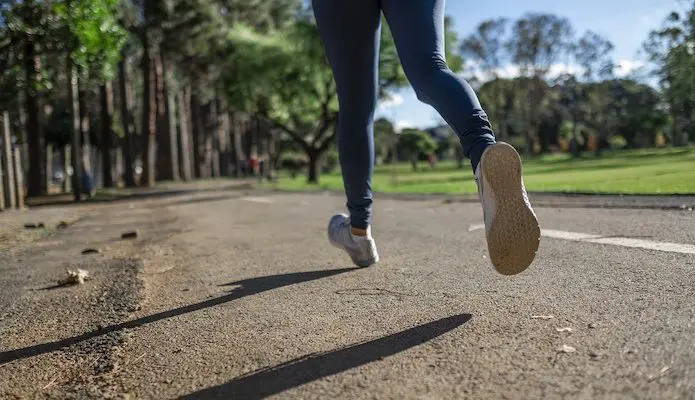
Don’t miss your comeback though! Running regularly again will help you find balance by relieving stress. Don’t procrastinate! Don’t put it off until tomorrow! You don’t have to run 45 minutes right away. In fact, that would be a big mistake. And the risk of getting injured very quickly. Go for 10 minutes! You can even alternate with walking: 30 seconds of walking / 30 seconds of jogging. But go for it! And go gradually! You will have to relearn to run gradually. As with cycling, you will have to go back to basics.
Gradual progression
“Gradual progression” as the key word! Everyone knows the importance of true gradual progression in the quality, duration, and volume of any learning process. It’s the same for returning to running. After 8 weeks of confinement, it is crucial not to rush back to an effort or mileage equivalent to the pre-confinement period. You will go step by step to regain your previous level. You have time, especially since you still have no visibility on potential competitions.
After 8 weeks of confinement, it is crucial not to rush back to an effort or mileage equivalent to the pre-confinement period.

Some advice
We went to get some valuable advice from my favorite coach: Coach Lozano. He guides us in 5 points:
- Don’t see it as a failure but rather as a step forward: alternate walking and running.
- Increase the duration of your outings very gradually. By 5 minutes at a time, always leaving a rest day between sessions for the first 4 weeks.
- Therefore, limit the duration of sessions and the #socialdistancing of 10 meters will help you: don’t let friends drag you into doing more and faster.
- Distribute the time or kilometers run over the entire week. Don’t overload your weekends just because you have more time.
- Include a cycling session to limit constraints and reduce the risk of injury.
What we can add
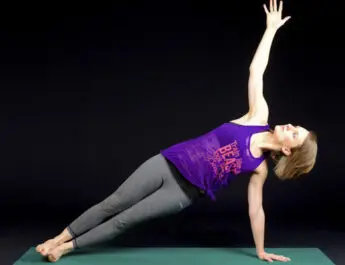
For the more experienced among you, there has been a phenomenon of detraining. The consequences are multiple! First thing: VO2 has decreased. Studies show, for example, that you lose more than 10% of VO2 after a month without exercise. And even more significantly for those whose initial VO2 is even higher. The return to exercise must also take into account cardiovascular, metabolic, and muscular data. It would be worthwhile, for example, to supplement training with a weekly strengthening session. Light strength training that specifically targets the muscles recruited by your sport would be welcome. No need to spend hours on it, but 30 minutes dedicated to eccentric strength exercises for the lower muscles combined with proprioception and plyometrics would do a world of good. In addition, two or three 15-minute sessions of abdominal and core exercises, not forgetting the lower back, would help balance the strengthening.

To conclude
Beyond your impatience which is starting to get exacerbated, it is necessary to remain faithful to a method to isolate risks and counter the threats of injury. And don’t forget that this return is ultimately the first page of a new chapter. The story is just beginning…
=> SEE ALSO: All our Coaching articles
Share the post "Triathlon: resuming running after 8 weeks of lockdown"