Share the post "May 11: Your comeback plan"
If all goes as planned, May 11 will mark the gradual beginning of the long-awaited deconfinement, and with it the return of solo road training. Whether it’s after a break or after two months of home maintenance with an indoor trainer and general physical preparation, the return to training must be gradual. We explain how.
By Guillaume Judas, with the collaboration of Mathieu Istil – Photos: PEdALED
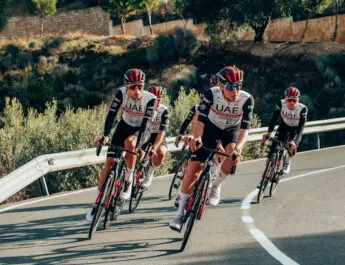
In the deconfinement plan proposed last week by the government, athletes will be able to resume an almost normal activity, at least for outdoor and solo outings. Indeed, initially, gatherings of more than ten people will remain prohibited, and for sports, a distance of at least ten meters is imposed. This means that for cycling, it amounts to riding alone because there is absolutely no point in being accompanied while maintaining such a distance (neither for sharing relays nor for talking).

Social Rides will therefore still be kept on Zwift at least until June, but for many, the resumption of road rides will be a real breath of fresh air. All the better. However, in the absence of specific objectives and event or gathering dates – which remain to be determined – it will be important not to do just anything, at the risk of being morally and physically exhausted by the end of summer.
First, endurance
During these eight weeks of confinement, substitute activities may have been sufficient to maintain a decent physical condition and not start from scratch. But if there’s one thing that’s not really possible to work on an indoor trainer or during sessions limited to one hour within a one-kilometer radius of home, it’s pure endurance. Cycling and triathlon are first and foremost endurance sports, it’s worth remembering. While some may have done long indoor trainer sessions, the confined environment and bike position are never totally identical to reality.
The good news is that endurance is one of the simplest qualities to work on and improve, if you approach it progressively. And for some of you, you’ll be able to complete a real first month of endurance for the first time, without the temptation of excesses linked to group rides.
This period will allow you to reconnect with the road, rebuild your foundations, and establish a good base of fitness for the rest of this disrupted season. There will be plenty of time in June to do more specific and intense exercises to see your form improve significantly, but on solid foundations. Don’t forget, if the sports season resumes from August, the dates on the calendar are likely to be concentrated over three months, with a series of competitions or events similar to what is currently planned for professionals. During this intense quarter, you won’t have time to catch your breath, and it will be all the easier to chain together if you have taken the time to allow yourself a good period of endurance training.
The transition with indoor trainer practice
Even if you’ve ridden a lot on an indoor trainer, you’ve somehow “detrained”, because the pedaling motion on an indoor trainer is slightly different from that on the road, mainly because such a device is fixed, but also because there are neither the same frictions nor the same inertia. Proprioceptive circuits, which are the exchanges of information from the muscles to the nervous system, are somewhat distorted by the stability of an indoor trainer.
On the road, you will need a period of adaptation to regain effective balance and bike handling reflexes outdoors. You will obviously know how to ride a bike without training wheels, but your fine perception and regulation of bike control will be very slightly dulled.
In terms of strength, you may also notice a lack of muscle response at first. This is quite logical, because even during very difficult indoor trainer sessions, you never have the same power peaks for a few seconds as on the road.
All of this comes back very quickly, but it is necessary to have a rested body to reconnect your muscles and nervous system more quickly. This is why it is interesting to ease off a few days before resuming road training.
The right time to question your motivations
These long moments of solitude on the road will also allow you to question your practice and your real motivations for cycling. And for many, to rediscover the very essence of the pleasure of riding.
Why do you like cycling? What do you look for in this activity? What motivates you? The feeling of the wind on your face or calves? The feeling of freedom? The taste for effort or the well-being felt after physical exertion? Group life? Once you have answered these questions, focus on your primary motivation and the pleasure it brings you during this recovery period, and forget everything else.

The benefit of such introspection is to better understand yourself and your goals. Some people cycle out of habit, and sometimes without passion, only motivated by group rides where they take advantage of drafting to boost their average speed. They are spectators rather than actors of their activity, and this is reflected in their behavior in races or sportives. For them, solo rides will represent a new challenge, but they can also find a new form of pleasure in them.
A progressive but always targeted return to training
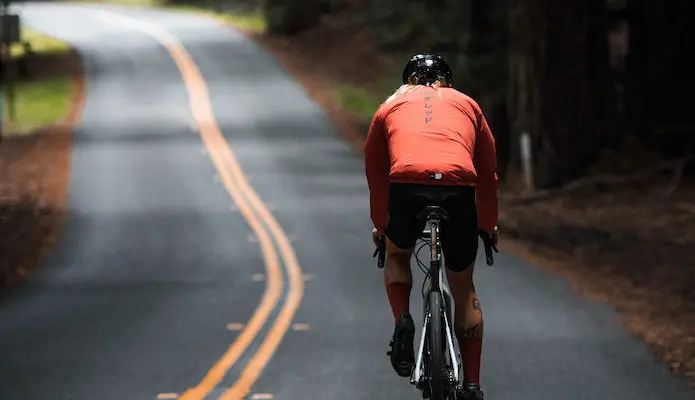
These solo rides will necessarily be more demanding than if they were done in a group. Demanding for morale because some will discover what a headwind feels like for long kilometers, and due to the absence of social contact. You may initially find these sessions boring. Demanding for the physique, because alone you will have few moments of coasting. You will be “on the pedals”, even if you dedicate this period to a pure endurance pace.
Therefore, you shouldn’t count in kilometers, nor aim for an average speed. Nor should you be too ambitious in terms of duration at the beginning. This gradual readjustment will involve frequent rides, because endurance also means chaining rides together. If you can ride every day or almost every day, start with two-hour rides, and schedule a complete rest day after three consecutive rides. If you’re returning to work and are used to two long rides a week, do 2h30 on Wednesday and Sunday, for example, and supplement with two or three one-hour rides.

Improving endurance levels involves increasingly longer durations, but also improving pedaling technique, so that it becomes more and more economical. To do this, alternating a ride whose objective is to gradually extend the duration with one or more short rides has the advantage of avoiding the accumulation of fatigue while allowing enough time for the body to progress. In terms of supercompensation, it is estimated that it takes about 72 hours to fully recover from a long ride (from 3 hours).
You can then gradually increase the duration, but make sure you have fully assimilated the previous distances. You will thus be able to ride for more than 4 hours by the end of May, noting that the simple chaining of rides and the natural difficulties of the terrain will have allowed you to regain strength, improve your posture, limit muscle soreness, no longer have saddle problems, or optimize your hydration and energy intake. You will avoid “voluntary” efforts but you will be able to gradually climb hills more sustainedly without taking long minutes to recover. In terms of intensity, aim for a range between 60 and 75% of your potential, verified by a heart rate monitor.

From the second week, you can add specific exercises, but staying at this level of cardiac exertion. You can do some submaximal strength training by climbing hills at a slow pace with a large gear, or do cadence sequences for a few minutes on the flat, but always monitoring your heart rate. After the third week, you can do three or four short sprints in the middle of the ride, just to finish waking up the body.
You will then be ready to target your training with specific sessions in June, aiming for VO2 max work, then FTP. The more patient, progressive, and rigorous you have been during this recovery period, the stronger your condition will be this summer. Shall we bet?
=> SEE ALSO : All our Coaching articles
Share the post "May 11: Your comeback plan"