Share the post "Details and first photos of the new Lapierre Aircode DRS used by Groupama-FDJ"
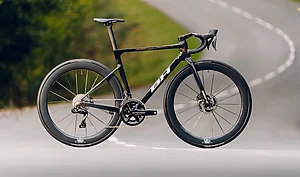
At Paris-Nice, where it was used by several Groupama-FDJ team riders, Lapierre unveiled the first images of its new Aircode DRS bike. Discover the first details of the new version of the “aero” road bike from the Dijon firm, in its final phase of development and validation.
Photo credits: Lapierre
At Paris-Nice (but also at the start of the Flemish classics), the most avid equipment observers could spot the new version of the aerodynamic Lapierre Aircode DRS under some Groupama-FDJ team riders. Still in its final development and validation phase (especially concerning the stem/handlebar part), the 2020 Lapierre Aircode DRS reveals its new lines and gives a glimpse of the work carried out by the Dijon company’s engineering department. The associated DRS (Drag Reduction System) designation, inspired by the Aerostorm time trial bike (but also by the world of Formula 1 and the lowering rear wing of single-seaters), suggests that this new version of the Aircode aims to further reduce aerodynamic drag and offer an even higher air penetration coefficient.
For this third generation of the Aircode, Lapierre’s engineering departments started from a blank slate to create and shape a 100% new frame. The brand developed its new frame with the support of the professional riders it partners with, as well as the aerodynamic knowledge of Professor Bert Blocken, a renowned specialist in CX and air penetration in the cycling world.
Drawing inspiration from the work and expertise acquired in the design of the Aerostorm time trial model, the Aircode DRS features certain lines that are reminiscent of the in-house rocket developed for timed events. Similarly, we can observe the specific connection of the seatstays to the seat tube and top tube, which echo the lines seen on the Xelius SL. And it can logically be imagined that the approach aims to reinforce and increase the overall comfort of the Aircode DRS compared to the previous version.
Regarding the evolutions on the 3rd generation Aircode, we can also observe that the seatpost clamp is perfectly integrated into the extension of the top tube. And the presence of NACA and Kammtail profile tubes is still distinguishable. Previously available only with rim brakes, the Aircode DRS has been developed to offer dual technology, as the new frame perfectly integrates hydraulic disc braking.
Broadly speaking, and before its official launch, we note that the Aircode DRS has largely drawn its inspiration from the lines of the Aerostorm DRS with the aim of optimizing aerodynamic performance in specific areas compared to the previous version of the Aircode. However, Lapierre engineers had to adapt it to the constraints of rouleurs/sprinters on long-distance events (different from a 50/60 kilometer time trial). The lines of the bottom bracket shell and its junction with the down tube and chainstays have also been worked on.
Seen in professional races in recent weeks, the new Aircode DRS has entered its final validation phase at Lapierre. Only the handlebar/stem assembly is still in its development phase, to offer an integration and a level of efficiency that will match the aerodynamic performance obtained for the new frame.
A junction support developed by Lapierre for its new frame integrates into the upper part of the head tube, to connect with the spacers or the stem. It can be noted that all Di2 and brake cables pass through this support in order to minimize air resistance and friction at all levels. No weight or figures have been given for now, but complementary and precise information on this new version of the Aircode DRS should not be long in coming…
=> SEE ALSO : All our Mag articles
Share the post "Details and first photos of the new Lapierre Aircode DRS used by Groupama-FDJ"