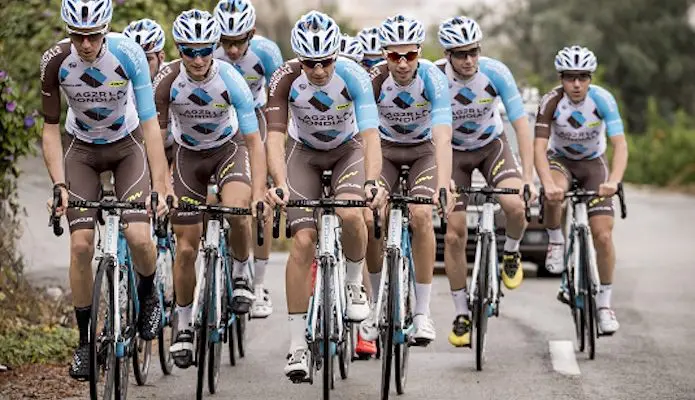
Share the post "Could You Have Made It as a Pro?"
Beyond the tactical side of cycling, your level depends on your power relative to your body weight, and on how long you can sustain the effort. With well-structured training, you can improve your fitness and gain watts. You may even wonder whether your potential allows you, or would have allowed you, to become a good racer, or even a professional. To find out, you have to finally give yourself the means by training seriously.
By Guillaume Judas – Photos: AG2R La Mondiale cycling team / Flickr.com / Pixabay.com
=> SEE ALSO: Power in cycling
You cannot rewrite history. It is often too late at forty or fifty to live with regrets. Some people start cycling seriously in the second half of their lives, enjoy it, and even get some results in competition within their age category. Others get into it through practices other than traditional racing, such as cycle touring, cyclosportive events, mountain biking, bike commuting, or even discovering themselves in virtual racing on Zwift.
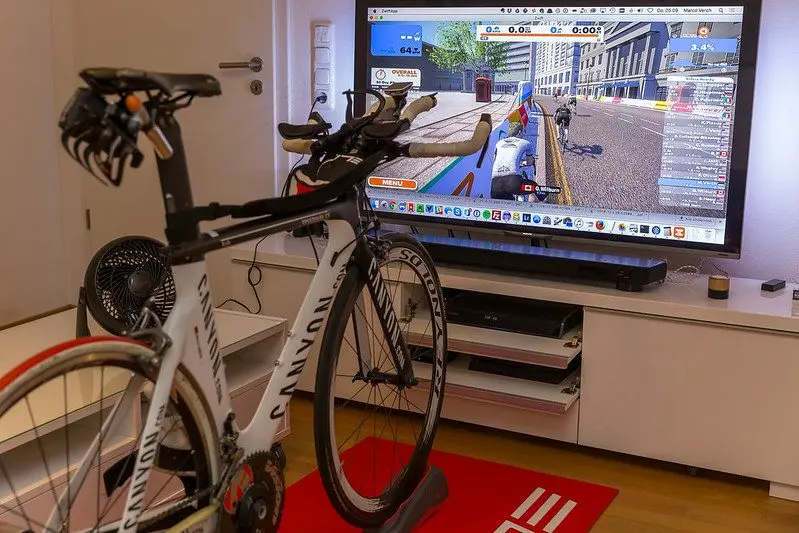
There is no longer a path laid out in advance, and above all no clearly defined categories of riders. That is a strength, but it can also feed frustration by encouraging illusions, because your circle or social media may make you think you are exceptional. You can picture yourself becoming a strong rider, climbing the ranks of competition, winning big races, and appearing on TV. Dreaming is even rather healthy, and it can push you to surpass yourself. Yet reality is sometimes harder to accept.
Are you any good?
Several elements combine to make a champion: talent, hard work, courage, entourage, strategy, career choices… Nothing is ever simple or easy for an athlete who gets results. We are not all equal when it comes to effort, whether in physical qualities or in the perseverance needed to face the scale of the task awaiting an aspiring sports star. Many people, in fact most, cannot sustain the daily, long-term discipline needed to climb every rung of the ladder to success. Is that you? Or are you ready to give yourself entirely to pursuing this goal? You have to be aware of it and accept it. Stepping back is not serious in itself, as long as you live according to your aspirations.
Most athletes cannot sustain the daily, long-term discipline needed to climb every rung of the ladder to success.
As for talent, it is hard to measure, but it shows itself through a feel, a style, favorable genetics, recovery abilities, and adaptability. Overall, however, what we call talent deserves far less credit than the work needed to put it into practice. There is no great victory without talent, but above all none without work. If you find yourself wondering what kind of rider you would have been if only, it means you did not seize your chance when the moment came.
As for physical qualities, which are no doubt already significantly reduced after 40, you will only get a small idea of what you could have delivered twenty years earlier by taking the trouble to explore them. If you train hard and are still improving at an advanced age, you have certainly not reached the limits of your potential.
From Cyclosportive Rider to Pro
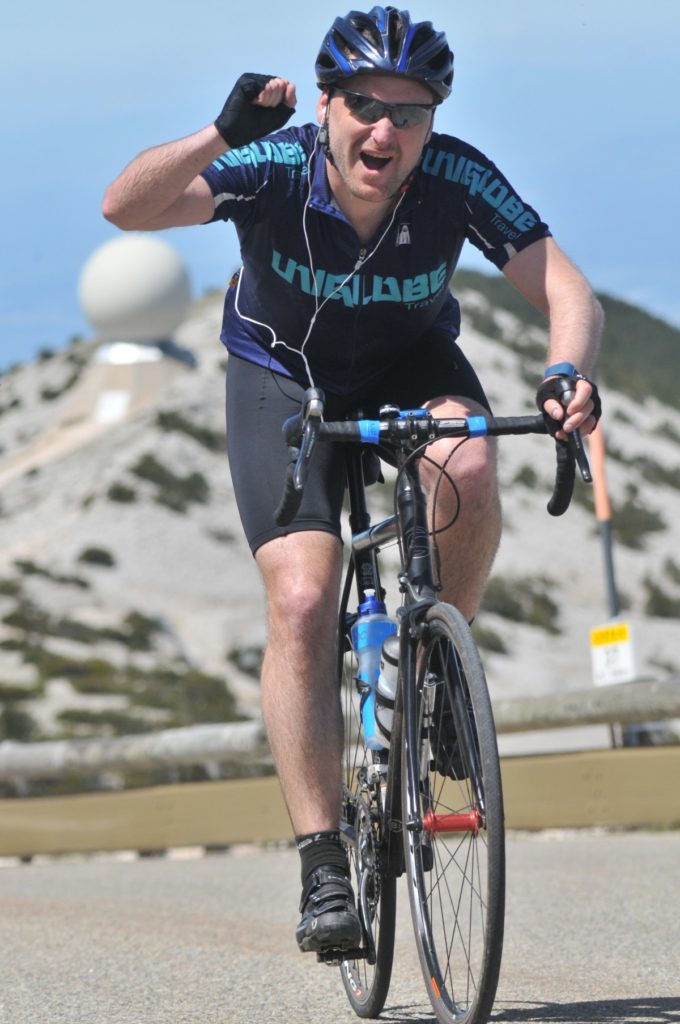
Over its nearly 40 years of existence, the cyclosportive has become a discipline in its own right, with its own operation, organization, codes, and specialists. In the renowned events, particularly in the mountains, you find very good athletes and excellent climbers, with specific physical qualities as their power profile shows. They are very enduring riders with high FTP values in watts per kilo, sometimes close to those of some professional riders. Should we conclude from this that they would make good climbers in the pro peloton? That is unlikely, because the range of skills needed to climb the ranks of competition is far greater than an increase in FTP.
Reference FTP values: Between 5.7 and 6.4 W/kg: very high-level professional |
As you will notice if you have raced, you do not drop anyone from your wheel if you regularly ride at an average of 45 km/h on the flat. Even on climbs, you always find opponents who can hold their own with you as long as you keep a steady pace. Beyond the specific physical qualities that set apart a rouleur (a flat-terrain specialist), a climber, or a sprinter, a rider of a certain level is already capable of doing everything.
Among pros, you need a high level of endurance, but also the ability to ride very fast for a few minutes.
Among pros, you need a high level of endurance, but also the ability to ride very fast for a few minutes, and to go deep into the red for a few dozen seconds to endure or impose a decisive acceleration at any point in the race. These qualities are innate, but they are also patiently acquired after several years of competition, climbing the rungs one after another. With very rare exceptions, it is extremely hard to acquire other high-level skills while keeping the ones that define you.
What is PMA (maximal aerobic power)? PMA is the power reached at VO2 max, that is, at the peak of the cyclist’s aerobic capacity, when oxygen consumption reaches its maximum and levels off. PMA is the cycling equivalent of VMA (maximal aerobic speed) in running. But instead of being expressed as a speed, as in running, it is expressed as power (watts), or better, in watts per kilo. A trained athlete can sustain PMA for about 5 minutes. Reference PMA values: Between 7 and 7.6 W/kg: very high-level professional |
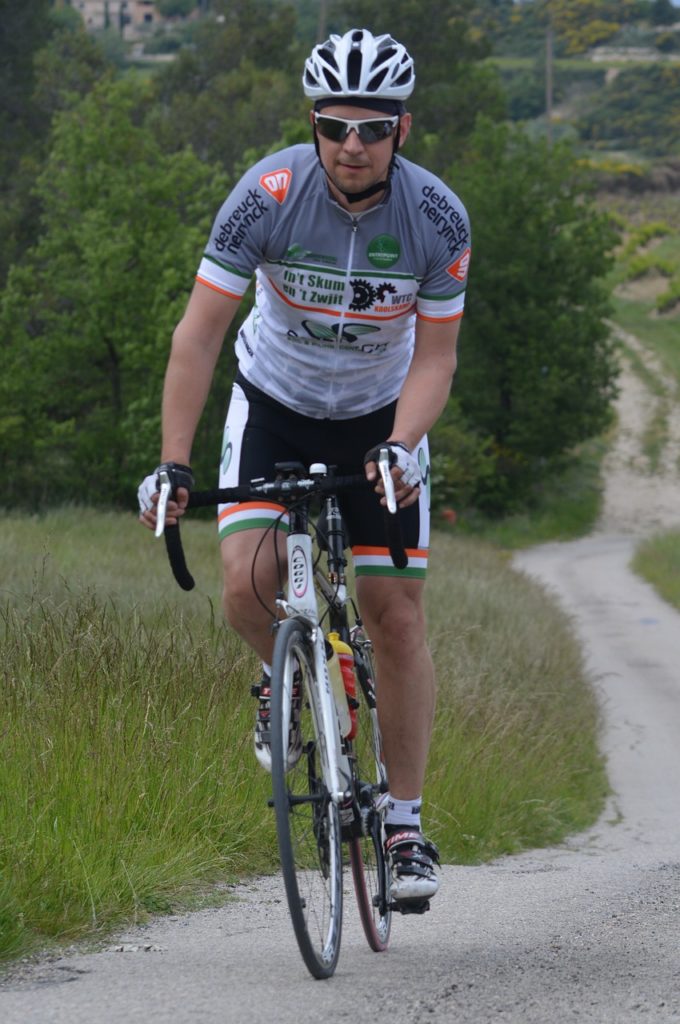
Knowing your limits and being aware of them lets you fulfill your potential fully, without frustration.
Keep a level head
The concept of power, when measured directly or indirectly, helps you place yourself and gauge the distance you still have to cover to reach your goals. You cannot cheat with power or simply compensate with grit or willingness to do well. It depends directly on your physical qualities and fitness level. But measuring it has other advantages too: based on your power profile, it lets you train precisely in the zones needed to develop certain qualities.
Reference 5-second power values: Between 22 and 24 W/kg: very high-level professional |
If you want to climb passes at your best this summer, you will aim to improve your power over one hour, which is a very good indicator of your endurance level. If you are aiming for local KOMs, you will work more specifically on your PMA. And if you want to challenge your mates in sprints to the road signs, you will work more specifically on short sprints to improve your explosiveness. The full complexity of training, and the revelation of your talent, lies in combining exercises to progress in every area without accumulating too much fatigue and while keeping the motivation. Not so simple. But knowing your limits and being aware of them lets you fulfill your potential fully, and without frustration.
The qualities needed to become a professional road racer A rider fit to turn pro needs:
|
=> SEE ALSO: All our coaching articles
Share the post "Could You Have Made It as a Pro?"