Share the post "Logbook – Long-term test of the Orbea Orca OMX #3"
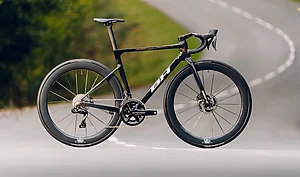
In addition to our first exclusive test of the Orbea Orca OMX at the time of its official presentation, how does this bike really perform in everyday use? The answer is in this long-term test of the Orca M20iLTD-D on our usual training routes, with regular updates. This third installment covers the discovery of disc braking in long-term use. Reliability, performance, and maintenance are among your questions regarding this technology. Let’s see what it’s really like.
By Guillaume Judas – Photos: GJ / 3bikes.fr – All rights reserved
=> SEE ALSO : Logbook – Long-term test of the Orbea Orca OMX #1
=> SEE ALSO : Logbook – Long-term test of the Orbea Orca OMX #2

Whether we like it or not, disc braking on road bikes is gaining more and more market share. Is it a real consumer demand or a desire by manufacturers to impose this technology, with all that it implies, including the complete change of bike and equipment due to a lack of compatibility (frame, fork, wheels, brakes, levers)? It’s hard to know for sure, as opinions are divided. And it’s also difficult to get precise figures. At the high end, disc braking seems to be gaining a clear advantage month after month. In the entry and mid-range, consumers may be a little more reluctant because, at the same price, there are very clear differences in weight and behavior between bikes that use disc braking and more traditional bikes. Finally, some manufacturers blur the lines by offering certain models only with disc braking, which ultimately clearly guides consumer choice.

This is the gamble Orbea took with the Orca OMX, which is only offered with this type of braking. The Basque manufacturer’s flagship model, performing and versatile on all terrains, both stiff and comfortable, benefits from both the power and consistency of disc braking and the integration allowed by this technology.
Indeed, let’s remember that instead of a cable, it’s a fluid (mineral oil here with Shimano) that flows inside the brake hoses, and this setup is therefore more flexible than in the case of a traditional setup. As a result, it’s possible to impose a more tortuous path on the hoses (housing) along or inside the handlebars and stem, then inside the head tube, without altering the braking function, for example, with poor cable return. This is one of the advantages of this technology, for a cleaner cockpit appearance and better aerodynamics, even if we know that in terms of assembly and maintenance, access to the hoses is more complicated.
It is possible to impose a tortuous path on the hoses (housing) along or inside the handlebars and stem, then inside the head tube, without altering the braking function.
Moreover, on this test bike, the brake hoses proved to be a bit long after adjusting the position. And we have so far refrained from shortening them, given the time and tools required to access them and because it is mandatory in this case to bleed the system again.
=> SEE ALSO : Disc braking for road bikes, the current situation

Almost silent braking
Despite our reservations for daily use, the disc braking has so far proved silent most of the time, throughout these 4500 km of intensive testing, and in sometimes difficult weather conditions. Contrary to some of our fears, there is very little rubbing when riding out of the saddle, except perhaps for a few meters just after hard braking (the time it takes for the pads to reset in the calipers). The rotors are a little noisy just after riding through puddles or in very heavy downpours, when some dirt gets into the very small space between the rotor and the pads. You can then hear a slight grinding noise, but this usually doesn’t last.
During braking itself, the brakes are silent in dry conditions, and sometimes squeak a little in wet conditions, at least during the first few pulls on the levers. This is the time it takes for the braking surface of the rotor to “cleanse” itself of impurities.
A very limited amount of rubbing, and in any case much less than on the first versions of road disc brakes a few years ago. Shimano explains this by better training for assemblers and mechanics, but also by improved frame quality and precision. We suspect that, given the reduced space between the rotor and the pads in the caliper, a sum of small details is necessary for a perfect alignment of all elements.

This is also true when adjusting one of the calipers. Indeed, this remains one of the system’s weaknesses, but it can be easily circumvented: when transporting the bike, the calipers are exposed and can become misaligned (change position); simply loosen the two screws with an Allen key (the caliper then has lateral play), actuate the brake lever (and hold it with an elastic band or strap if you are alone), then tighten the screws behind the caliper. Simple and quick on the Orbea, really.
Power and modulation
For road use, Shimano offers 160 and 140 mm rotors. The brand indicates that the 140 mm rotors provide braking power comparable to good rim brake calipers (with added consistency), while the 160 mm rotors are more powerful. On the UCI side, a standard has been defined for in-race repairs with a 160 mm rotor at the front and a 140 mm rotor at the rear. Of course, Shimano, Sram, or Campagnolo brake calipers are compatible with both sizes, but they must be pre-adjusted on the bike. Finally, some manufacturers decide to mount two 160 mm rotors, to suit certain users or demanding courses.
The first braking attempts are unsettling because they are very powerful. But you get used to it very quickly. However, they require excellent road holding.
This is the case with Orbea’s Orca OMX, which comes standard with two 160 mm rotors. For the record, there is about a twenty-gram difference between the two sizes (per rotor). We initially thought that the braking was oversized for us, partly for our region, which is flat or only hilly, but also because of our light build. Obviously, the first braking attempts are unsettling because they are very powerful. But you get used to it very quickly. However, they require excellent road holding. The bike comes with Hutchinson Fusion 5 700×25 tires (measured at 28) which are satisfactory in this regard. Then we changed them for Specialized 700×26 Tubeless tires (actually measured at 26) which were a bit more delicate with such power, even on dry roads, and finally for Specialized 700×28 Tubeless tires (measured at 31) which proved to be excellent even during hard braking in wet conditions.
It is therefore inconceivable to talk about braking without associating it with road holding. When we were riding with the Specialized 26s, we were once surprised on dry ground by a car that cut us off, and the rear wheel locked instantly, severely limiting bike control (without damage in the end). Disc braking is a bit like a bike helmet: it doesn’t protect you from all risks!
However, there remains a pleasant and easily modulable power. These Shimano Ultegra Disc brakes no longer have the On/Off feel of the first models, with a lever effort that seems to have been artificially modified here to provide the same feeling as with rim brakes. For experienced road riders, this is a real advantage, allowing them to better feel the contact point of the brake pads on the rotors, and thus to modulate the action on the lever well. From our point of view, modulation is all the easier as the grip of these levers, almost identical to that of rim brake levers, optimizes the overall feel. This is a real advantage for Shimano in this area compared to Sram and Campagnolo.
The 160 mm rotors are therefore heavier than the 140 mm ones and brake harder. However, they are less pushed to their limits in use, and therefore have less tendency to heat up, deform, and warp. This is quite logical because the action of the pads occurs on a larger circle. We are therefore revising our opinion on the subject and believe that this option can be justified to limit maintenance.

What maintenance?
This is one of the main questions concerning this technology. According to the bike shops we consulted, there are no rules on the matter, in terms of duration or distance. The need for maintenance depends on usage, conditions, and terrain. As far as we are concerned, after 4500 km, it is already time to change the front pads. This need is manifested by an extended travel at the lever, which almost touches the handlebars when braking hard. We might have thought of the need to bleed the system, but the slightest movement on the lever actuates the pads in this case. It is therefore not a system failure or leak, but rather wear of the components, and therefore of the resin pads here, which are biting and silent, but whose lifespan is surely limited, especially in the conditions in which the test is carried out, on roads that are often greasy and dirty, and often in the rain. Unlike a rim brake system, it is not possible here to bring the pads closer to the rotor by any adjustment. The Shimano Ultegra Disc levers can indeed be adjusted to bring the lever closer to the handlebars (for small hands) but it is not possible to act on the contact point with the pads.

In terms of price, we are looking at around €20 for a pair of pads, whereas a pair of Shimano rim brake pads costs around €8. It’s more expensive, but there’s no telling we wouldn’t have had to change pads more often given the weather conditions encountered during this test.
Our two 160 mm rotors are very, very slightly warped (but nothing serious) and barely marked despite the conditions. While a rotor costs around sixty euros, changing them is really not on the agenda. And as for bleeding the entire system, it costs around twenty euros, but again, that’s not an issue, and the bike shops we consulted agree that for road bikes and in the absence of a mounting defect, it can last 10 to 15,000 km without any problems.

The road continues
Disc braking therefore poses no problem in use, and we can even say that it does not hinder the bike’s performance. The Orca OMX is certainly a little heavier with this technology (the groupset weighs 250 g more than its rim brake counterpart, the wheels are also a little heavier…) but it compensates with its stiffness, which ultimately makes it very lively, even with very sporty use. We have finally convinced ourselves that disc braking provides a certain comfort, as its drawbacks are ultimately easily manageable in use.
=> SEE ALSO : 2020 Road groupset prices and weights
We have finally convinced ourselves that disc braking provides a certain comfort, as its drawbacks are ultimately easily manageable in use.
The bike’s stiffness does not prevent a certain level of comfort, especially when it is currently fitted with 700×28 (actually 31) Tubeless tires, which sometimes make you want to leave the paved roads. Of course, for now, we stick to bike paths and a few sidewalks, and we avoid muddy trails. But the bike’s versatility remains exceptional.

For the rest, it’s also time to change the chain, which has also been put to the test after 4500 km, mostly on dirty roads. This need for change is currently only manifested by increased noise on the most used cogs. But there is no cracking or lack of precision during gear changes with the Di2, which is still as efficient as ever. Changing the chain regularly also prevents premature wear of the cassette and chainrings. As for the derailleur battery, we recharged it for good measure after 3500 km, but we could have pushed it further. Everything was still working perfectly.
We will dedicate our next installment to testing the DT Swiss ARC 1400 wheels, which can optionally equip this bike, to see if they can further improve its dynamic qualities and efficiency.
Total kilometers ridden with the bike: 4466 km
=> SEE ALSO : Logbook – Long-term test of the Orbea Orca OMX #1
=> SEE ALSO : Logbook – Long-term test of the Orbea Orca OMX #2
Share the post "Logbook – Long-term test of the Orbea Orca OMX #3"