Share the post "Logbook – Long-term test of the Orbea Orca OMX #2"
In addition to our first exclusive test of the new Orbea Orca OMX at the time of its official presentation, how does this bike really perform in everyday use? The answer comes with our long-term test of the Orca M20iLTD-D on our usual training routes, the progress of which you will regularly find here. Second part with the start of specific training and the functioning of the Shimano Ultegra Di2 Disc groupset.
By Guillaume Judas – Photos: GJ / 3bikes.fr – DR
=> SEE ALSO : Logbook – Long-term test of the Orbea Orca OMX #1

Humidity, rain, wind, fog, road grime (mud and sand), but not yet truly cold… The Orbea Orca OMX M20iLTD-D continues its journey during this long-term test in winter conditions, on the roads of the Île-de-France and Brittany regions. No extreme conditions for the rider, but the bike suffers a little more than usual during these long winter months, on often greasy and sticky asphalt. A good test for the tires, drivetrain, and brakes, but representative of what we put our equipment through all year long in our not always favorable latitudes.

Three punctures on the same day accelerated the tire change, after barely more than 700 km. We replaced the Hutchinson Fusion 5 All Season Tubeless with other Tubeless tires that are supposed to be more performant but more fragile. And despite two small front punctures immediately sealed by the sealant while riding, no issues on that front almost 2000 km later. We will tell you more about it later in a detailed test.
A top-notch drivetrain
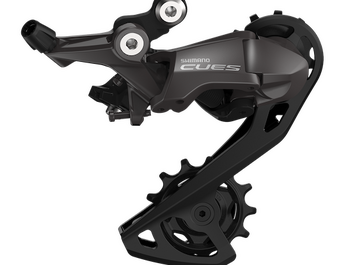
Still nothing to report on the drivetrain either. We had noticed from the start the excellent precision of the derailleurs, the speed of the Di2 gear changes, and the complete absence of rubbing noises. And despite some reluctance, we are forced to conclude that there is no functional difference between this Ultegra Di2 Disc groupset and the higher-end Dura-Ace Di2 Disc model.

Only certain materials used, and thus the weight of the components, make a difference on paper. But the finish, at least at the brake/shift levers, where we are in almost permanent contact with the groupset and the level of quality it conveys, are identical.
=> SEE ALSO : 2019/2020 Road Groupset Prices and Weights

Better yet: with the Dura-Ace and Ultegra hydraulic Di2, Shimano has managed the feat of housing the master cylinder in the levers without creating a bulge, as is the case with all other road disc groupsets. There is therefore no difference in grip between a Di2 Dura-Ace or Ultegra lever for rim brakes and a disc lever of the same level. You just notice a little more width at the base of the lever, where the brake hose fitting is located. But it’s completely transparent when riding.

The Ultegra Di2 derailleurs function perfectly. But this also depends on the quality of the frame construction and the rigidity of the derailleur hanger. Many users of entry-level frames, or certain generic or counterfeit frames, have experienced problems with gear shift adjustments, lack of precision, or noise, even with high-end equipment.
=> SEE ALSO : Generic or counterfeit, the economy we deserve.
Out of the box, the Orca OMX’s drivetrain was already perfectly adjusted. No rubbing noise in any gear, no hesitation from either derailleur, and during all possible manipulations. An imprecise adjustment would not have been a big problem, as long as the high and low limits of both derailleurs were properly set. It would have been enough to press the small button on the junction box and make micro-adjustments with the lever. Simple and quick. Unnecessary here, both with the new bike and after almost 2500 km. Nothing has moved, despite intensive use and several wheel removals/installations.

One of the characteristics of disc bikes is, for the most part, the mounting of wheels with a 12 mm thru-axle, which is operated with a 6 mm Allen key. In case of a puncture, you have to remember to carry the said key with you. The same goes for removing the wheels and stowing the bike in the car trunk. Not very practical for everyday use, but so much more “mechanical” in terms of operation! The thru-axle ensures a consistently identical wheel position on the frame, which is essential for the proper functioning of disc brakes, but also stiffens the connection between the wheel and the frame. For wheel reinstallation, the rigidity of the derailleur hanger and the precision of gear changes, this seems to us an undeniable advantage that the Orbea Orca OMX benefits from to ensure flawless transmission operation.
The thru-axle ensures a consistently identical wheel position on the frame.
A silent drivetrain thanks to its chain, but one that is not eternal. While it is still too early to change it at 2500 km (we aim for around 4500 km to avoid premature wear of the cassette and chainrings), it starts to get a little noisier if not perfectly oiled around 1800/2000 km. The Dura-Ace is known to be slightly more durable, but in any case, it is a wear part.

Synchronized gear changes
Few users are aware of it, but the possibilities offered by electronic drivetrains are very extensive, with the aim of offering more comfort and personalization. This is the case with Sram’s new Force eTap AXS and Red eTap AXS groupsets (also in Orbea’s catalog with other versions of the Orca OMX), and of course with Shimano’s Dura-Ace and Ultegra Di2.

The Di2 drivetrain has three modes:
- a “normal” derailleur operation, like with a cable-actuated drivetrain
- a “semi-synchronized” derailleur operation, with the rear derailleur automatically shifting cogs to compensate for the gear ratio when changing chainrings
- a “synchronized” derailleur operation, with the drivetrain functioning like a sequential gearbox, meaning it automatically changes chainrings and rear cogs when you increase or decrease the gear ratio, controlled only by the right lever.
You switch from one mode to another using the small button on the junction box, which is installed on the down tube of the Orca OMX (but it can be elsewhere on other bikes). A double press wakes up the system, and each double press switches between modes.
By default, the semi-synchronized mode compensates by two cogs at the rear when you change chainrings.
Also by default, the synchronized mode automatically shifts from the large to the small chainring when you are on the second-to-last cog of the cassette, and places the chain on the eighth cog. In the other direction, it waits until you are on the fifth cog to shift from the small to the large chainring, and places the chain on the seventh cog. All this without the slightest jolt, even under full effort.

But everything is customizable via the E-Tube software (PC version). Depending on the cassette and chainrings adopted, or simply your preferences, you can customize when the chain shifts from one chainring to another and/or the cog it lands on. With two chainrings and 11 cogs at the rear, you don’t really have 22 speeds, but rather 14 different gear ratios. The idea here is to use them progressively and smoothly, regardless of the chainring.

With the software, you can also modify the speed of the paddle reaction, or the number of cogs they shift during long presses. You can also reverse the controls, and move the rear derailleur to the left lever if you wish. A small hidden button is located under the rubber of the brake hood, and can be used, if you decide, to change gears (practical in certain aerodynamic positions, for example) or to manipulate the pages of the bike computer/GPS if the latter is compatible and your bike (which is not the case here) has an optional Bluetooth connector.
It works wonderfully, as precisely and as silently as if it were Dura-Ace.
On the Orbea Orca OMX M20iLTD-D, a bike costing €5699, you have all these possibilities, and it works wonderfully, as precisely and as silently as if it were Dura-Ace. And it is with the synchronized mode that we ride, fully appreciating it, and after having adapted it to our habits.
Finally, let’s conclude with the Di2 battery. 2500 km have not yet been enough to drain it and require a recharge. And there is still plenty of margin. There are not many arguments left for the last holdouts against this technology.
First intensities and first signs of fatigue
Still with that extra kilo on the bike, which is noticeable in terms of responsiveness during certain group rides, for example during small accelerations at the top of climbs, the Orca OMX nevertheless becomes more and more endearing with each outing.

Its rigidity never fails, which is very pleasant when riding at sustained speeds on long straight sections, in cruising mode. During strength training sessions, the frame doesn’t budge an inch and maintains its line, allowing you to concentrate on precise movements.

On standing sprints, the consistent rigidity of the whole works wonders. Only the wheels wobble a little at full power, but without the bike’s efficiency suffering. In crosswinds, however, they require a bit of holding, because while they are comfortable to handle when riding at a steady pace, the front wheel can sometimes surprise with its reactions. In short, you have to hold the handlebars!

A handlebar where the first signs of intensive bike use appear, but nothing too serious: the handlebar tape is starting to get damaged on the lower part, forming some bulges and turning up a little. This kind of inconvenience often happens on the upper part of the handlebar. But placed here, it shows that for 2500 km, we haven’t exactly been twiddling our thumbs with the Orca OMX!
Next up is a detailed review of the disc braking.
Total kilometers ridden: 2429 km
=> SEE ALSO : All our Gear articles

Share the post "Logbook – Long-term test of the Orbea Orca OMX #2"