Share the post "How Much Time Can You Gain by Losing Weight?"
Weight, whether it’s body mass or equipment mass, is at the heart of discussions among dedicated athletes, cyclists, triathletes, and runners. Let’s look at exactly how much you can hope to gain by losing weight or lightening your bike.
By Guillaume Judas – Photos: Pixabay, Pxhere, PEdALED, Hoka, Brooks, 3bikes.fr
Weight is the enemy of cyclists and runners, who have to fight gravity. At equal power or with equivalent fitness, the less weight you have to carry, the faster you climb a slope, or with less fatigue. This holds true whether we’re talking about body mass (your own weight) or equipment weight. But as we’ll see later, weight also affects riding on the flats, contrary to some popular beliefs.
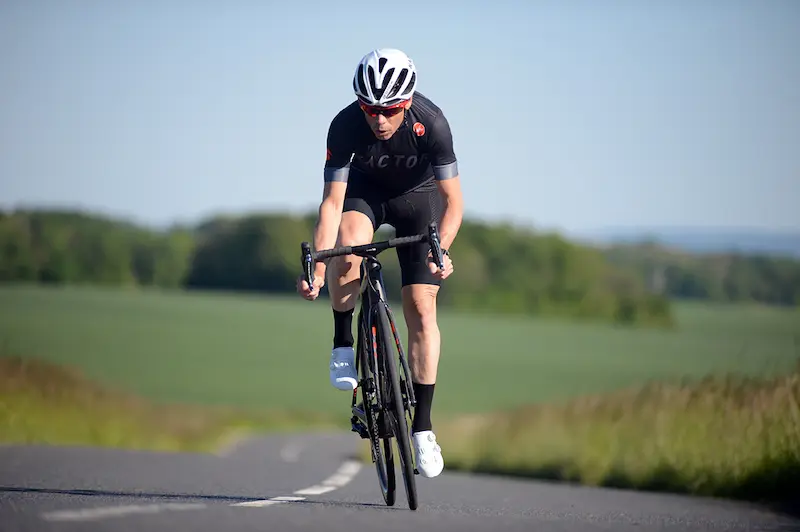
For a 70 kg cyclist riding an 8 kg bike with 1.5 kg of gear (shoes, helmet, clothing, glasses), losing 1 kg only saves 1.26% of the total weight. On an 8% gradient at 15 km/h, 1 kg less represents an approximate saving of 4.5 watts, which amounts to a 40-second gain over 15 km. The gain rises to 1 minute 20 seconds with 2 kg less, and to 2 minutes with 3 kg over the same distance. That’s little for training or casual riding, but a lot in competition, where 20 seconds can be the difference between getting back onto a good group at the top of a climb or not.
There are two options: lose body fat, or lighten the bike. The second option, however, is far more expensive than the first. It’s therefore better to work by elimination, starting with optimizing the rider’s weight.
=> SEE ALSO: Your Weight Questions Answered
Losing Weight to Climb Better
Looking at the respective masses of the rider and the equipment, potential weight savings are obviously easier to achieve on the rider. An entry-level race bike weighs around 10 kg. A pro bike hovers around 7 kg. Models with disc brakes are slightly heavier, but the UCI limit is still 6.8 kg for now. The maximum gain on this front is therefore limited to about 3 kg, but more often around 1.5 kg when moving from a mid-range bike to a high-end machine.
=> SEE ALSO: 2019/2020 Road Groupset Prices and Weights
On the other hand, there is a lot of talk about the apparent thinness of elite endurance athletes. And while their physiques sometimes suggest unhealthy eating habits, their low weight is both a cause and a consequence of their activity and the pursuit of performance: daily, dedicated training naturally promotes the loss of excess weight, and maintaining a low weight also helps with performance.
It is fairly common to find a body fat percentage of 20% in the population of our industrialized countries.
Many average athletes simply carry a few extra kilos. Let’s say that for a healthy 70 kg body, 20% body fat represents a total of 14 kg of fat. And 20% body fat is quite common in the population of our industrialized countries. If that same body gets leaner without any health risk and keeps the same lean mass (bones and muscles), it can drop to 7% body fat without reaching the extreme thinness sometimes seen in certain marathon runners or overall Tour de France contenders (who can go down to 4% body fat). At 7% body fat for 70 kg, there are only 4.9 kg of fat left, an approximate reduction of 9 kg from the starting weight. The calculation is actually a bit more complex, because logically, if a 70 kg person loses 9 kg, they then weigh only 61 kg. And 4.9 kg of fat for 61 kg actually works out to just over 8% body fat.
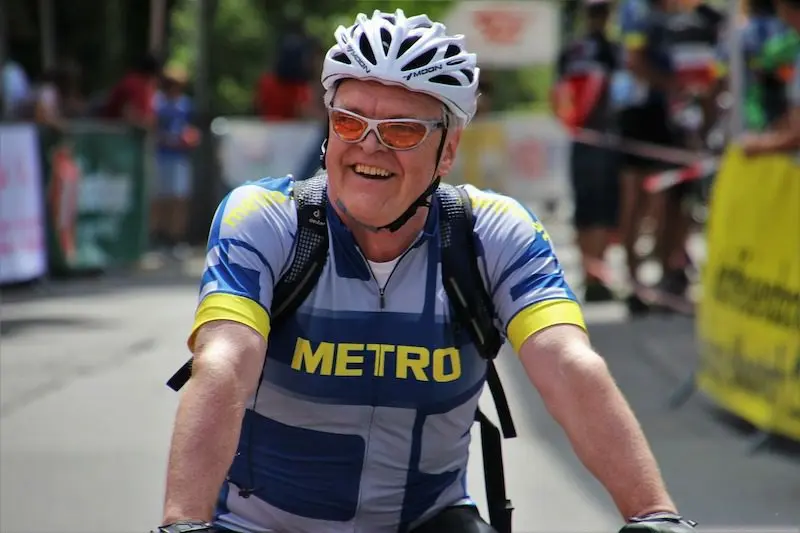
Following the reasoning above, a 9 kg weight loss yields a 6-minute gain on a 15 km climb at an average 8% gradient, all other things being equal. In the best case, the maximum gain hoped for from equipment is only 3 kg, or 2 minutes over the same distance.

It is therefore far more profitable to shed weight from body mass first, especially since this very often comes with better fitness and lower long-term health risks. And only once body weight is optimized (between 7 and 10% body fat, no less) should you turn your attention to equipment. Obviously, in light of these explanations, it sometimes seems pointless to debate a 50 g gain from two overpriced carbon bottle cages. Nevertheless, all other things still being equal, 50 g less means 2 seconds gained on a 15 km climb at an 8% average gradient. Some races are lost for less than that.
Running too
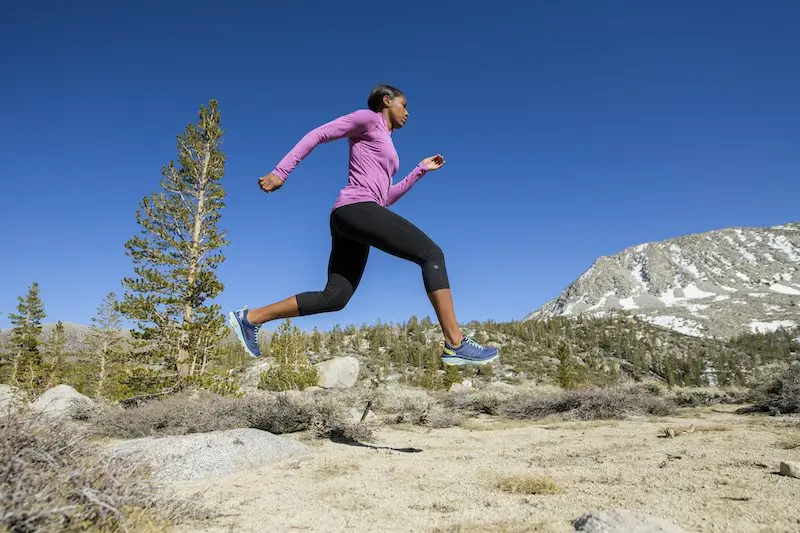
Runners are also concerned with weight optimization, and consequently triathletes have a double interest. Running performance depends directly on the mass to be moved, whether in terms of gravity or inertia. We’re talking, of course, about the excess weight you have to haul uphill, just as on the bike, but not only that. With every stride, and even on the flats, a runner expends energy proportional to their weight and to their center of gravity, which moves up and down with each bounce. That movement amounts to 6–8 centimeters in a long run, and up to 12 centimeters with each stride in a fast race. Specialists estimate that one extra kilo would cost 2 minutes and 30 seconds over a marathon.
With every stride, and even on the flats, a runner expends energy proportional to their weight and to their center of gravity, which moves up and down with each bounce.
But as on the bike, the other source of energy loss comes from the succession of accelerations and decelerations of the lower and upper limbs caused simply by running. And that’s without even counting voluntary changes of pace during competitive races. With each of these breaks in rhythm, the extra weight costs energy and weighs on performance.

Once again, the causes and consequences of dedicated, daily training mean that the world’s best marathon runners are very lean but also share very slender extremities (ankles, lower legs, wrists, forearms), and therefore very light ones, to limit the energy cost of each stride. This is also why very lightweight running shoes are favored in competition, since saving a hundred grams per pair compared with training models affects your time too, even if it means giving up some cushioning and comfort.
Weight, Even on the Flats
According to the laws of physics, weight plays no role at constant speed on the flats, where the drag coefficient is the dominant factor in performance. That said, beyond the athlete’s weight, their shape, or rather their shapes, does matter for aerodynamics, since more body volume means more wind resistance.

Poorly distributed fat can even change your riding position on the saddle, which is itself directly responsible for good airflow penetration. A protruding belly naturally makes it harder to hold a low position on the bike, and encourages the rider to sit up sooner to grab the brake hoods instead of the bottom of the handlebar.
=> SEE ALSO: Riding Faster by Being More Aerodynamic
Considering a constant speed as established because of the average speed would be a mistake, however. In reality, traffic, road signs, and the terrain impose constant accelerations and decelerations, which involve the inertia of the cyclist and their bike at every moment. This is even truer in competition, or even within a peloton, where you often have to brake and accelerate again, even in flat races.
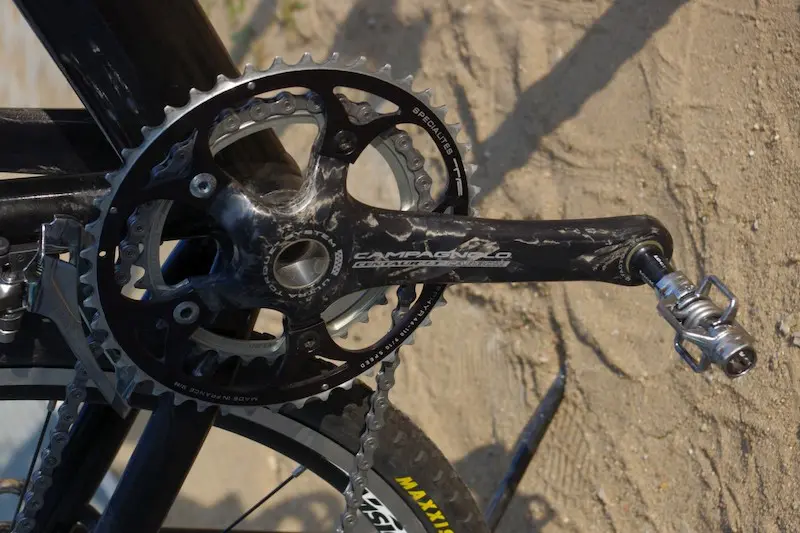
And if we go even further, we can observe the very motion of pedaling, which is anything but linear and constant. Over each pedal revolution, we can see slight variations in speed: a deceleration inherent to passing top and bottom dead centers, and an acceleration when the cranks are near horizontal. Considering the weight of each leg (around 20 kg) and a pedaling cadence of about 90 revolutions per minute, these speed variations start to add up over time.
=> SEE ALSO: Pedal Prices, Weights and Features: How to Choose?
A difference of a few grams is noticeable and contributes to a more economical pedal stroke, even on the flats. This can come down to the rider’s build (slim, light ankles and calves), but since you can’t slim down your joints, you can also take care of the rotating parts of the bike, namely the pedals, shoes, crankset, and most of all the wheels and tires. In this area, the weight issue is amplified by the diameter of the moving parts. Since the same small variations in rotational speed as in pedaling come into play, weight becomes an important factor, though certainly not the only one to consider.
Logic and Feel
It is well established that losing weight improves performance, uphill of course but also on the flats. It is also the most economical way to ride faster, and the easiest to put into practice. But a gradual loss of body weight does not necessarily bring an immediate improvement in how the bike feels, unlike lightening the equipment.
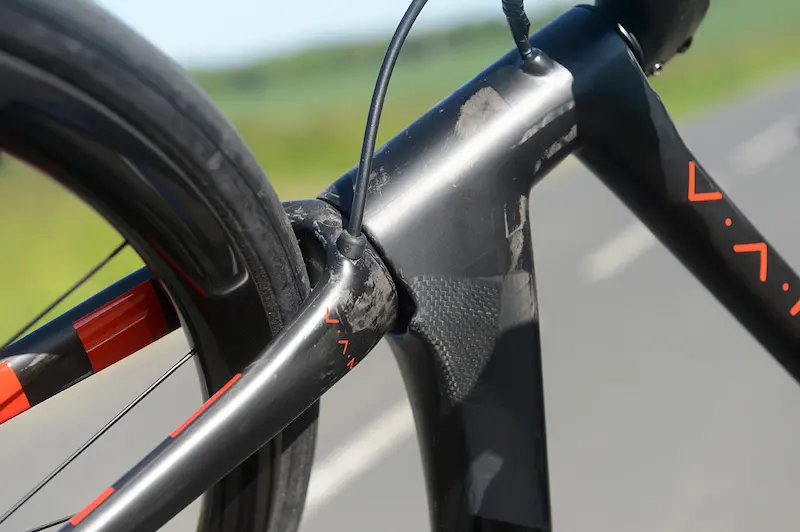
A lighter bike feels more lively and responsive, and lets you accelerate or get back up to speed faster or with less fatigue. Rotating masses, especially the wheels, noticeably influence this feeling. The gain in the bike’s total inertia on each acceleration is roughly equivalent to about twice the same weight saved on the frame or accessories. Lightening the wheels therefore radically changes how the same bike feels. The same goes for the saddle when standing up to pedal, or for the brake levers. And in this area, we are really talking about feel rather than pure, measurable performance.
A lighter bike feels more lively and responsive, and lets you accelerate or get back up to speed faster or with less fatigue.
Mathematically, it is therefore far more important to lose weight from body mass than from equipment in an endurance sport. But lightening your equipment isn’t necessarily reserved for elite athletes chasing the last watts. After all, nothing prevents you from indulging in a few sensations beyond pure reason.
=> SEE ALSO: All our Coaching articles
Share the post "How Much Time Can You Gain by Losing Weight?"