Share the post "Long-term review of the Assioma Duo power meter"
While power meters are becoming more common and affordable, the Italian company Favero Electronics offers a very accurate sensor for only €695. Our verdict after 7000 km of testing the Assioma Duo power meter pedals.
By David Polveroni – Photos: DP / DR
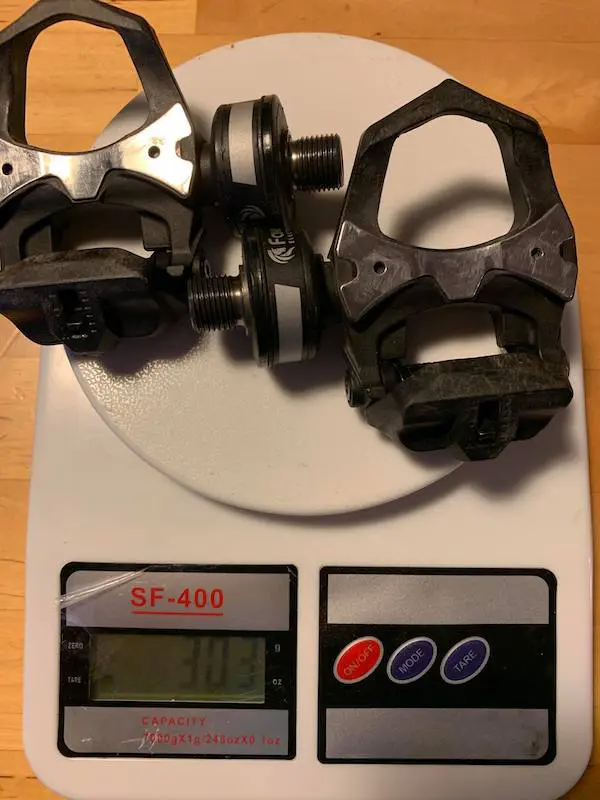
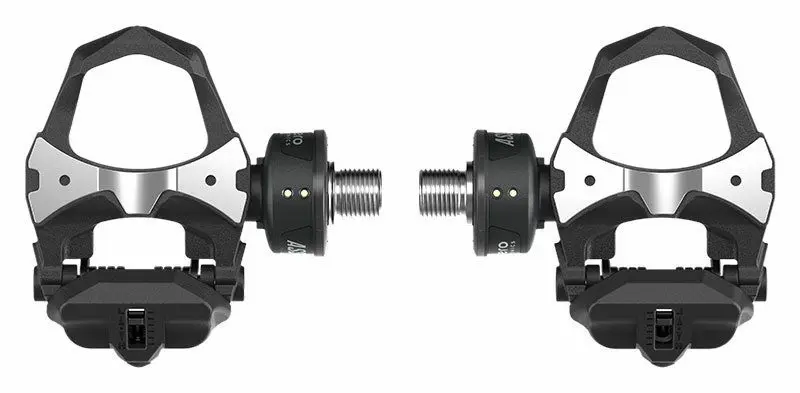
Let’s start with a brief product presentation: a pair of pedals based on the XPedo model, delivered with cleats with 6° of angular float (0° possible), compatible with Look Kéo cleats (only, otherwise the warranty is void). At 303 g on the scale, this adds only 74 g to a pair of Shimano R9100 pedals, or a little over 80 g to a pair of high-end Look pedals. So there’s no reason to deprive yourself of power, as this extra weight is negligible. In reality, we end up with exactly the same extra weight as for a Shimano RC-P9100-P power meter crankset.
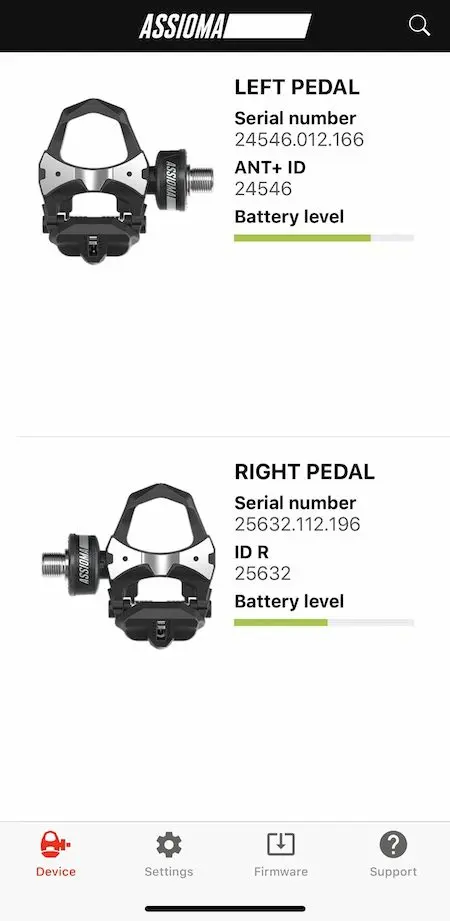
The batteries allow for use over two very intense weeks of training. With 50 hours of autonomy, there’s plenty of power to spare. But in case you forget, the bike computer emits a notification when the battery is low, 8 hours before it goes into standby. Recharging is then done with a cable, just like with a bike computer/GPS or Di2, EPS, or eTap batteries.
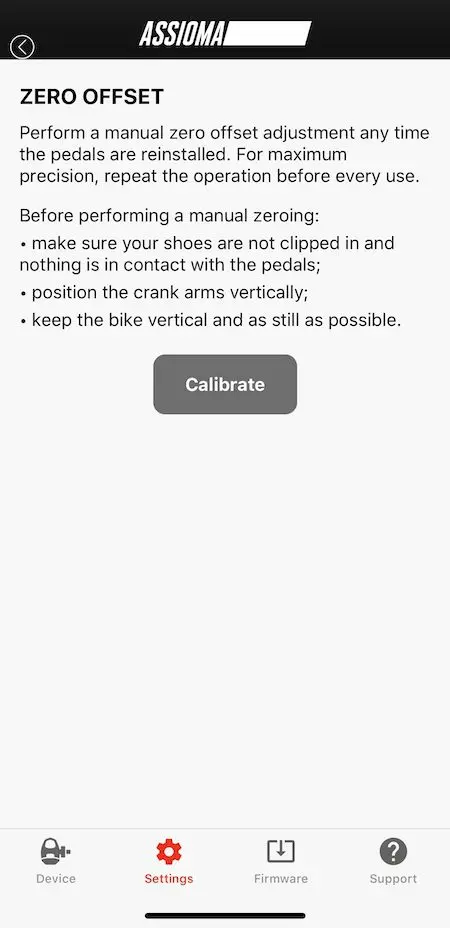
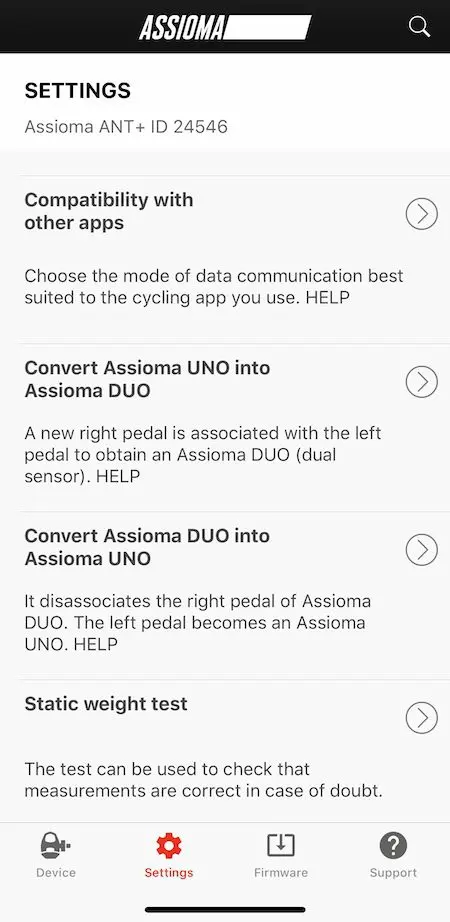
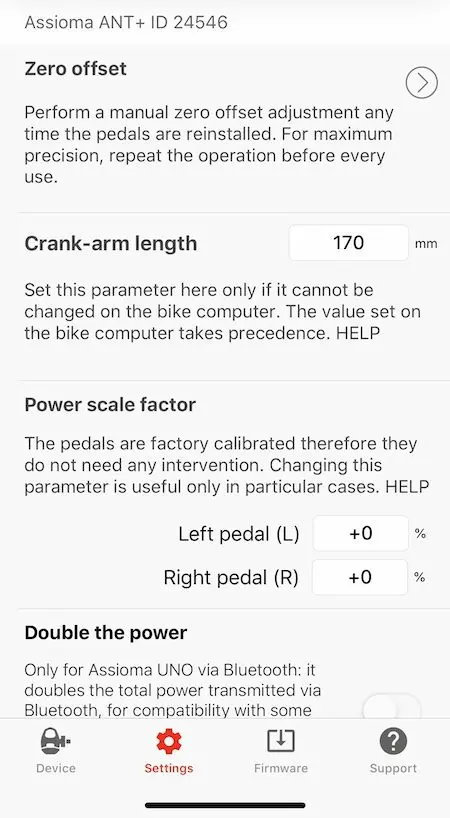
You then need to install the Assioma app, available for any smartphone. It allows you to register the product, check the charge status, and also configure it, with the following information to specify:
– Define crank length (don’t forget to do this in the bike computer)
– Allow for calibration (the entire procedure is linked in the app, very simple) and thus see any drifts of the sensor over time. Few manufacturers offer this, only SRM to my knowledge.
– Convert the Uno model to Duo, or vice versa in case of a return for service, for example. The Assioma Uno sensor consists of a single pedal that measures power from one side, and the data is then estimated by multiplying the found value by two.
– Perform an Offset, with the crank arm vertical, without any load applied. This tells the system what the 0 value is. You can do this more simply with your bike computer, preferably before each ride; it’s quick.
A very practical power meter
=> SEE ALSO : Power in cycling
Assioma pedals make it easy to switch from one bike to another with a quick turn of the wrench (included). This is one of the big advantages for me. Previously using Shimano Dura-Ace for pedals and power meter, I didn’t change the saddle height. No discomfort from this point of view, nor on the Q Factor. Note, however, that even if this is the most common pedal system, you need to be comfortable with the Look system to fully appreciate these pedals. You might be a little bothered if, for example, you needed more angular float or pivoting at the cleats (like Shimano, Time or Speedplay, whereas Look simply offers float at the rear).
=> SEE ALSO : Price, weight and features, how to choose your pedals?
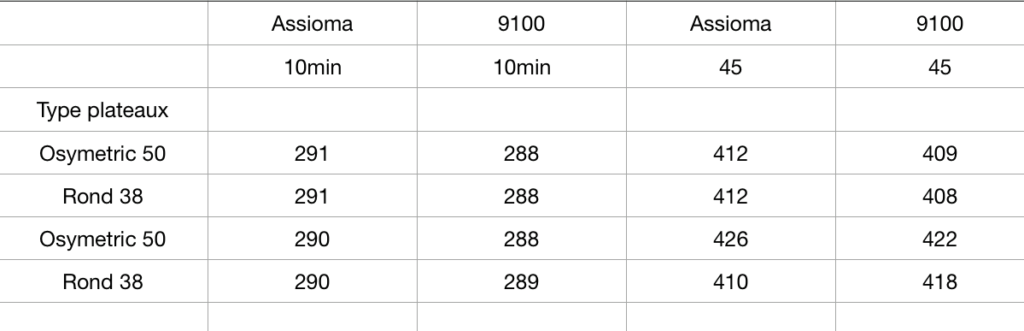
I used the Dura-Ace 9100 sensor and the Assioma in parallel for two weeks. The watts are very close, with (very) small differences that go both ways. This observation already confirms that the Assioma are perfectly usable regularly for training progress, and with complete confidence. This applies to both round and oval chainrings. Here, the advantage of the IAV system, which is supposed to detect the actual instantaneous angular velocity of the pedal stroke, and thus manage inaccuracies related to the use of oval chainrings, did not jump out at us. Or perhaps, the Shimano system handles oval chainrings very well.
However, this electronic gyroscope system normally allows for more precise power calculation, where many power meters lose a bit of accuracy. We’re talking first about irregular pedaling, especially on steep climbs, standing or sitting, where the cyclist tends to deliver very jerky pedal strokes with very pronounced variations in angular velocity. Then on an indoor trainer: each model has a braking system to recreate the right experience for the cyclist. This system changes from one model to another, and since the inertia produced has a direct impact on the angular velocity of the pedal rotation, there is an immediate influence on the power output. And finally with oval chainrings which are designed to take advantage of the pseudo-sinusoidal course of the pedaling torque. In this case, it is essential according to Favero Electronics to have a power meter capable of instantly detecting angular velocity, because variations in this velocity are not only inevitable, but even mechanically accentuated.
Accuracy in question
With IAV, the brand claims to deliver power measurement accuracy of ±1%, in any situation. And not just in a laboratory. And for those who systematically take SRM as the absolute reference, Favero Electronics specifies that today nothing proves that the German brand – certainly the first in the field and for more than 20 years – is the most accurate on the market.
This IAV technology also allows for the determination of Cycling Dynamics. That is, in addition to the right/left balance and pedaling efficiency or fluidity found on a Shimano power meter, here we have the ability to know at what point in the pedaling cycle power is delivered and for how long. This feature is visible on Garmin bike computers (520+, 530, 830, and 1030) or any other Ant+ device with Cycling Dynamics. For my part, I was hindered in my test because my Wahoo Elemnt Roam bike computer has not yet received the update allowing it to collect this information. The fact remains that this option is available, but not necessarily interesting from my point of view. There are many parameters to study before that in the context of power training.
=> SEE ALSO : How to gain watts?
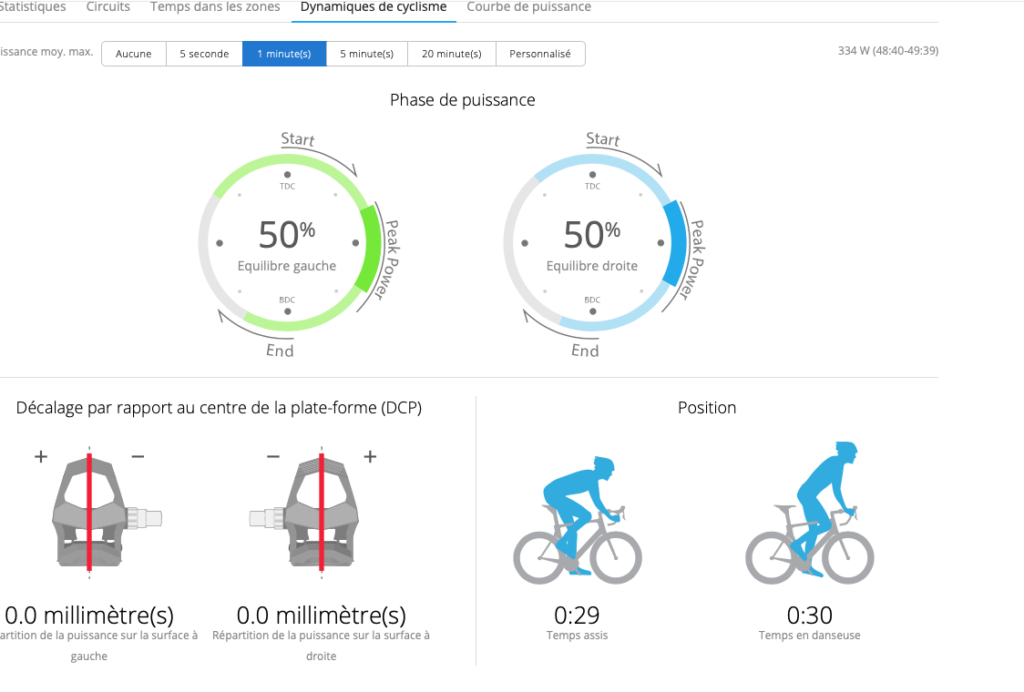
A more interesting piece of data is the time spent seated or out of the saddle. For a given interval or over the entire ride, this information is available, as well as the average power during that phase. For me, it allows me to see (well, I’ve suspected it for a very long time) that I produce more watts out of the saddle than seated.
Reliable pedals
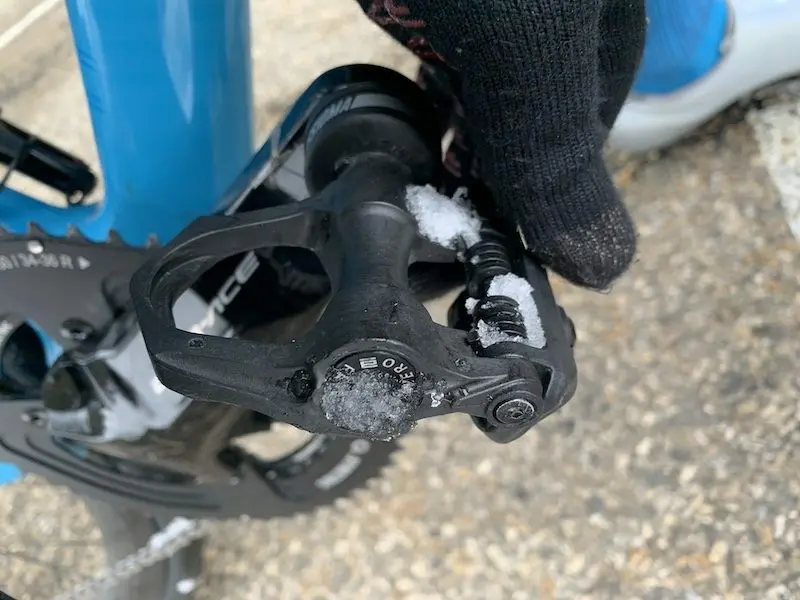
In terms of reliability, there’s nothing to fault with the Assioma pedals. The bearings are like new, meaning very smooth. This is impressive from my point of view, despite rides in all weather conditions and regular jet washes (without focusing on the bearings, however). Note that everything is available on their website in case of breakage or simply wear.
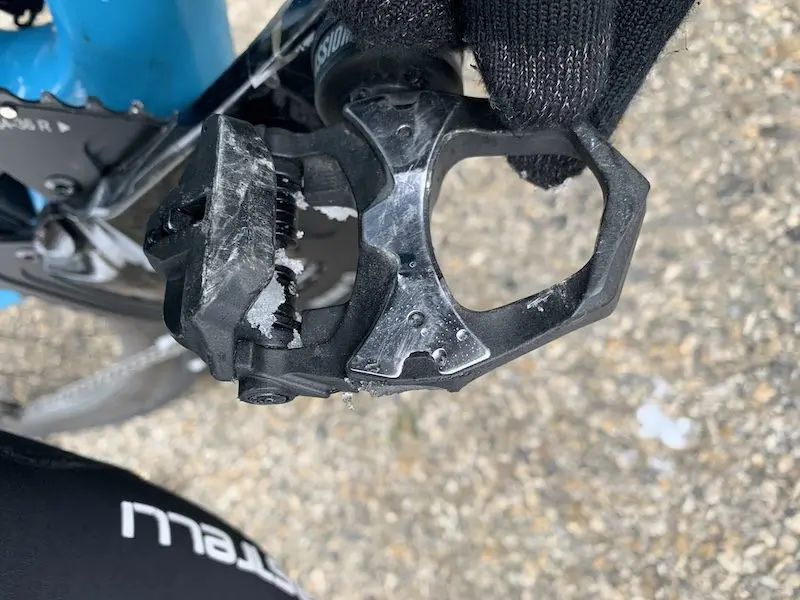
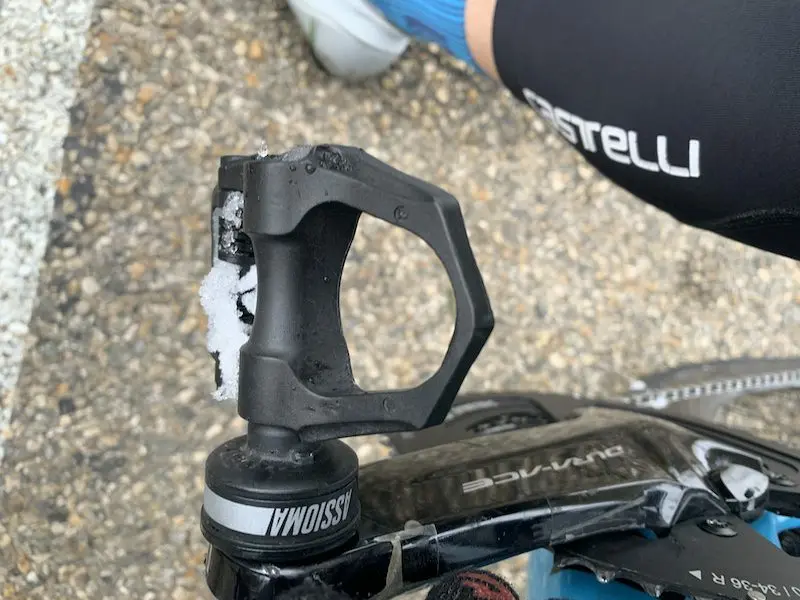
Also be careful with certain shoe covers that may rub against the prominent part of the pedals. You must ensure that no force is applied, which could damage the product. With neoprene shoe covers, I applied electrical tape to ensure there were no rubbing marks. This is mainly a precaution.
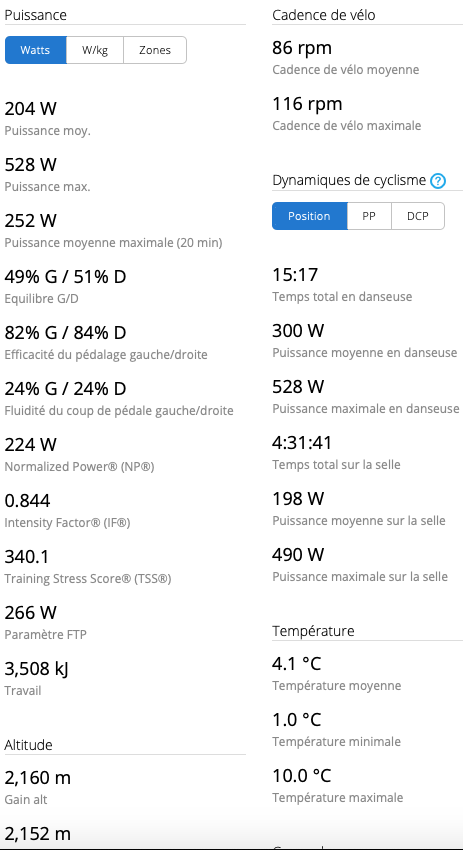
The advertised 1% accuracy is truly impressive. I was able to repeatedly perform tests by repeating a climb to the exact watt: I arrived at the same times every time. I didn’t notice any drift or strange data. The Assioma are very close to the Shimano sensor at low pedaling frequencies (such as on a climb), but I note a small difference (7 to 8 watts) when increasing the cadence, in favor of the Shimano. Perhaps this is due to the oval chainrings? But ultimately, these absolute values are not very important. What matters with this type of product is that the watts you produce are reproducible from one ride to the next. You then just need to establish a power profile with one sensor, and stick to it.
What matters with this type of product is that the watts you produce are reproducible from one ride to the next.
Finally, in terms of basic operation, foot stability is closer to Shimano than to Look, and that’s a good thing. This was what I feared most due to compatibility with Look cleats, and because once you’ve experienced the stability offered by Shimano pedals, it’s hard to do without it.
After more than 7000 km with these Assioma Duo pedals, I was impressed by this power meter, which offers one of the best compromises between accuracy, price, and practicality on the market. Not to mention exemplary communication from Favero Electronics, who will be able to answer your questions and guide you in case of after-sales service needs. And for this type of product, that’s truly fundamental.
=> SEE ALSO : Shimano RC-9100-P Power Meter Test
=> SEE ALSO : FSA Powerbox Power Meter Test
| FAVERO ELECTRONICS ASSIOMA DUO |
| RATING : ***** PROS : Accuracy, price, After-sales service/communication, transfer from one bike to another, calibration, change bearings and components yourself. CONS : In case of a fall, the sensor is more exposed, only compatible with Look, be careful with shoe covers. Power meter on left and right pedals PRICE : €695 |
| CONTACT : cycling.favero.com |
-> SEE ALSO : Our other gear tests
Share the post "Long-term review of the Assioma Duo power meter"