Share the post "Pinarello Dogma F12 Disk Review"
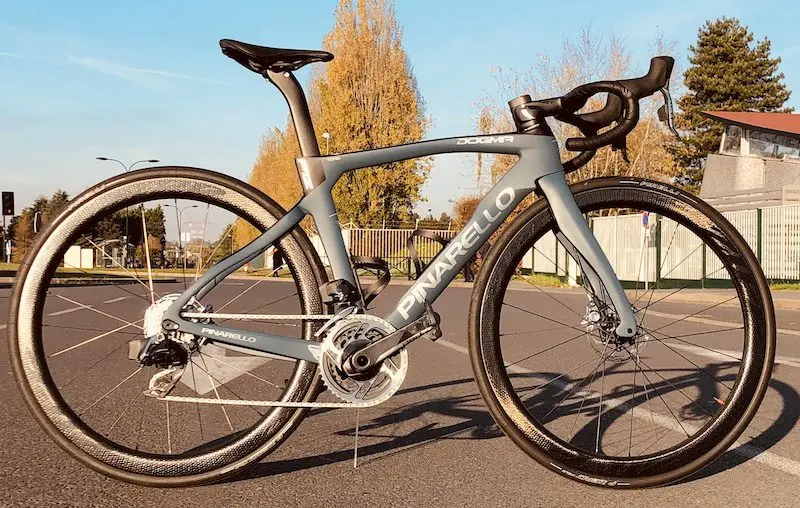
Unveiled in the spring and used by Egan Bernal (Team Ineos) to win the Tour de France in July, the Pinarello Dogma F12 is one of the benchmark high-end bikes of the moment. In its disc-brake version, it is an ultra-technological, fast, and efficient machine, with even good ride comfort.
By Guillaume Judas – Photos: 3bikes.fr / All rights reserved
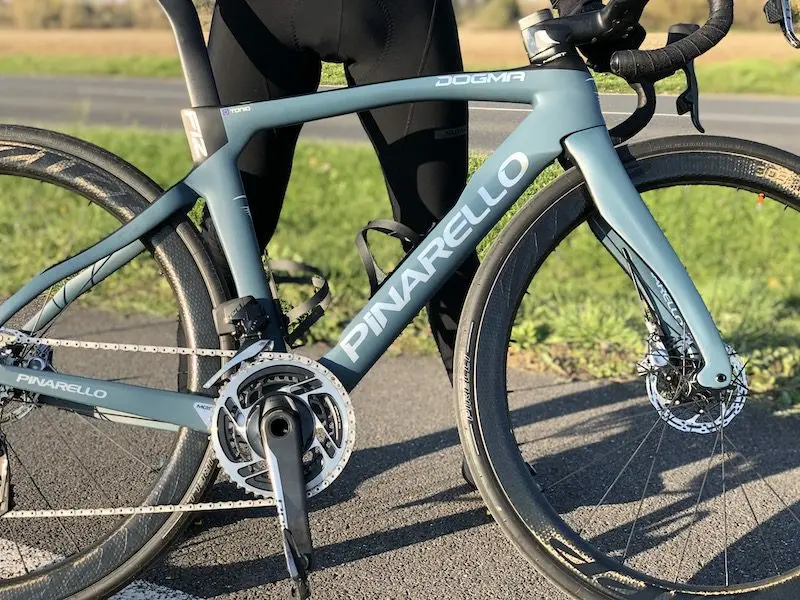
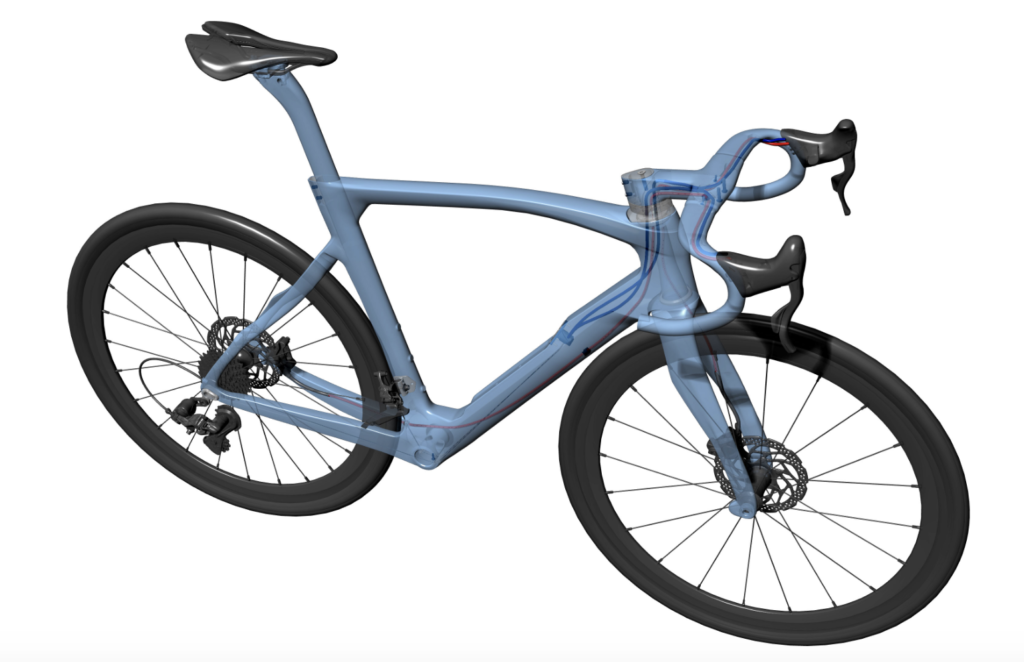
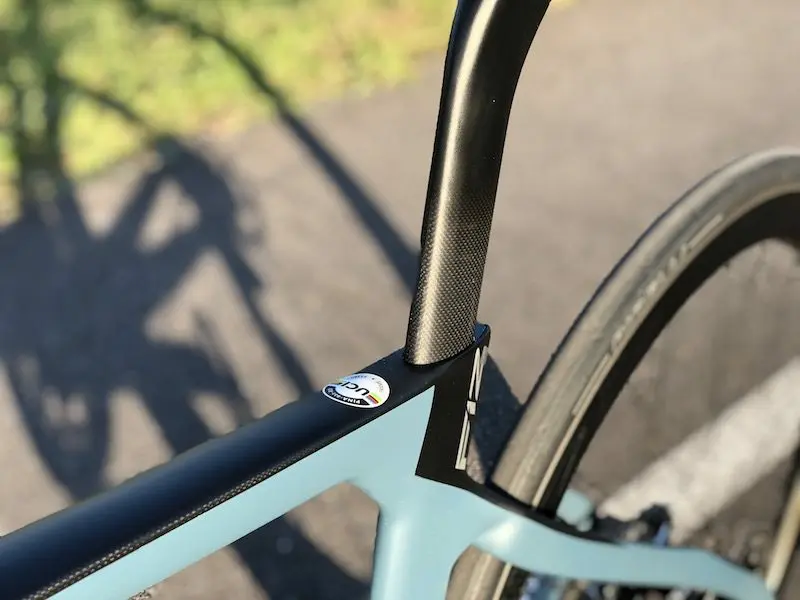
The Dogma F12 follows in the footsteps of the F8 (unveiled in 2014) and F10 (unveiled in early 2017), from which it takes – and further optimizes – the aerodynamic profile and asymmetry of the tubes. With almost total integration of cables and brake hoses, it follows current trends and asserts itself as one of the most desirable bikes of the moment.
It was with the Dogma F8 that Pinarello entered a new era five years ago, with one of the most wind-efficient frames of its time and at the same time one of the most versatile for hilly or even mountainous terrain. A bike that appealed to both Team Sky pro riders and many sportive cyclists when it was released. The Dogma F10 then evolved with a few aerodynamic details but was above all a little stiffer laterally.
=> SEE ALSO: Pinarello Dogma F10 Disk Review
The F12, finally, arrives with superior integration (with a dedicated cockpit), tubes with slightly more pronounced edges and somewhat more tortured shapes, even more visible asymmetry to counteract the forces exerted on the drivetrain side, and compatibility with larger tire widths. But still using the same carbon fibers as the two previous high-end models, Torayca T1100 1K Dream Carbon with Nanoalloy Technology.
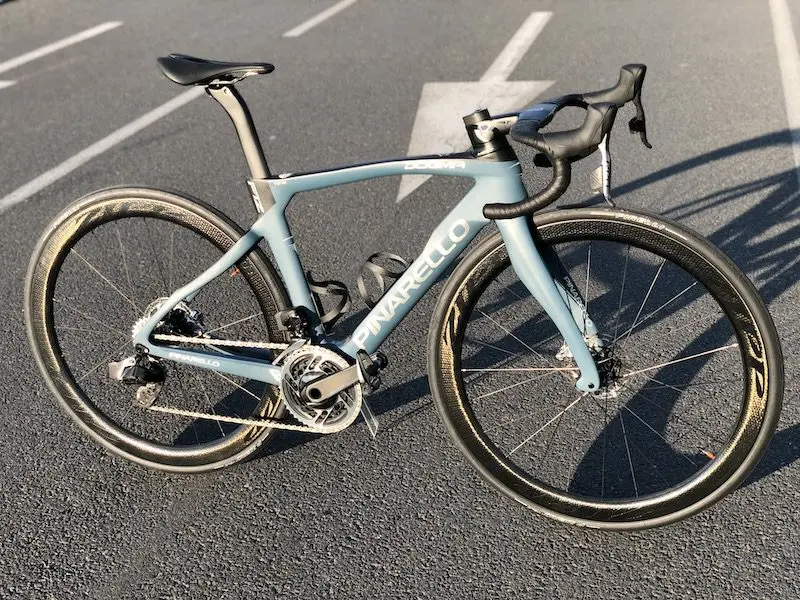
The result is a weight that doesn’t change much, around 6.8 kg for the rim-brake version and around 7.5 kg for the disc-brake version (complete). By opting for Fulcrum Racing Speed wheels, also in the catalog, instead of Zipp 303s, it would have been possible to save almost 200 g. Without being a featherweight (but this has never been Pinarello’s strong suit), the Dogma F12 Disk is therefore not far from the “light” bikes in its category.
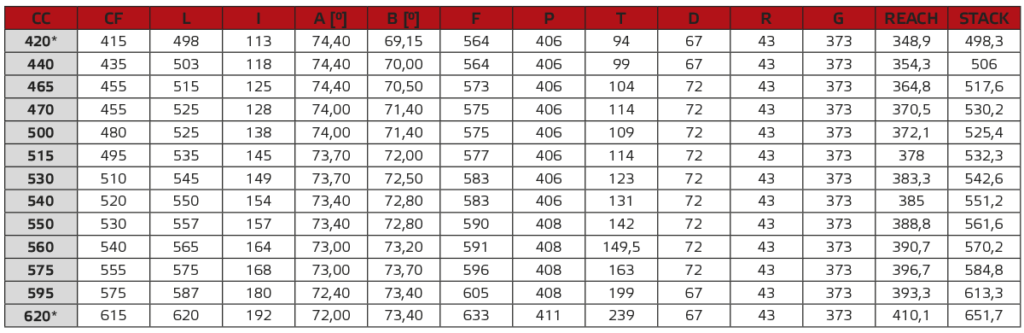
This high-end model is still offered in 13 different sizes, which is almost a record.
Even above the F12, there is the F12 Xlight (rim or disc brake) which allows for saving a few more tens of grams, but starting first by… foregoing paint! Only a matte black version is offered, whereas 9 colors are available with the F12 and F12 Disk, not to mention the My Way customization program, where many variations are possible. And this high-end model is still offered in 13 different sizes, which is almost a record.
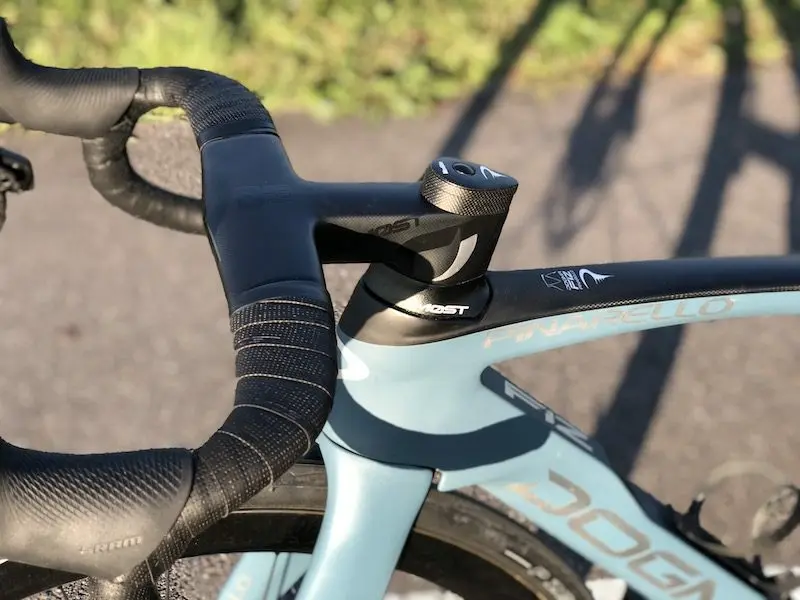
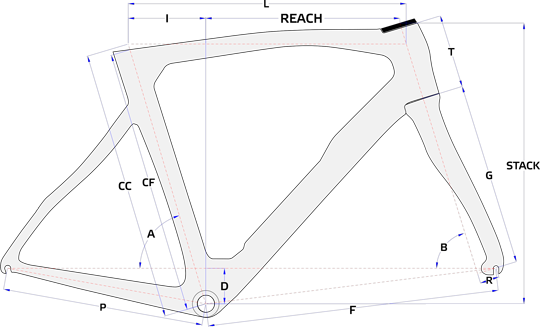
However, for those who already own a Pinarello, be aware: the new compatibility with 28mm tires slightly raises the Stack (height difference between the center of the bottom bracket shell and the highest part of the frame, at the head tube) compared to the F8/F10, which requires taking this into account when adjusting the cockpit.
Equipment: only high-end
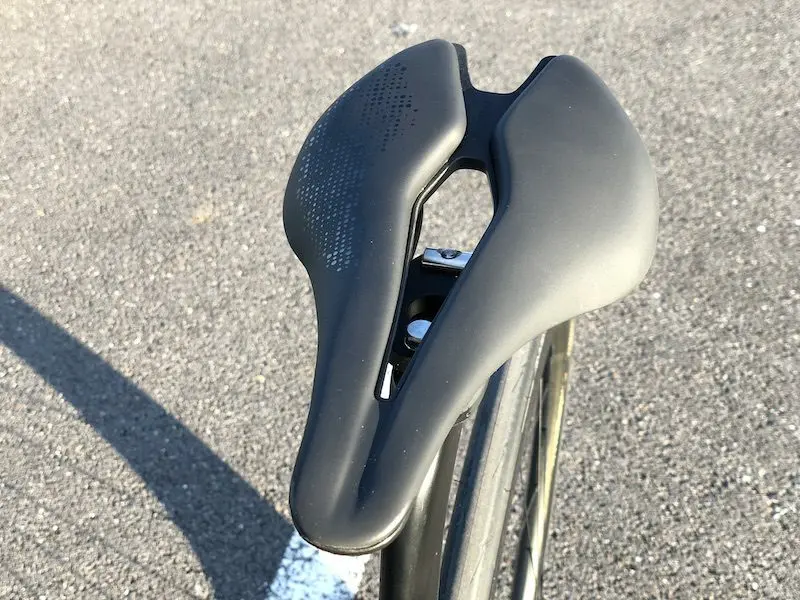
Five different builds are offered in the catalog, for both rim-brake and disc-brake versions. Campagnolo Super Record 12-speed EPS or mechanical, Shimano Dura-Ace 11-speed Di2 or mechanical, and Sram Red eTap AXS. Around these very high-end groupsets, you have a choice of 7 pairs of rim-brake wheels and 6 disc-brake wheels (Campagnolo Bora WTO, Fulcrum Racing Zero, Wind 40, Racing Speed, Zipp 303, and Lightweight Meleinstein). Prices range from €9,610 to €18,060 (with Lightweight wheels) for rim-brake, and from €10,220 to over €19,000 for disc-brake. To be more pragmatic, our test bike is equipped with Sram Red eTap AXS disc brakes with Zipp 303 wheels and is offered at a catalog price of €13,160 with the Talon Ultra handlebar, Most carbon saddle, and Pirelli tires. But it starts from €12,190 with Fulcrum Racing Zero wheels. Note that for aesthetic reasons, it is not possible to purchase a Pinarello F12 with Shimano or Sram and Campagnolo wheels.
In terms of equipment, the price of the Most Talon Ultra monocoque handlebar must be taken into account, as it is an integral part of the F12’s overall concept, with cables, wires, or brake hoses running entirely inside for the disc version, from the brake levers, through the steerer tube. It is aesthetically magnificent and perfectly finished, in addition to the aerodynamic gain achieved by streamlining the front of the cockpit.
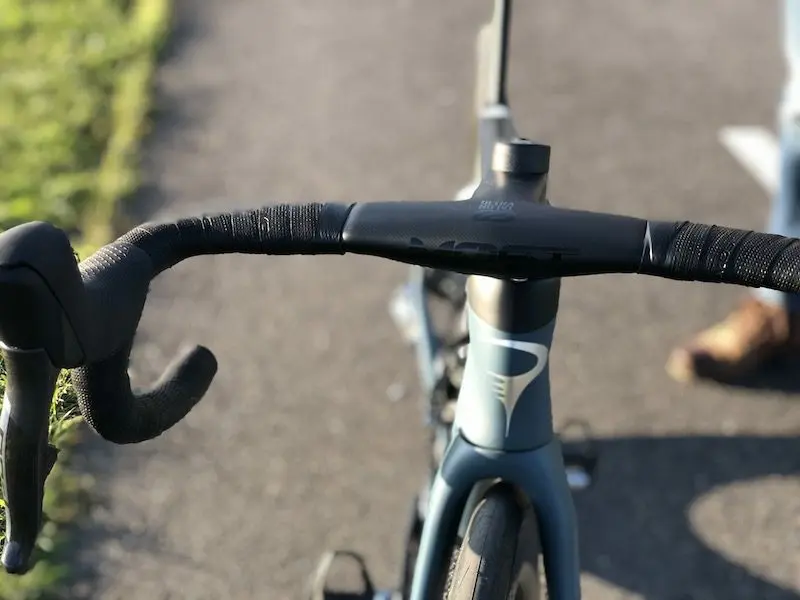
Unlike other competing solutions, the choice of a one-piece handlebar prevents angle adjustment of the handlebar. Both the stem angle and the drop bar angle depend on the head tube angle (and thus the frame size). However, it is still possible to mount a classic cockpit on the F12, but since the cables must pass through the inside of the head tube, a specific spacer ring must be added under the stem for cable entry.
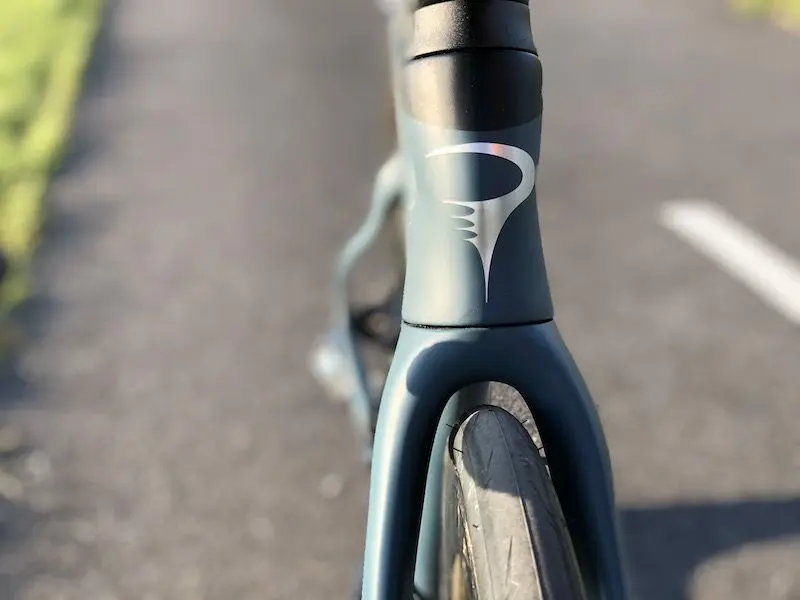
It should also be noted that as a very high-end brand, Pinarello supplies its bikes as much as possible with gearing, cranks, and cockpit at the requested dimensions. Yes, in our opinion, this is the minimum, but it is not always respected by the competition, except by special arrangement with the dealer.
=> SEE ALSO: Specialized Venge S-Works Review
A soaring price
This ultra-selective equipment comes with a sales price that has soared in five years, with an increase of 25 to 30% between the high-end of the past and that of today. A runaway increase justified by brands through improved technologies. But for what benefit? With the Sram Red eTap AXS disc groupset, the F12 gains more secure braking in certain conditions and a twelfth cog at the rear. But it gains about 700 g, is much more complicated in terms of maintenance, and disrupts riding with various noises from brake rub and drivetrain.
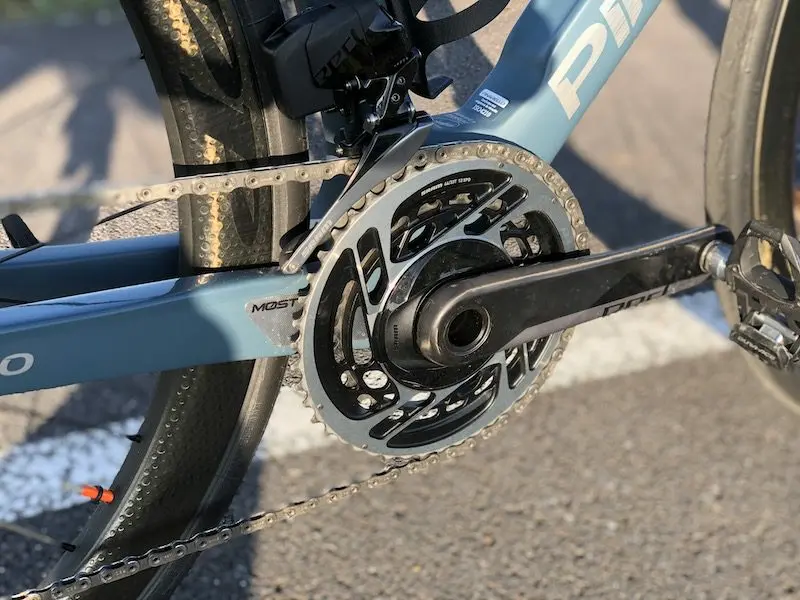
A drivetrain that seems less fluid in terms of chain wrap and overall efficiency than the 11-speed version. As for aerodynamics, Pinarello communicates an 8-watt gain at 40 km/h between the F12 Disk and the F10 Disk, but it is true that the latter was not optimized for the transition to this type of braking. We also know that disc braking offers 3 to 7 watts more air resistance depending on the wind angle compared to rim braking. A “cost” barely improved by the integration of cables in the cockpit.
The F12 Disk proves highly desirable for those who dream of cutting-edge equipment.
Ultimately, the F12 Disk is a bike that offers all the latest developments in the cycling industry, and as a result, proves highly desirable for those who dream of cutting-edge equipment. But it doesn’t completely revolutionize the practice either, as a hybrid bike might, for example.
=> SEE ALSO: Disc braking for road bikes: the situation in 2019
On the road
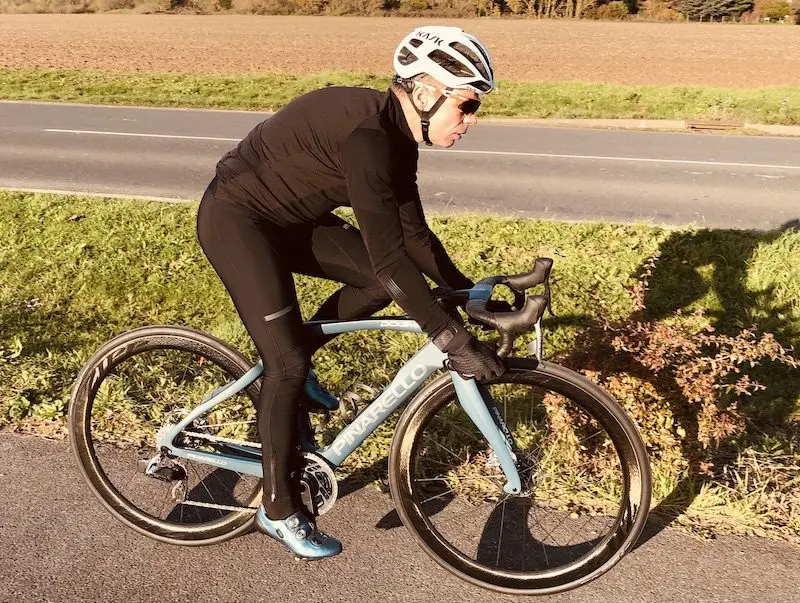
Fortunately, a few rides on the road are enough to dispel any doubts about the Dogma F12’s effectiveness. Pinarello claims a 10% improvement in lateral stiffness between the F12 and the F10. While we cannot verify this with figures, or even in terms of pure on-the-ground performance, we first notice an even greater compactness of the entire bike compared to the F10. This translates into a truly complete sense of unity between the front and rear of the bike. The front end doesn’t budge an inch during energetic accelerations or power climbs, with a truly rigid monocoque handlebar that seems to be completely one with the head tube and fork.
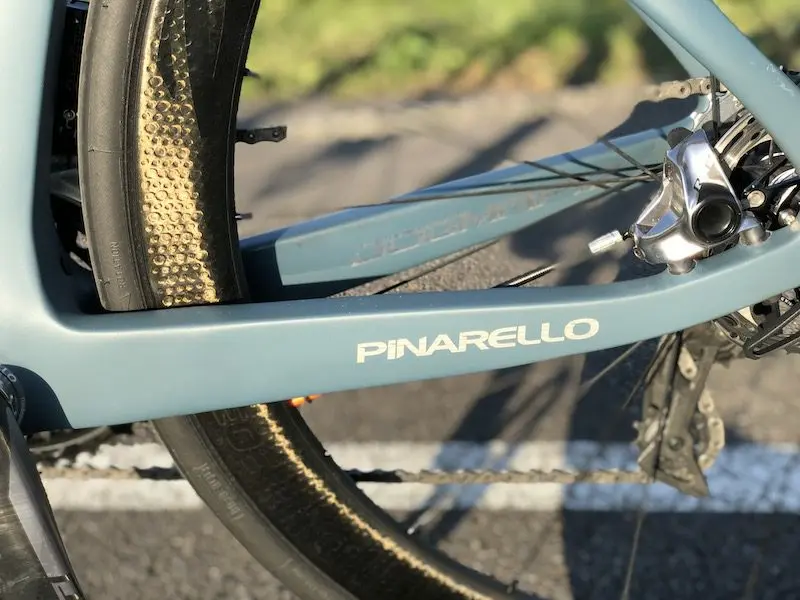
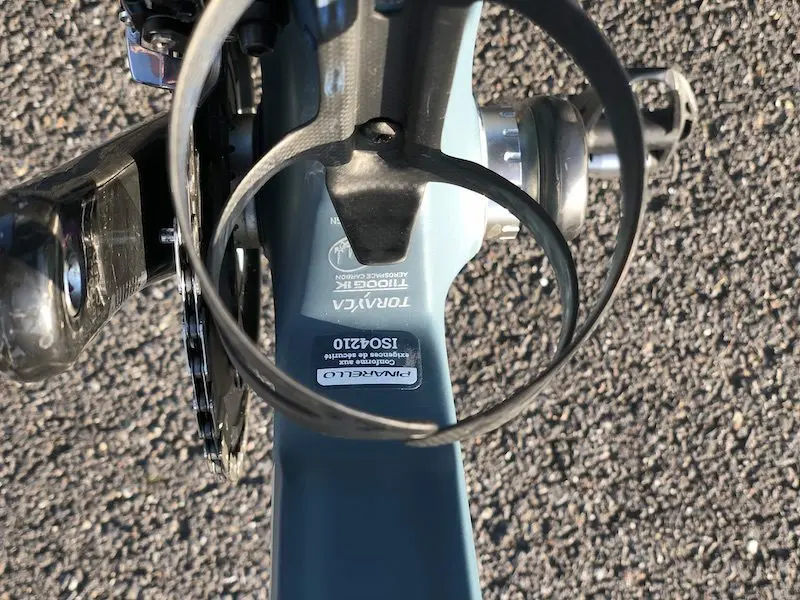
The rear follows without seeming to lag, which even allows one to forget the slight extra weight induced by disc braking. The Dogma F12 is a rigid competition bike, but it proves lively and responsive, making it pleasant to ride at usual training speeds. But it is obviously when picking up speed that the bike performs at its best. While it feels firm under the pedal, it is far from inert thanks to its overall rigidity, as we saw earlier. All it takes is a bit of physical condition to get it up to speed, which it then easily maintains thanks to its general rolling qualities. We once again find the famous Pinarello identity, with bikes that always seem well-planted on the road and move perfectly in a straight line.
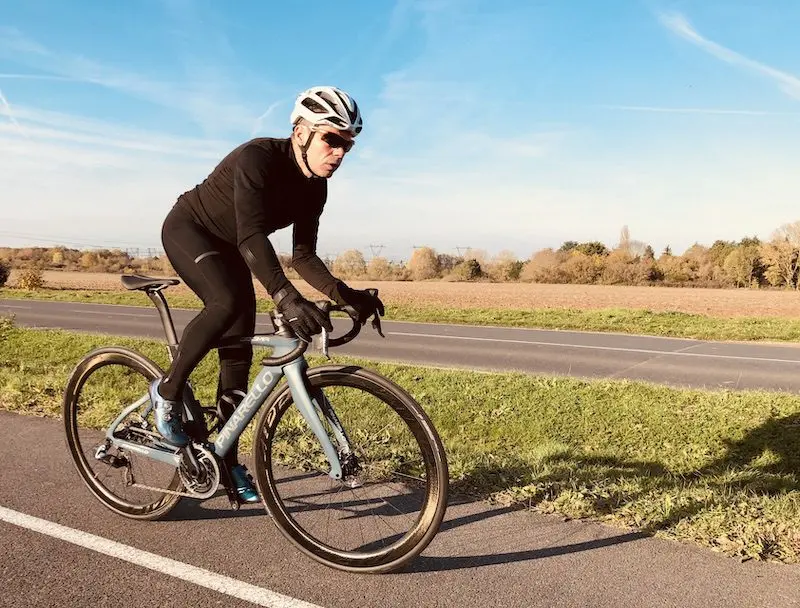
On climbs, it can be a bit difficult to handle on steep gradients, not because of its 7.5 kg, which are almost imperceptible thanks to its overall efficiency, but rather due to the stiffness of the cockpit and the absence of a “spring” effect from the machine when pedaling is not perfectly harmonious and coordinated. This is not the case on long climbs tackled at a steady pace, where the bike again stays well in line.
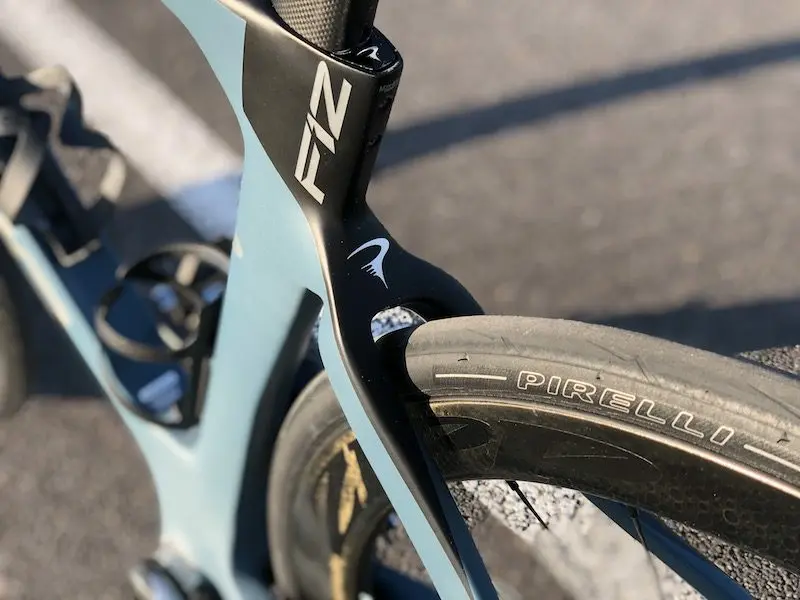
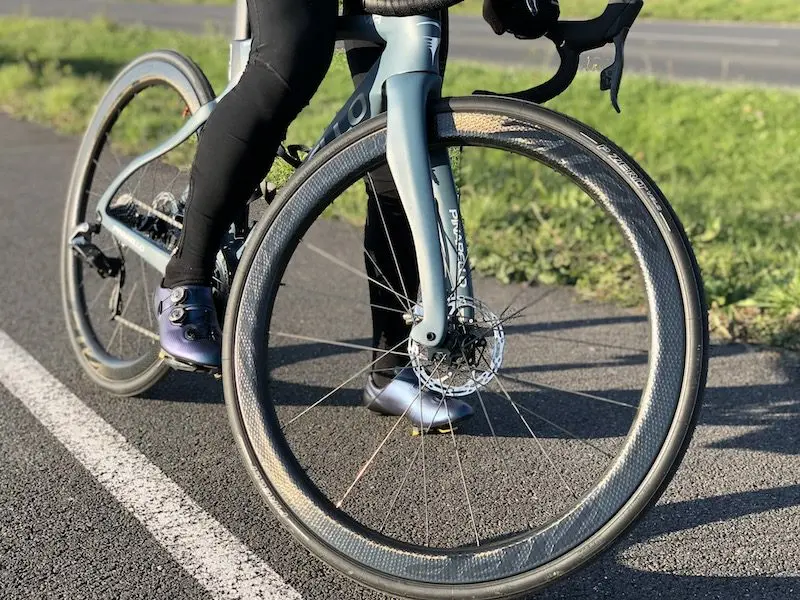
High-speed accelerations or launched sprints don’t destabilize it one bit. It’s a super stable pro bike that never seems to come apart under energetic pedaling. We also appreciate the firmness of its steering, as well as the feeling of security induced by the handling and tracking of the whole. Although efficient in the wind – at least that’s the impression it gives given the speed displayed on the bike computer – it remains sensitive to crosswinds with its 45mm deep wheels and brake rotors, especially at the front. It’s a competition machine that needs to be held firmly.
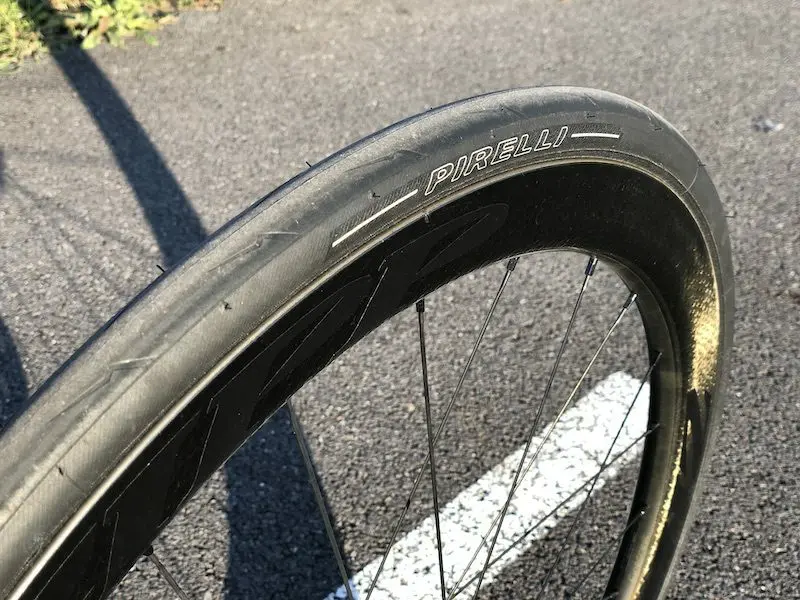
The wheels, in particular, are exceptionally wide with an external width of 29.9 mm. Mounted with Pirelli PZero Vélo 700×25 tires, these actually measure… 29 mm wide! In our opinion, there’s no need for anything larger, even if the bike accepts larger tires. Aerodynamically, ideally the rim width should be 5% greater than the tire width, according to Zipp. We’re there. This “generous” setup at least has the advantage of offering good grip, but above all, surprisingly good ride comfort, even with inflation slightly above 7 bar (we’re using 700×25 tires, let’s remember). The bike certainly transmits large impacts, but it doesn’t bounce, dissipates small vibrations correctly, and ultimately proves more comfortable than the F10.
An extraordinary bike
At over €13,000, the Pinarello Dogma F12 Disk is an extraordinary bike in every respect. On paper, it makes you pay a very high price for its technological extravagance, including a frame meticulously designed for aerodynamics, a profiled and integrated cockpit, 12 cogs, and disc braking, but more pragmatically, the choice it offers between 13 frame sizes and 9 colors.
A technology sometimes debatable in terms of pure performance if we consider, for example, disc braking and 12 speeds. A rim-brake F12 with 11 speeds is still lighter today and, in our opinion, more efficient in the wind.
What remains is a generally fabulous performance on the flats, descents, and rolling hills, as Pinarello bikes have always delivered for several generations. This makes the Dogma F12 Disk both addictive and endearing, as long as you’ve saved enough money to afford a bike that’s a little more than just a race machine.
| PINARELLO DOGMA F12 DISK |
| RATING: ***** PROS: Efficiency, safety, stiffness, handling, comfort for this type of machine FRAME: Dogma F12 Disk Toyayca T1100 1K carbon, nanoalloy technology
PRICE: €13,160 |
| CONTACT: pinarello.com |
-> SEE ALSO: Our other gear reviews
Share the post "Pinarello Dogma F12 Disk Review"