Share the post "Review of Julian Alaphilippe’s Specialized S-Works Turbo Creo SL"
At a time when every major road bike brand offers at least one electric-assist bike, Specialized once again stands out by developing its own system, with the S-Works Turbo Creo SL as its spearhead. We exclusively tested the bike used by Julian Alaphilippe during the Tour de France rest day in Albi. Despite a significant price tag, the machine has many advantages.
By Guillaume Judas – Photos: @3bikes / All rights reserved
It’s one of the big current trends: all major brands offer their version of the electric-assist road bike, designed to give a boost to those whose physical condition is not sufficient to keep up with friends on difficult routes. These new models are discreet and lightweight, not mopeds, and are more accurately called Hybrids. We are now seeing sleek and lightweight machines, with very discreet assistance. These bikes have also become lighter, approaching traditional road bikes. Where the question of assistance management, autonomy, and regulation used to arise, modern motors have become smoother and less intrusive.
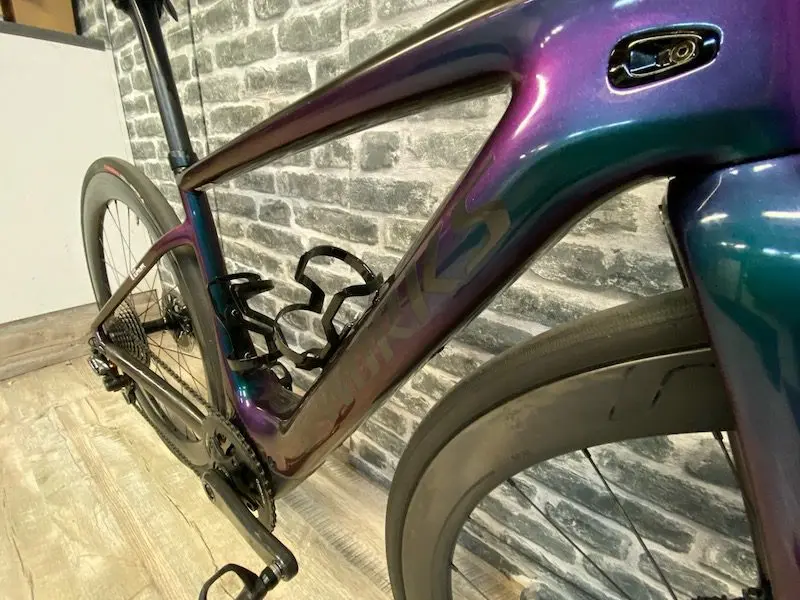
In the face of many voices raised against the very principle of electric-assist bikes, most manufacturers have chosen moderation rather than overdoing it in terms of assistance and power. This is also the case with this high-end S-Works Specialized Turbo Creo SL, which offers a weight and handling close to a traditional road bike when the assistance is off, and which provides just enough assistance to maintain the illusion of being in shape on climbs and particularly on long ascents, without radically transforming the riding experience. This is one of the brand’s arguments: to offer an experience that “extends” your capabilities, in the most natural way possible. This is indeed what emerged from our field test.
This bike offers just enough assistance to maintain the illusion of being in shape on climbs.
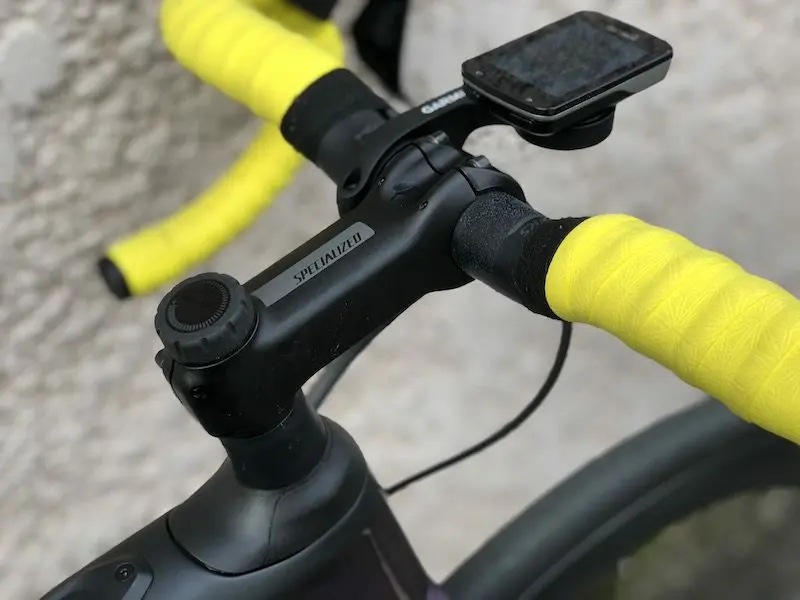
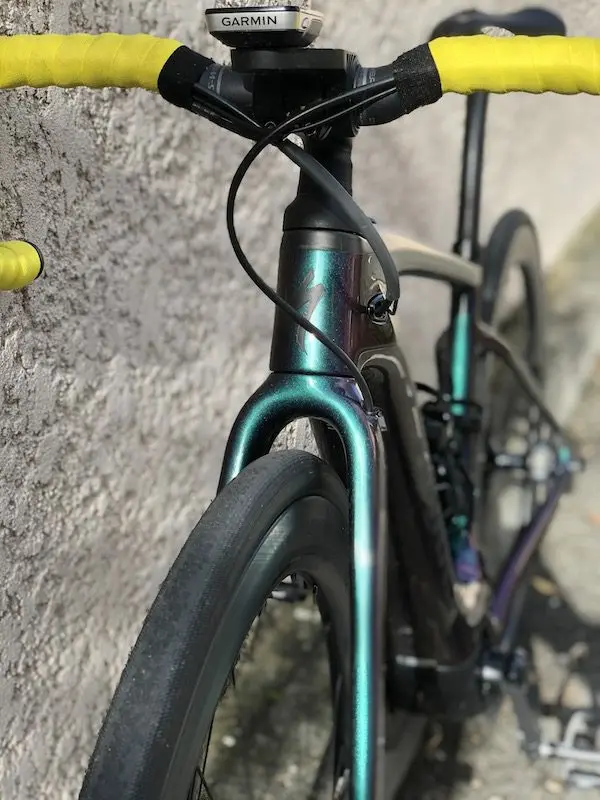
This particular bike has a story. Specialized officially announced the release of this innovative model on the first rest day of the Tour de France in Albi. Julian Alaphilippe was then in the yellow jersey, and with his Deceuninck – Quick Step teammates, he rode this bike, which is of course forbidden in competition, during the traditional opener ride. It is this same test bike used by the Frenchman that we tested, even with the yellow handlebar tape installed by his mechanics.
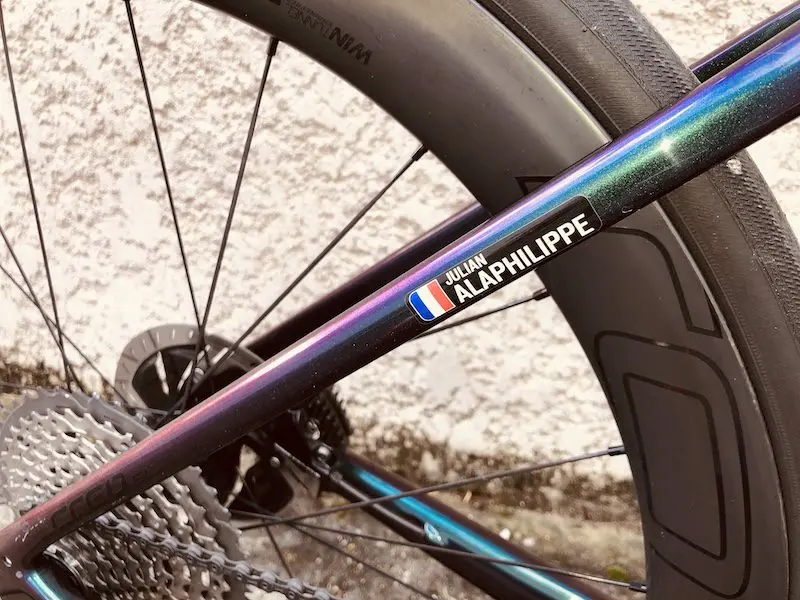
A new motorization
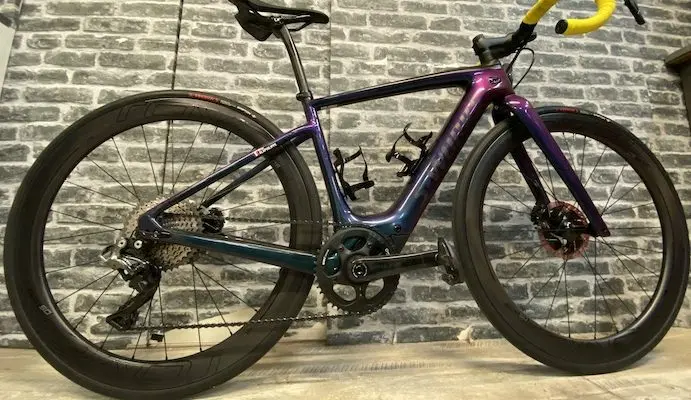
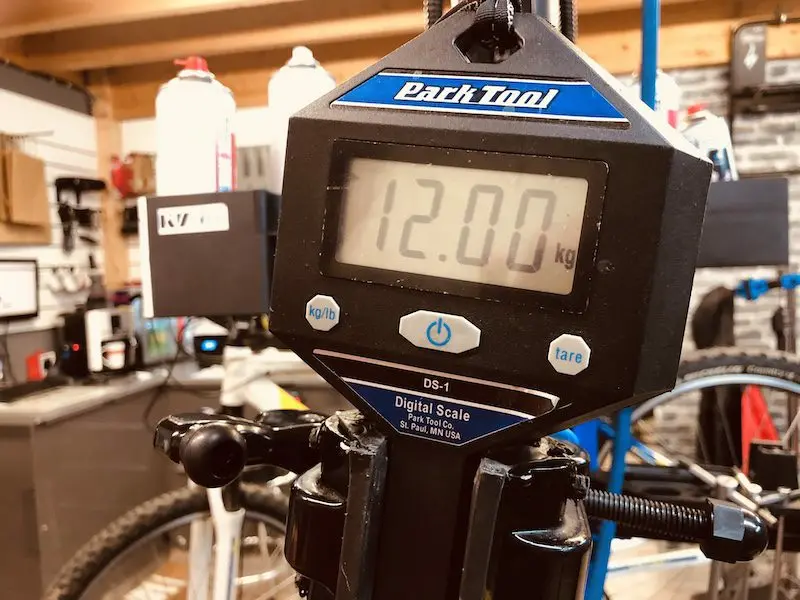
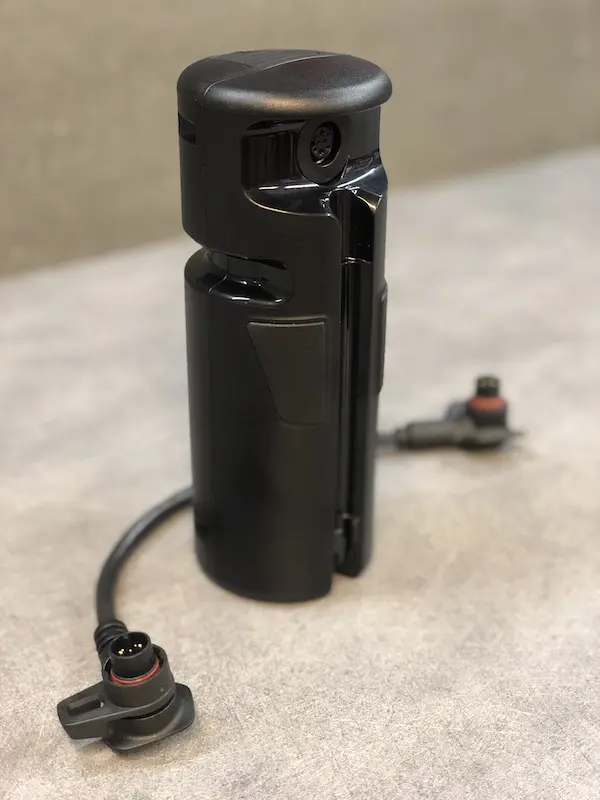
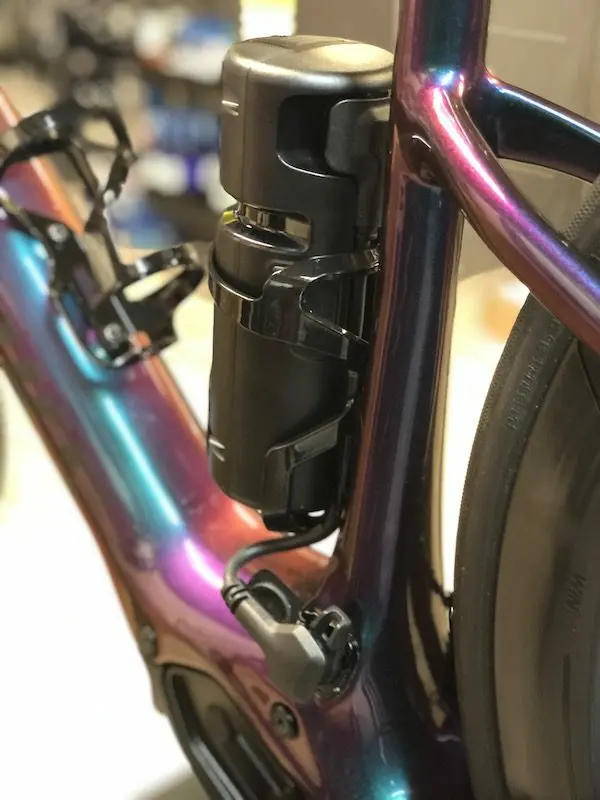
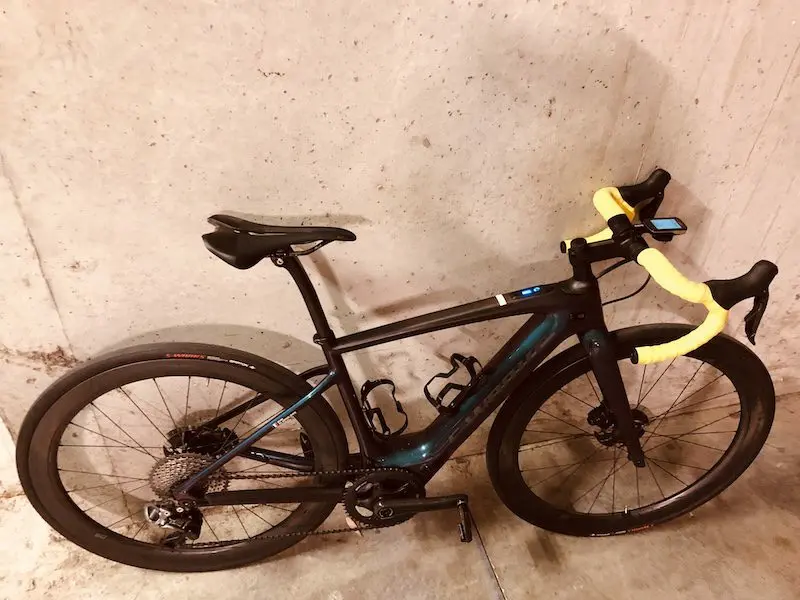
The price of this version is very high, at €12,499, with Shimano Dura-Ace / XTR Di2 equipment, Roval CLX 50 wheels, and an additional range extender battery that provides up to 65 km of extra autonomy. The complete bike weighs exactly 12 kg, and 500 g more with the additional battery, while offering up to 195 km in “assisted” mode. The S-Works Turbo Creo SL is simply the lightest bike in its category.
Another Expert version of the Turbo Creo SL exists, a little heavier, at €8,499 with Ultegra Di2 and Roval CL 38, but without the additional battery (optional at around €400), and there’s even a Turbo Creo SL Expert EVO at the same price in Gravel mode. This is still very expensive when other brands have entered this product family with models around €6,000. But the frame (common to the three S-Works, Expert, and Expert Evo versions) is very high-performance here, made of Fact 11r carbon fibers, and it features an integrated Future Shock 2.0 damping system in the head tube, like the brand’s Roubaix model. This hybrid bike is therefore a very high-level endurance-oriented bike, equipped with proprietary technology, and different more affordable versions should gradually emerge.
Because the different types of motorization available on the market were not sufficient for Specialized, which decided to develop its own system to meet the brand’s requirements in terms of handling, evolution, and autonomy.
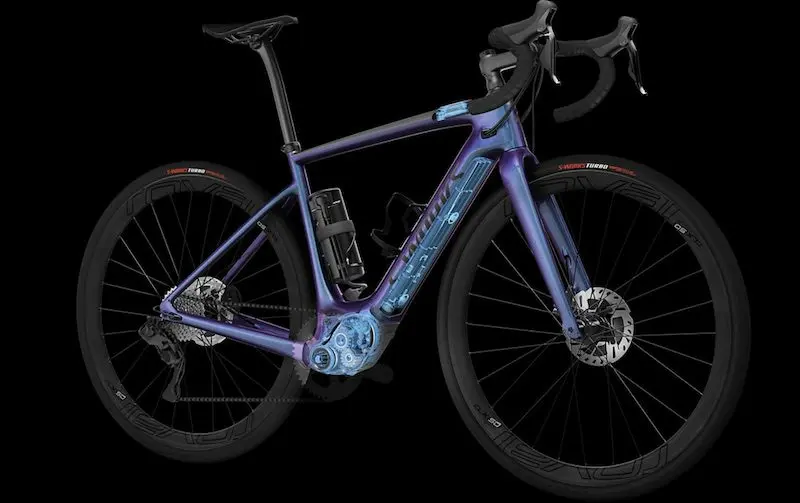
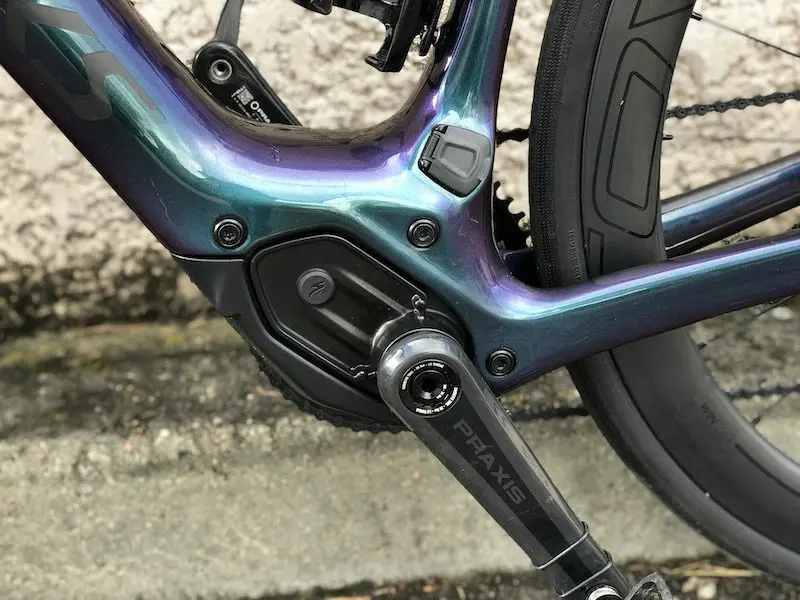
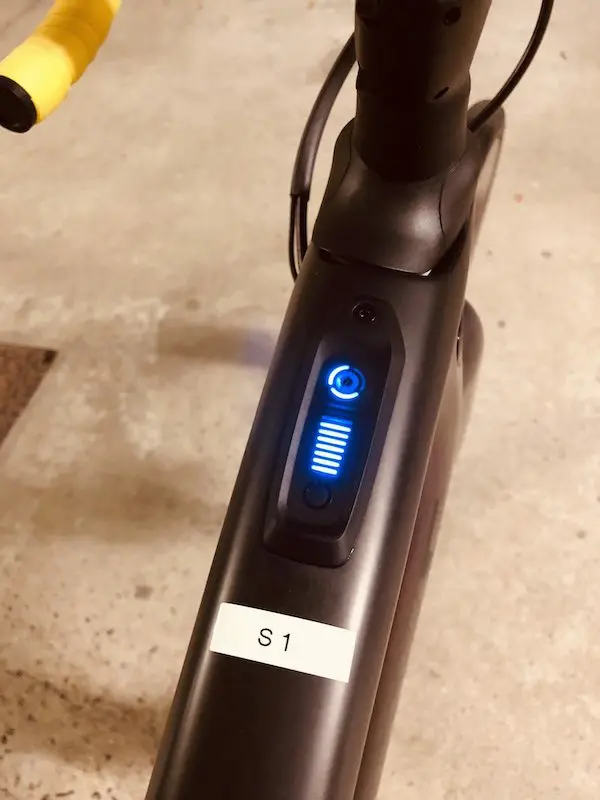
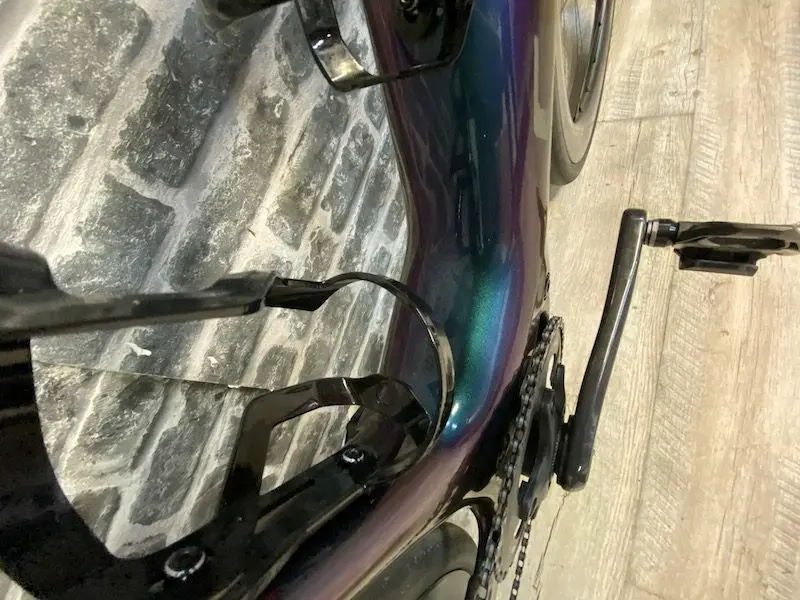
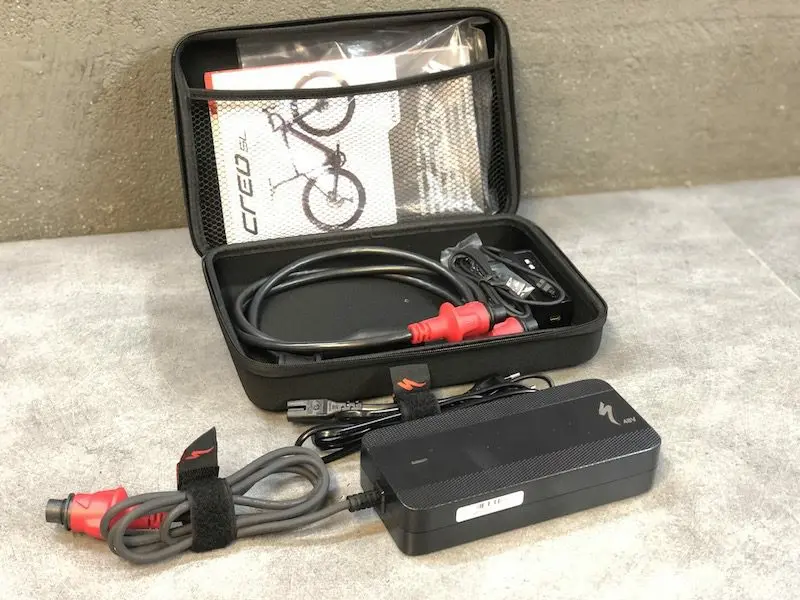
The SL 1.1 mid-drive motor provides up to 240 watts of assistance, and a range of up to 130 km with an internal 320Wh battery. It weighs just under 2 kg and is positioned near the bottom bracket shell, which lowers the bike’s center of gravity for very natural handling. The auxiliary battery offers 160Wh of power to increase range, as mentioned above. By regulation, assistance cuts out at 25 km/h, but in practice, it “pushes” up to 27 or 28 km/h according to the Garmin GPS speed. The bike does not come with a dedicated display, but the three assistance levels are selected using a single button that cycles through the modes. These can be customized using a smartphone application to optimize range if necessary, depending on the difficulty of the route and your weight.
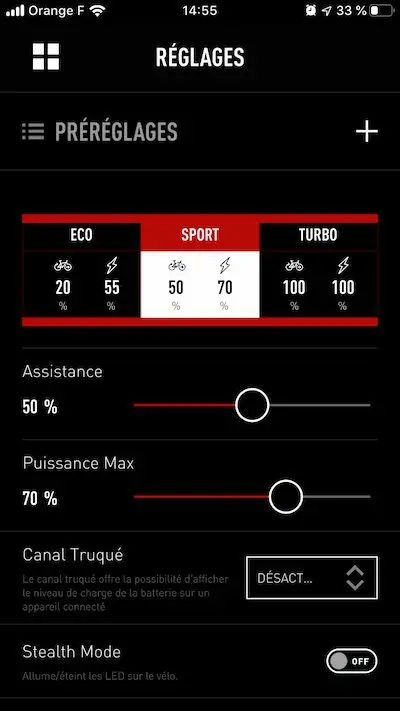
Another advantage of the proprietary system: the crankset has an internal power sensor and cadence sensor, compatible with any ANT+ bike computer. Power and cadence are therefore displayed as with any power-measuring crankset. Obviously, we are talking about the combined power of the motor and your legs. This feature also allows you to manage battery autonomy by learning to master the additional torque and power provided by the Turbo Creo SL.
A bike for long distances
Apart from an overweight of just over 4 kg (motor + battery) compared to an endurance-oriented bike with an equivalent equipment level, the S-Works Turbo Creo SL could also largely fall into this category of machines. It certainly only has 11 speeds, because the motor’s characteristics require a single chainring at the front, but these are compensated by a wide range cassette at the rear. To manage the 11 to 42 tooth cogs, an XTR Di2 mountain bike derailleur is necessary.
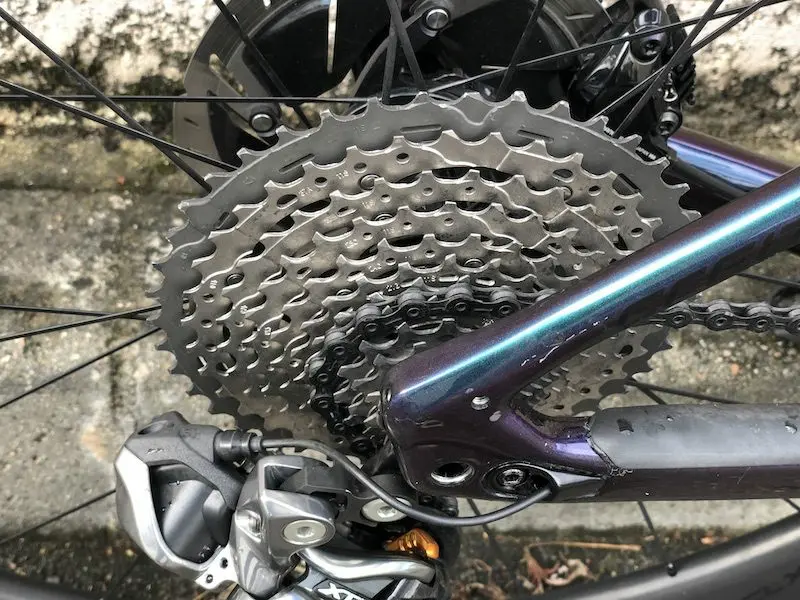
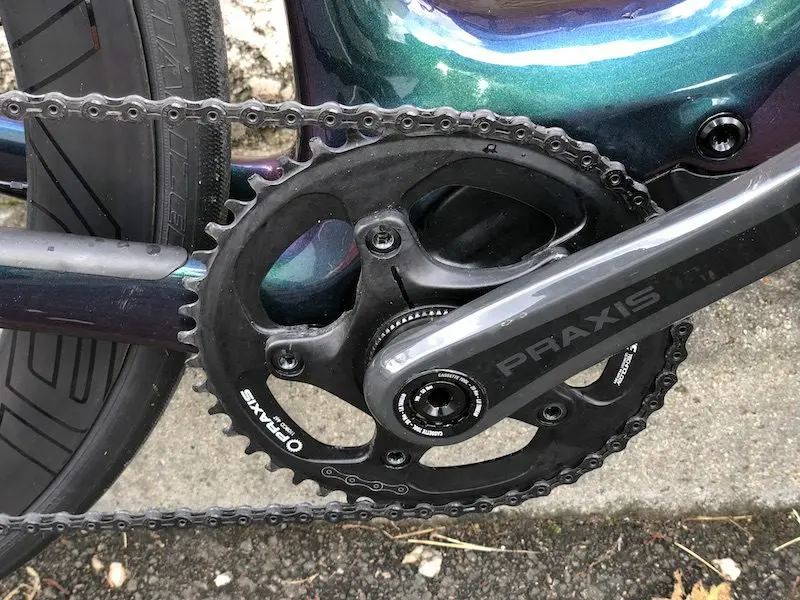
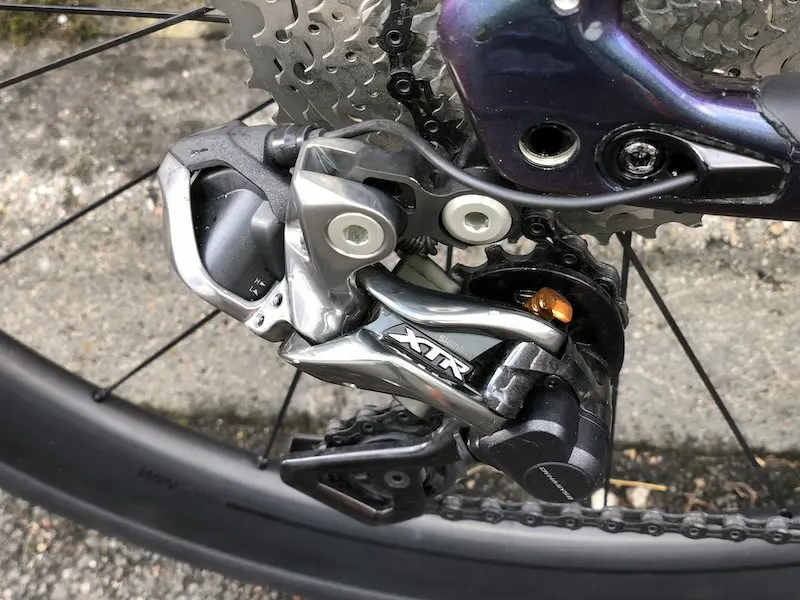
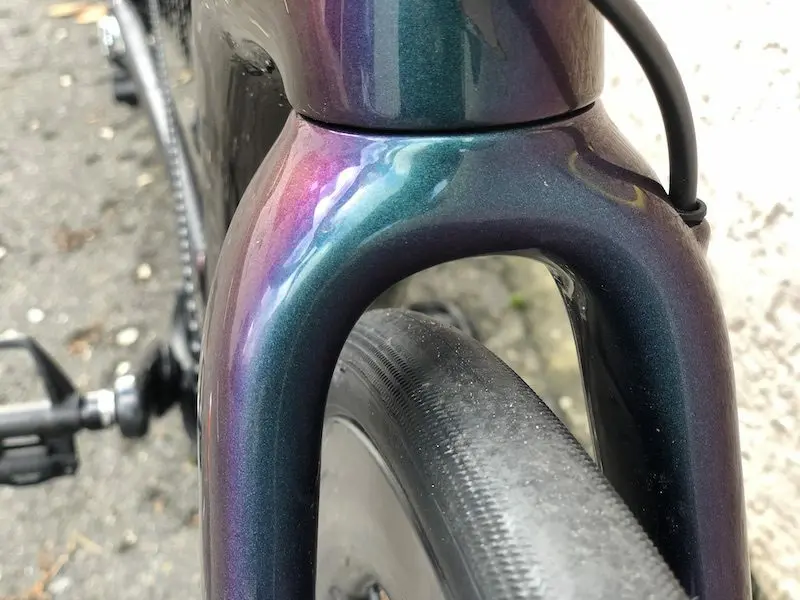
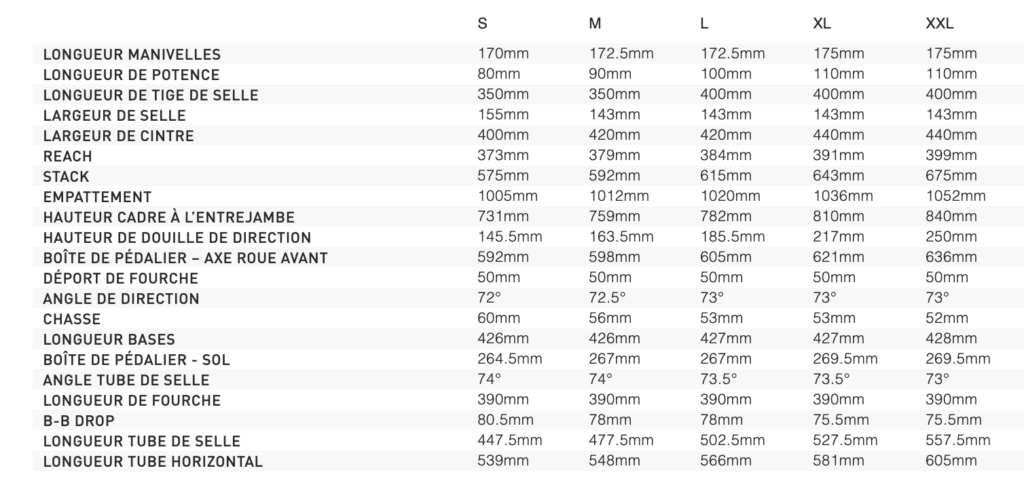
The rest of the equipment is of the same caliber with S-Works carbon components everywhere (Praxis crankset, handlebars, seatpost, saddle rails) and especially Roval CLX 50 wheels with ceramic bearings, with 50 mm deep rims as their name indicates, topped with 28 mm S-Works tires to support disc braking. The geometry is similar to that of an endurance bike, with extended chainstays for stability, a slightly raised cockpit, and a relatively short top tube. But the head angle has been designed so that the bike retains its liveliness during changes of trajectory, and it is quite successful. Above all, there is the Future Shock 2.0 front suspension system with lockout, successfully used this year at Paris-Roubaix by Philippe Gilbert, the winner with his Specialized S-Works Roubaix, which offers 42 mm of travel for truly astonishing comfort. This hybrid bike therefore concentrates several modern technologies, while limiting weight. This is what makes it such an exceptional machine.
Discreet assistance
Even if our experience with electric-assist bikes is limited, we can affirm that we are in the presence of a totally different machine. Very far from heavy and lifeless city bikes, ultra-powerful mountain bikes that are no longer bikes, and even Speedbikes limited to 45 km/h instead of 25. The assistance of the S-Works Turbo Creo SL does not manifest itself with an extraordinary torque that gives a big kick in the butt and even disturbs the feeling of bike control. On the contrary, it is soft and linear, and proportional to the pedaling cadence. For the motor to perform at its best, you also have to push on the pedals and, if possible, at around 90 revolutions per minute. By pushing a little slower or a little less hard, you certainly feel the assistance when it is engaged, but you retain the impression of managing the power supplied.
The first level of assistance is just enough, in our opinion, to offset the bike’s extra weight on climbs or against a headwind. The second level remains very smooth and boosts you like a day when you’re in great shape. The third level is much more noticeable, especially during accelerations or on steep climbs. You clearly change categories. But it’s not enough to climb all of them at the limit of assistance. For a light and trained rider, this Turbo mode allows you to climb a 6% gradient with hardly any effort at 20 km/h. It’s exhilarating and easy. On a 15% gradient, it’s enough to climb without getting out of breath, but if you want to climb quickly, you still have to put in some effort. Let’s say that by making a real effort comparable to what you would do with a 100% muscle-powered bike, you gain between 2 and 3 km/h in these conditions. But above all, a lot of pleasure, which is not insignificant.
The assistance’s whistling is barely perceptible, but it lets you know when the motor is engaged. The cut-off occurs at just over 27 km/h on our GPS display, but without the bike being slowed down by the motor’s dead weight. However, there is a tricky transition just after cresting a good climb: the acceleration at the moment of the crest is very easy and really makes a difference compared to a 100% muscle-powered bike for a few tens of meters, just long enough to approach 27-28 km/h, then the assistance cuts out and the bike suddenly feels its weight, lacking a bit of fluidity and ease of rolling. But by gaining speed and going beyond 32-33 km/h, or by riding well with the wind at your back on the flat, its inertia becomes an advantage, and it clearly shows rigidity at high speed, even allowing you to sprint. It then behaves almost like a classic bike, just a little less lively during sudden changes in pace. Apart from the factor related to the bike’s weight (but which remains very high-performance for an assisted bike!), the engagement or disengagement of the motor when you are around the assistance speed limit are always very smooth.
On descents, the S-Works Turbo Creo SL proves to be super stable and reassuring, and always very precise when placing the front wheel. Its weight doesn’t pull it wide on curves, and the Roval CLX 50s combined with the S-Works Turbo tires allow for perfect trajectory control. Whether on the flat or downhill, a sporty cyclist doesn’t need assistance, as it cuts out above the regulated speed. But the motor can remain ready to intervene whenever the travel speed decreases, on false flats, on climbs, after a stop sign or a red light, to give a little boost that ultimately saves a lot of energy, but without over-draining the battery. For example, we used only one bar of autonomy on a 50 km ride with 700 m of elevation gain. And used half of the internal battery on two rides totaling 140 km. There is clearly plenty to do, although this will depend on the terrain, the user’s weight, and their contribution to propulsion, and therefore their physical condition. And all this in the greatest comfort, because that is the bike’s other essential quality.
Electric-assist bikes are sometimes viewed with condescension or annoyance, as they are normally intended for people who are completely out of shape or even handicapped by illness or other conditions. With this new category of hybrid bikes, of which the Specialized S-Works Turbo Creo SL is the new spearhead, we discover fun and exhilarating machines that can even appeal to experienced riders. This bike will not make you a pro and will not allow you to break high-level records. However, it will allow you to ride further, with less difficulty, and while having quite addictive sensations of speed. Another way of looking at sport, in fact.
| SPECIALIZED S-WORKS TURBO CREO SL |
| Rating: ***** Pros: Weight, range, smooth, natural and progressive assistance, equipment level Frame: FACT 11r carbon, Open Road Geometry, front/rear thru-axles, fully integrated down tube battery, internal cable routing, fender/rack mounts, Boost™ 12x148mm
Price: €12,499 |
| Contact: www.specialized.com |
=> SEE ALSO: All our Gear articles
Share the post "Review of Julian Alaphilippe’s Specialized S-Works Turbo Creo SL"