Share the post "Cannondale CAAD 13 Review"
Cannondale has been one of the world’s leading experts in aluminum for 25 years. The new CAAD, the thirteenth in the series, once again demonstrates the American brand’s expertise, with a bike that rivals many carbon models in terms of road performance, while offering much better value for the money.
By Guillaume Judas – Photos: 3bikes.fr

While the famous CAAD 3 and CAAD 4 models, popularized by Mario Cippolini in the late 1990s, were racing beasts and monsters of stiffness for their time, the subsequent aluminum models in the American manufacturer’s lineup have gradually become more versatile and accessible, thanks to advances in materials and heat treatment. Cannondale’s aluminum frames have kept pace with consumer demands, while also adapting to the constantly evolving characteristics of the carbon frames they were competing against. After serving as a serious alternative to steel at the end of the last century, well-made aluminum is still a viable option to consider over carbon when on a limited budget.
While prices for carbon frames in the mid- and high-end ranges have skyrocketed due to the complexity of manufacturing, the prices of Cannondale’s aluminum models have remained virtually unchanged. With inflation, they’ve even become quite affordable, while remaining competitive in terms of performance.
The Super Six Evo’s little brother With the CAAD 13, Cannondale takes another leap forward—not in terms of weight or stiffness, but rather in comfort and aerodynamics. It uses the same aluminum alloy as the two previous versions, the CAAD 10 and CAAD 12: a stiff, responsive, and lightweight 6069 aluminum. According to the brand, the CAAD 13 is in the same weight class as the CAAD 12, weighing around 1,100 g for the bare frame in size 56, whether in the disc brake or rim brake version. The carbon fork weighs around 400 g. Note that Cannondale still gives you a choice, including a Shimano Ultegra rim-brake version that’s very competitively priced. That’s about 100 g more for the frame than the new Super Six Evo and 230 g more than the Super Six Evo HM—both of which are carbon frames, but the CAAD 13 borrows both the geometry and tube shapes from them.

That’s the big new feature of this bike: tubes engineered to reduce drag, making it essentially an aluminum version of the brand’s flagship model, the Super Six Evo. According to Cannondale, the new tube shapes—with their truncated trailing edges, lowered seatstays, D-shaped seatpost, and concealed clamping—are said to reduce drag by 30% compared to a traditional design like that of the CAAD 12. All while improving comfort. It’s a win-win for the rider, in fact.
Comfort and Finish Comfort is also enhanced by the permitted tire size. The CAAD 13 Disc Ultegra we’re testing here is equipped, like the rest of the lineup, with 700×28 Vittoria Rubino Pro tires. But it can accommodate tires up to 30 mm in width, which allows you to ride with slightly underinflated tires or choose tires for venturing off paved roads, much like the Orbea Orca OMX. These tyres look a bit “balloon-like” when mounted on the Fulcrum Racing 600 DB wheelset and actually have a 29-section width. This new setup slightly alters the bike’s usual aesthetics, resulting in a higher head tube.
That said, comfort is also provided by the intrinsic qualities of the frame and fork combination, which effectively dampens all the micro-vibrations from the road without completely disconnecting you from it. In short, you’re not riding on a cushion of air despite the tire size, but the bike is very pleasant on long rides—especially because it never seems to bounce at the slightest bump. The CAAD 12 was already relatively comfortable at the rear, but it remained quite firm up front, especially in the disc-brake version. The CAAD 13, on the other hand, seems much more balanced to us.
Some of that comfort can also be attributed to the Speed Release quick-release system with 12 mm thru-axles front and rear, and an open dropout on the disc side, which lets the wheel be removed without pulling the thru-axle out of the hub – just unscrew it and let the wheel drop out. It takes a bit of practice, but it saves time in the event of a puncture or when loading the bike into a car trunk.
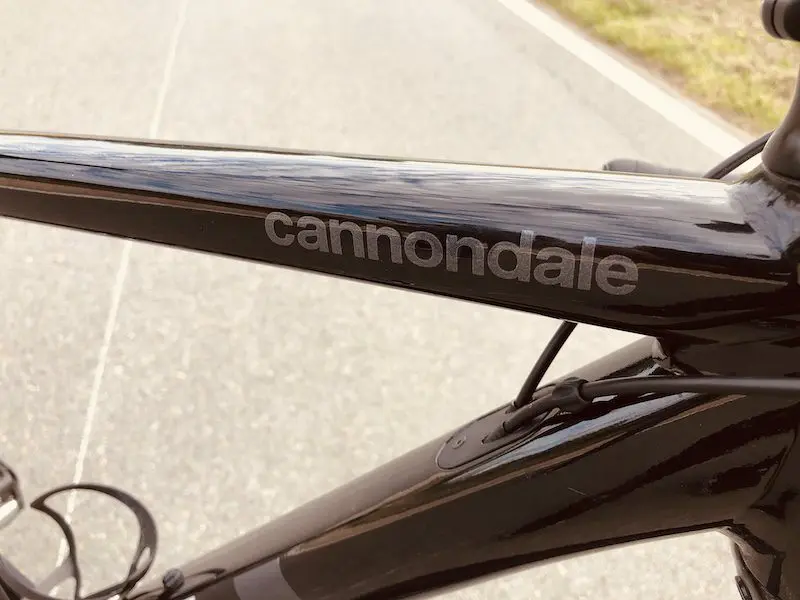
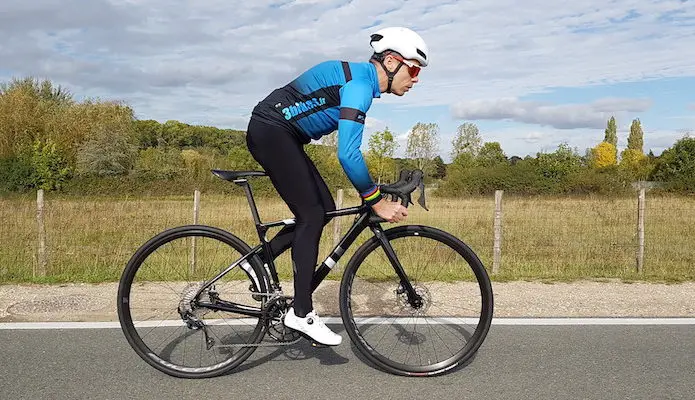
The CAAD 13 can take mechanical or electronic shifting, with internal cable or wire routing (except with a SRAM setup, of course) and an interchangeable port, which is relatively new for Cannondale, since the American brand stayed faithful for a very long time to derailleur cables running along the down tube. With this glossy black finish that takes on a slight midnight blue hue depending on the light, the CAAD13 adopts the brand’s new understated design language. This black version—the only one offered for this Disc Ultegra model—minimizes the visibility of the welds between the tubes, which, incidentally, always appear perfectly even. As for the overall design, the compact head tube, raised fork crown, and rear triangle with relatively thin tubes conceal an oversized down tube that’s very much in line with current trends.
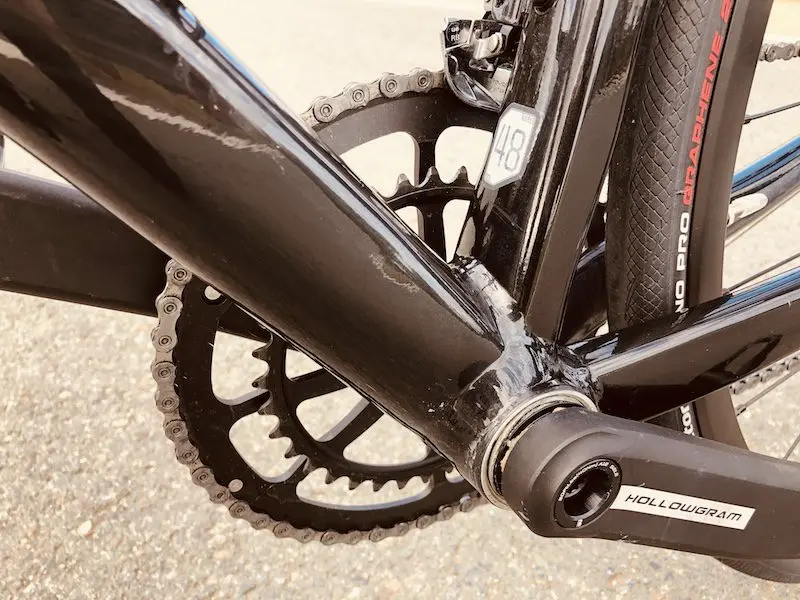
Versatility is the credo Although it can be seen as the direct descendant of the Super Six Evo, the CAAD 13 is more affordable, more practical and therefore more versatile. When it comes to cable routing, this design avoids running them through the cockpit and head tube in order to be completely invisible or to save a few watts against the wind, as on the Super Six. But it is also more practical and easier to maintain.
In addition, the CAAD 13 has the necessary mounting points for front and rear fenders. This is an undeniable advantage for those who want to expand the bike’s range of use—whether for bike-packing or as a training bike designed to tackle the rigors of winter. Reliable components
Only five CAAD 13 models are available in the catalog, and our test bike is the top-of-the-line model, priced at €2,699. Equipped with Shimano Ultegra Disc brakes and drivetrain—which perform flawlessly—it somewhat offsets the added weight of a relatively heavy groupset by featuring an in-house crankset mounted with a BB30a bearing system. This is a wider version of the BB30 standard, with bearings pressed directly into the frame’s bottom bracket shell and held in place by simple circlips. Sometimes criticized for the noises and creaks that develop while pedaling after several hundred kilometers, this “improved” BB30 posed no problems for us over nearly 700 km, in all kinds of weather.
As is often the case in this price range, the wheelset isn’t exactly lightweight, though it poses no issues in terms of stiffness or durability. The rest of the build, featuring Cannondale components (handlebar, stem, saddle), is equally reliable, resulting in a bike that weighs 8.150 kg without pedals.
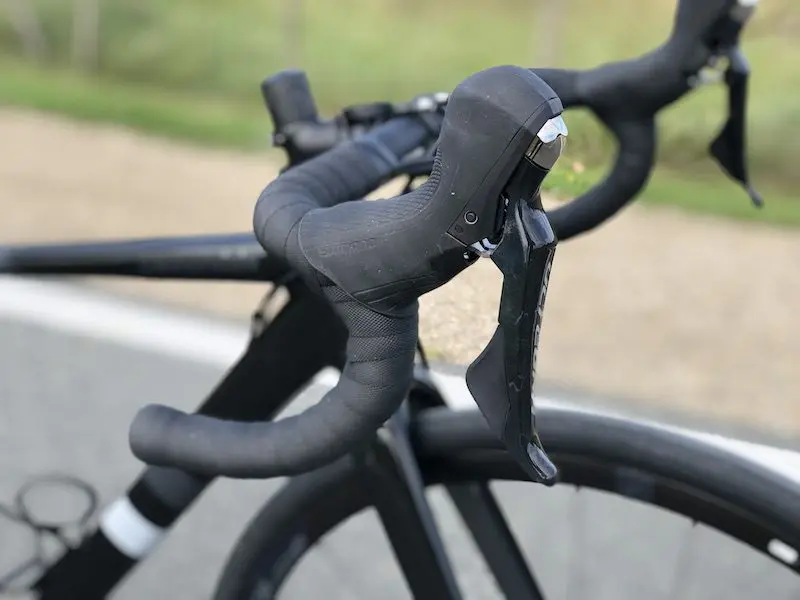
The Ultegra rim-brake model is at the same spec level but costs €2,099 and is likely nearly 500 g lighter. It’s a great deal. Then there’s the Shimano 105 Disc model with RD 2.0 wheels for €1,999 (available in men’s or women’s versions), and finally the 105 rim brake version for €1,799. In any case, the price-to-specs ratio is attractive compared to a bike with a carbon frame—which doesn’t always handle as well, far from it.
The price-to-spec ratio is attractive compared to a bike with a carbon frame, which doesn’t always handle as well—far from it.
On the road Weighing in at nearly 8.5 kg fully loaded and ready to ride, the Cannondale CAAD 13 Disc Ultegra isn’t exactly a featherweight. But of course, it all depends on how you compare it to other bikes in the same price range. And in this case, it’s hard to find much better, especially if you really want to ride with disc brakes.
Stiff, responsive, agile and comfortable, the CAAD 13 has plenty to offer—qualities you feel from the very first pedal strokes, whether you’re tackling rough terrain or making quick changes in direction. The bike feels compact and well balanced when pushed a bit, as no part of the bike seems to flex relative to the drivetrain.
At the same time, as mentioned above, comfort is quite good, at least in terms of vibration damping. As for the rest, the saddle is mostly a matter of personal taste, as is the shape of the shift levers, which aren’t necessarily easy to grip with small hands.
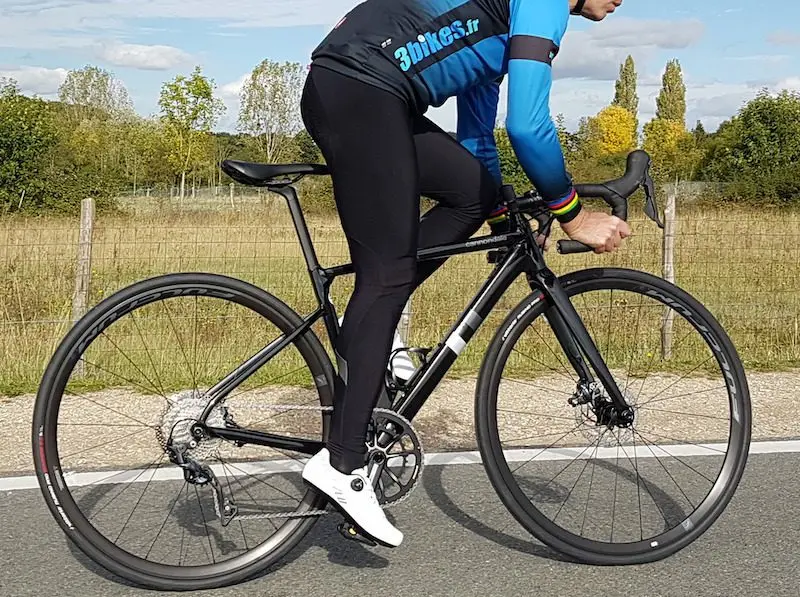
On sprints or steep climbs, the weight starts to become a handicap compared to lighter bikes. Nevertheless, while the CAAD 13 doesn’t perform at its best when riding in short bursts, it holds its own perfectly once you settle into a steady, even sustained pace. The gear ratios on tap also let you tackle challenges without being held back by the bike’s weight or stiffness. The tires don’t lose their shape during hard riding despite their size, and they roll very smoothly while still offering good traction. But again, they do slightly dampen the bike’s responsiveness and agility. On the other hand, on rougher roads or when riding on bike paths, they perform much better than more specialized 25-mm models. Be careful when braking, as they barely manage to handle the power of the 160 mm rotors: we were caught off guard several times, even in dry conditions, by a wheel locking up during emergency stops.
Stable on descents thanks to its inertia and the feeling that it sits perfectly on its two wheels, efficient on the flat once up to speed and more generally during long group rides, comfortable and quiet while riding, the CAAD 13 differs here from the early CAAD models, which were primarily pure competition bikes. The use of aluminum in its latest bicycle designs allows Cannondale to offer a versatile bike that feels reassuring in its responses and handling, and above all, is very well-equipped for its price. Yet you can sense even greater dynamic potential, which could be fully realized with lighter components—without necessarily spending a lot of money, provided you stick with rim brakes.
| CANNONDALE CAAD 13 DISC ULTEGRA |
| Rating: ***** Pros: value for money, versatility, stiffness, comfort, range of sizes Cons: weight, two 160 mm rotors, tire width Frame: All-New, SmartForm C1 Premium Alloy Fork: All-New, BallisTec Carbon, SAVE, 1-1/8″ to 1-1/4″ (thru-axle) Handlebar: Cannondale C2, 7050 alloy, Compact Stem: Cannondale C2, 6061 alloy, 31.8, 7° Brakes: Shimano Ultegra R8020 hydraulic, 160/160 mm Front Derailleur: Shimano Ultegra R8000 11-speed Rear derailleur: Shimano Ultegra R8000 11-speed Shifters: Shimano Ultegra R8020 hydraulic 11-speed Cassette: Shimano Ultegra 11/30 Chain: Shimano Ultegra 11-speed Crankset: Cannondale 1, BB30a, 52/36 Wheelset: Fulcrum Racing 600 DB Tires: Vittoria Rubino Pro 700×28 Saddle: Prologo Nago RS STN Seatpost: Cannondale CAAD13 aluminum Weight: 8.2 kg in size 48 without pedals Number of sizes: 8 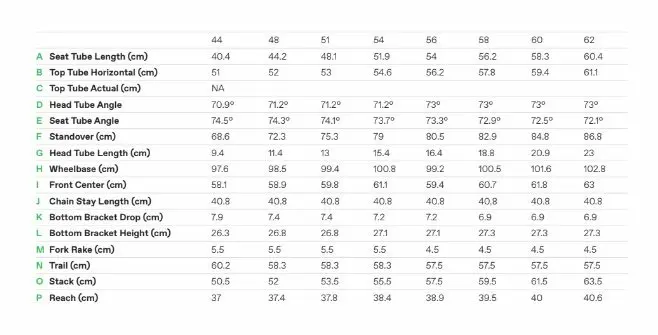 Price: €2,699 |
| Contact: www.cannondale.com |
=> SEE ALSO: All our Gear articles
Share the post "Cannondale CAAD 13 Review"