Share the post "How to choose your drivetrain?"
Weight, function, braking type, number of gears, compatibility, and durability define the range level of a drivetrain groupset on a road or triathlon bike. Let’s look at the factors to consider, in addition to the price of the complete bike or the aftermarket groupset, to determine the right groupset for you.
By Guillaume Judas – Photos: ProCycleShot/Wouter Roosenboom/3bikes.fr/DR
=> SEE ALSO : 2019/2020 Road Groupset Prices and Weights
Summary :
- How many gears?
- Cable or electronic?
- What type of braking?
- Ergonomic differences
- What level of range?
- Options
- Compatibilities
The range level of a bike and its behavior are first defined by the frame, then by the wheels, and finally by the components that make up the drivetrain and braking system, which we call the groupset. A groupset has little effect on the overall dynamism of the bike, unless you consider the weight of its components and the quality of the bearings. The rest is about comfort, precision, pleasure, and potentially safety.
| The weight of bike components The differences are sometimes barely perceptible, but they accumulate across all bike components. This is enough to define – among other things – the range level, or even performance, of the bike. Thus, count only about 500 g difference between a very light frame kit and an entry-level frame kit. Count up to 900 g for bare wheels, and 250 g for a pair of tires. You can add 150 g for a saddle and 200 g for a cockpit. Finally, about 1200 g separate the lightest groupset on the market from the heaviest. Weight isn’t everything, but you can easily reach a 3 kg difference between a bike combining the lightest components and a basic entry-level road bike. The price can also be multiplied by 10 in the most extreme cases. |
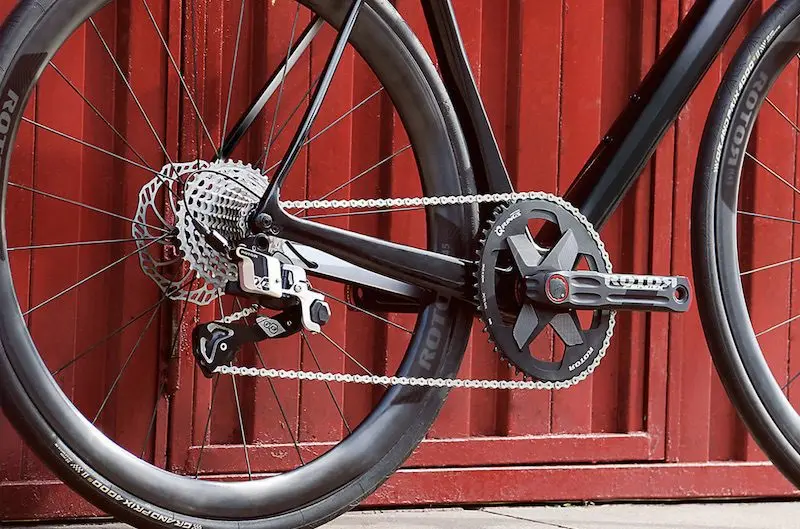
On road or triathlon groupsets, you’ll find drivetrains with 10 to 13 speeds for the rear cassette, and with one to two chainrings. 13-speed is exceptional and only available with a single chainring from Rotor. 10-speed is largely outdated, even if spare parts are still available, because 11-speed has existed for at least ten years. This is enough to answer all questions regarding system reliability, particularly the durability of chains and cassettes. This latter type of drivetrain still holds the lead as it is the number of gears still used today by Shimano, the main market player, whether on production bikes or for replacement groupsets. But Campagnolo and Sram have released their 12-speed drivetrains (with two chainrings), which should prompt Shimano to react soon.
=> SEE ALSO : 12 or 13 speeds, an update on new drivetrains
The choice of gear combination determines the comfort of use and the versatility of the bike. It is in this sense that 12-speed is interesting, as the extra cog can be very useful for filling a gap in the gear combination or for increasing the gear range.
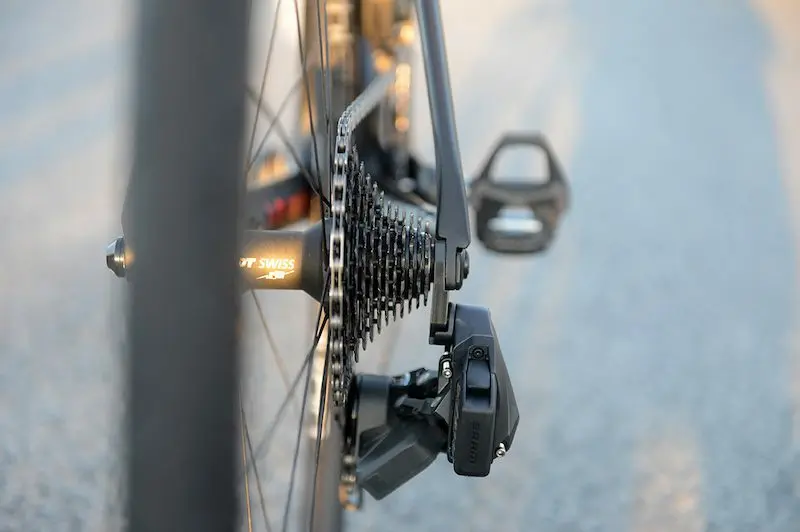
By using a cassette with a wide range of gears, you can tackle very different terrains, from flat roads to very steep climbs. On the other hand, a cassette with smaller gaps between each cog allows for smoother pedaling with fewer jerks during gear changes. The most avid cyclists with 11-speed often have one or more spare cassettes, which they adapt to the terrain to optimize their pedaling. This is no longer necessarily useful with 12-speed. 13-speed is currently only offered with a single chainring, and there are always fewer different ratios available than with 11 or 12-speed with two chainrings.
Mechanical or electronic drivetrain?
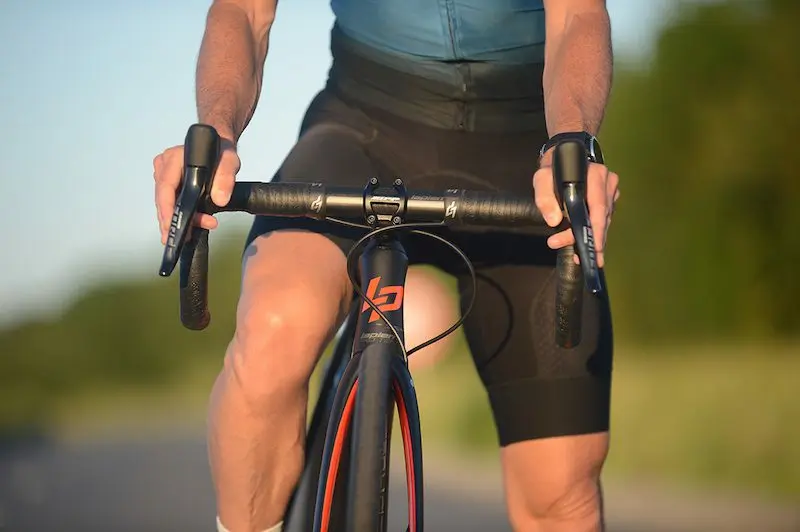
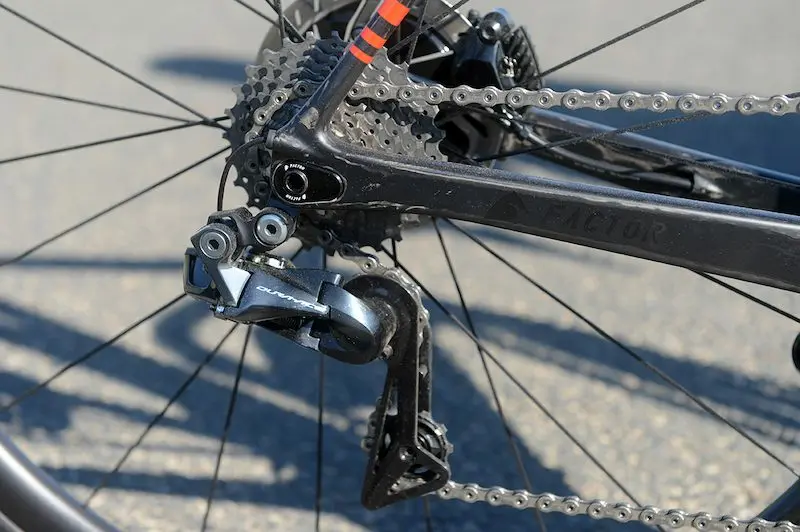
There are two ways to move the front and rear derailleurs: with a cable from the combined brake/shifter levers located on the cockpit, or by electronic impulse with (Shimano, Campagnolo) or without wires (Sram). This solution provides more precision and comfort, while in some cases offering several interesting options: automatic alignment of the front derailleur with the chain’s position on the cassette to avoid rubbing, the ability to customize lever action via dedicated software or add additional controls to the handlebars, or even semi-automatic operation of the entire drivetrain with a single lever. Little weight difference compared to mechanical groupsets, but a clear price difference, especially to consider for spare parts. In short, electronic shifting primarily brings comfort and pleasure to use.
Hydraulic disc braking is starting to gain traction on the road, as Shimano, Sram, and Campagnolo offer this option, which can be coupled with electronic shift levers. We know the advantages of this type of braking: better power regardless of weather conditions, better modulation, and no wear on the rim surface. In short, more safety, an essential argument for some users.
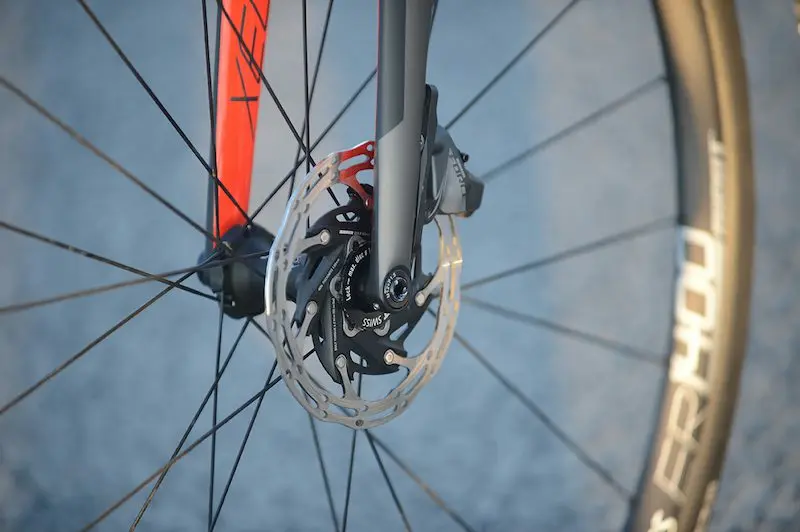
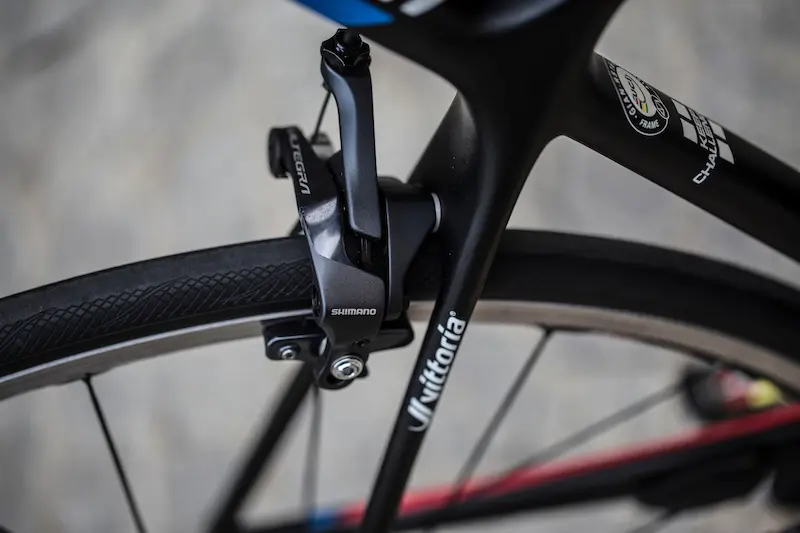
But also the disadvantages: a groupset with disc braking weighs 250 to 400 g more than its rim-brake equivalent, not to mention the additional weight imposed on the frame and fork (the constraints are different), the wheels, and sometimes even the tires (which generally need to be wider to support the braking power). And of course, no compatibility with previous components. Add to that more delicate maintenance and precise adjustments that make bike upkeep and transport more complex. There remains a sometimes perfect integration of brake hoses into the cockpit and the front of the bike, which makes modern equipped bikes extremely beautiful.
=> SEE ALSO : Disc braking for road bikes, the update in 2019
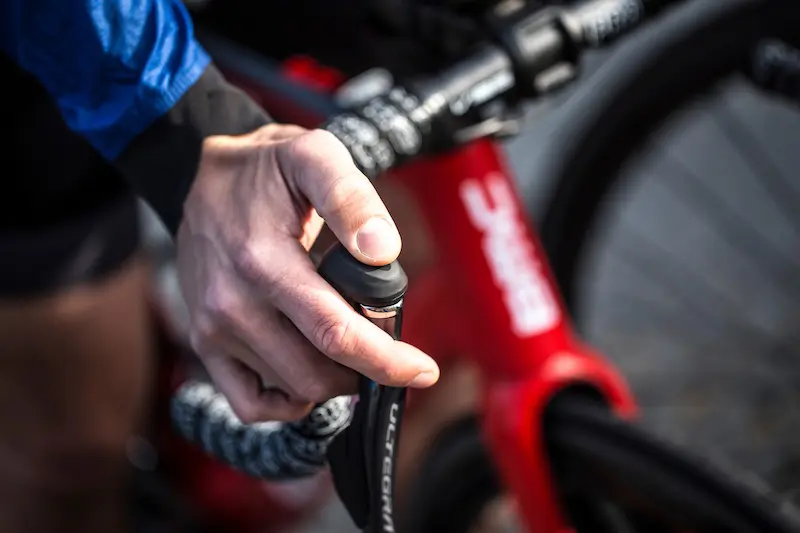
The main signature of Shimano groupsets concerns the brake levers with integrated shifters: moved laterally, the large lever is used for braking, but also for shifting the chain to larger cogs or the large chainring. The small lever located behind it is used to shift the chain down one cog at a time. DI2 groupsets use two paddles with the same functions as mechanical groupsets. The operation of the paddles is customizable, and you can take advantage of the Synchro-Shift option, which consists of controlling both derailleurs with a single lever. Note the presence of a hidden button under the brake hoods, for shifting gears or operating the bike computer without taking your hands off the handlebars.

No carbon cranksets from the Japanese, but generally very smooth shifting and very powerful braking. Note also that Dura-Ace, Ultegra, and 105 cranksets accept chainrings from 34 to 55 teeth on the same crank spider. Regarding disc braking, the new Dura-Ace and Ultegra hydraulic Di2 levers have exactly the same dimensions as their rim-brake equivalents.
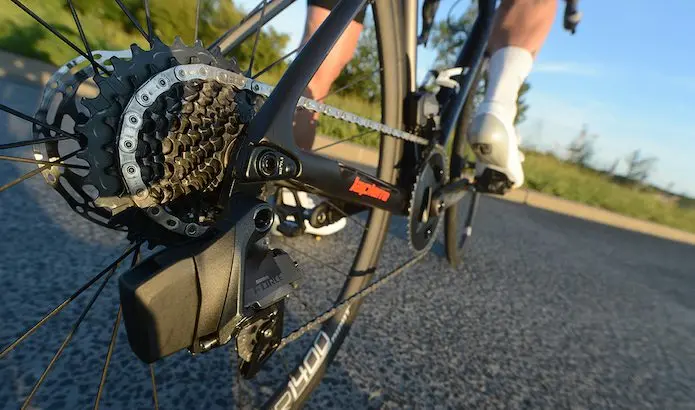
At Sram, the two new flagship groupsets named Red or Force eTap AXS feature 12 speeds, wireless electronic shifting, are available with disc or rim brakes, but most importantly have a 10-tooth smallest cog combined with smaller chainring combinations than the competition. The idea is to offer a wider range of gears, with tighter spacing between each cog. In terms of operation, the paddle located under the right lever is used to shift down a cog on the cassette.
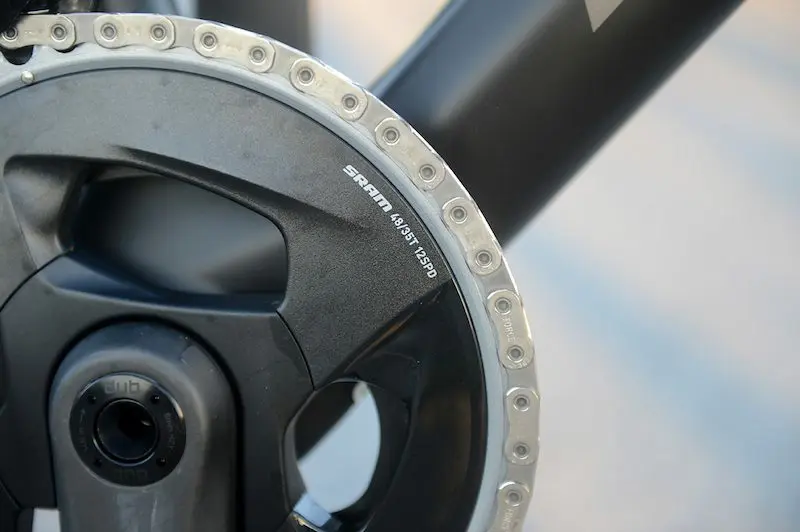
The left paddle is used to shift up a cog. Simultaneous action on both paddles changes the chainring. But it is also possible to customize the action of the levers via a smartphone application, or to set up semi-automatic shifting. At Sram, disc braking retains more prominent levers to house the hydraulic system. Sram also offers 1x drivetrains, with a single chainring (and thus no front derailleur) and cassettes with a wider gear range, to simplify shifting.
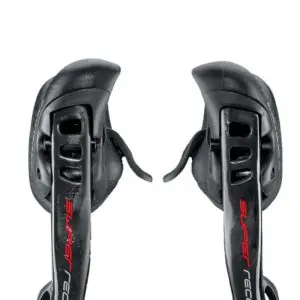
At Campagnolo, the ergonomics of the levers are typical, with one lever for shifting up the cogs or to the large chainring, and a small thumb lever for shifting down. The Italian brand was, as often, the first to introduce an extra cog with a 12-speed cassette, but maintaining traditional chainring combinations and an 11-tooth smallest cog. Compared to the usual 11-speed references, the Campagnolo drivetrain truly offers an additional gear, which is often enough to keep the same cassette all year round and on all terrains. By extensively using carbon on the shifters, cranksets, and derailleurs, the three highest-end groupsets (Super Record, Record, and Chorus) are lightweight.
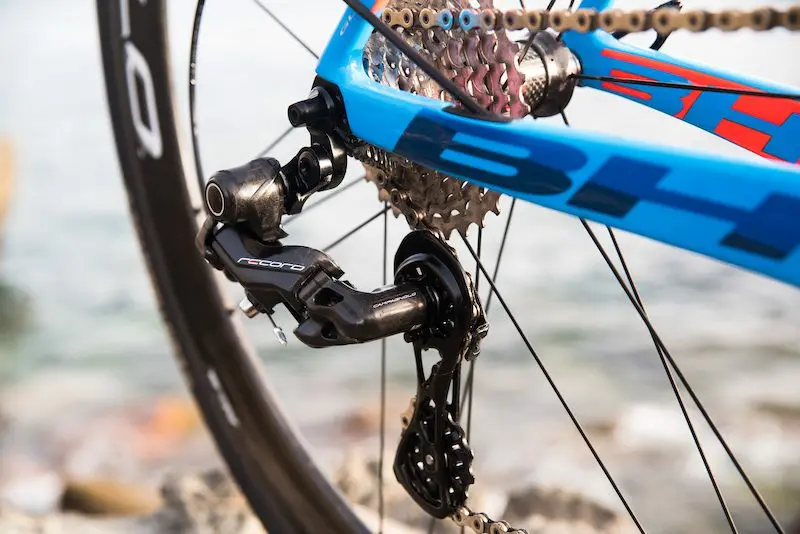
Gear changes are crisp and firm in the mechanical version (and very smooth in the electric version), braking is effective, and crankset bearings are generally very fluid. For disc braking, the levers are larger than their rim-brake equivalents, whether for cable derailleurs or the EPS electronic drivetrain, which does not offer the option of semi-automatic shifting.
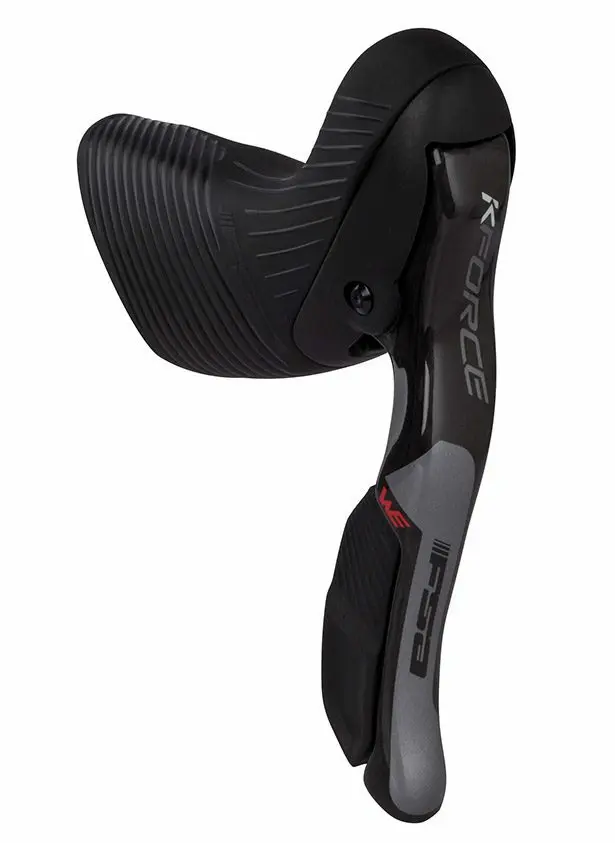
Rotor and FSA offer alternative high-end groupsets, but they are currently struggling to gain market share. In any case, we have not been able to test either of these groupsets. The first uses a hydraulic system for derailleur operation, and a kinetic similar to Sram. It is offered in 12 or 13 speeds, with a single chainring. The FSA KForce Wee groupset has ergonomics similar to Shimano, with wireless transmission from the levers to the battery.
Investing in a high-end and therefore expensive groupset is justified in terms of performance, but also longevity: less play, better quality bearings, less abrasive teeth, stiffer chainrings, and less fragile axles, pivots, and mechanisms. This is, of course, provided that maintenance intervals are respected and minimum care is given to the equipment. For the rest, it is often a choice of opportunity that prevails, depending on the budget, aesthetic or ergonomic preferences, and the offers of complete bikes sold by brands.
The second-tier groupsets often offer a very interesting compromise: these groupsets provide very similar performance to the leading groupsets, with only a slightly higher weight. At the entry-level, the functionality benefits from advancements made in previous years on the high-end, but with heavier and sometimes less refined materials. In terms of strict weight, there is approximately a 900 g difference between the lightest groupset on the market and the heaviest.
A groupset is always available with different configurations.
- Rim or disc braking
- Cable or electronic shifting
- Several cassette cog choices
- Several chainring combination choices
- Several crank arm length choices
This last point is very important because it influences pedaling efficiency and comfort. This is one of the limitations when buying a complete bike, as the crank arm length is most often imposed (especially in entry and mid-range), and this component is particularly expensive to replace if the length is not suitable.
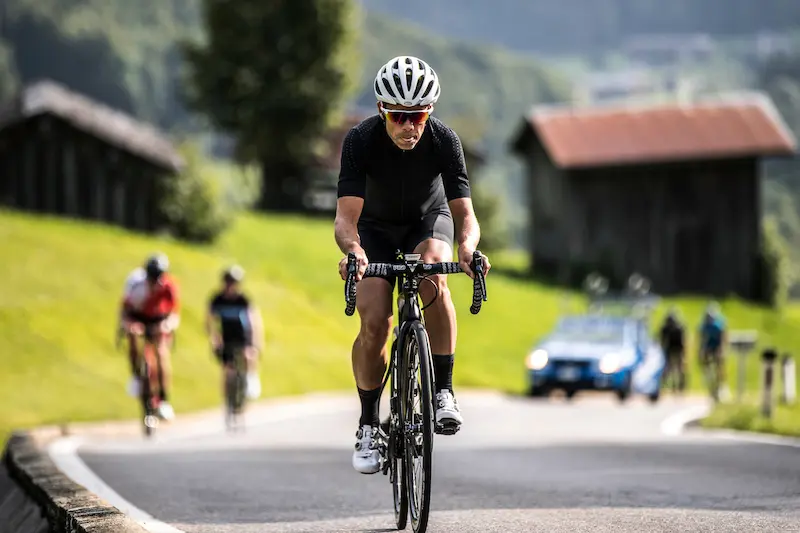
Each component of a groupset is designed to work in perfect harmony with the other accessories of the same groupset, or at least of the same brand, provided that electronic components or those related to the type of braking (rim or disc) are maintained. Therefore, one must be wary of combining derailleurs, chains, and cassettes from different brands. Some setups may work in a pinch, but without offering perfect functionality. Many bikes are offered for sale with cranksets from brands other than those of the drivetrain groupsets. This is a way to save a little weight most of the time while staying within the same price range. It is also the method used by enthusiasts of lightweight builds, or by manufacturers who offer cranksets that match the frame. Few unpleasant surprises are to be expected in terms of compatibility with drivetrain groupsets. However, the operation remains slightly less fluid than with a crankset of the same brand as the drivetrain. Before equipping a replacement groupset, it is also necessary to check the compatibility of the frame with the bottom bracket, and whether an adapter is needed. For wheels, it is necessary to check the compatibility of the freehub body (10, 11, 12 speeds, Shimano/Sram or Campagnolo spline).
Thanks to all these clarifications, we hope that you will have a clearer idea when choosing your groupset, especially with the prices and weights indicated in the second part of our dossier.
=> TO BE CONTINUED : Prices and weights of all groupsets on the market
Share the post "How to choose your drivetrain?"