Share the post "Exclusive review of the new Orbea Orca OMX"
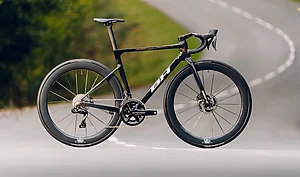
Three years after the release of its predecessor and two years after the Orca Aero, still used by professional riders, Orbea is completely revamping its flagship model and the guarantor of the brand’s philosophy. With the new Orca OMX, we find a stiff, responsive, comfortable, perfectly finished bike with a well-placed price.
By Guillaume Judas – Photos: Orbea / Antton Miettinen / 3bikes.fr / All rights reserved

The new Orbea Orca OMX is aesthetically up-to-date and is only available with disc brakes. But make no mistake. The flagship model of the Spanish manufacturer’s range retains its DNA with lively, precise, and versatile handling, typical of what is needed to tackle the roads of the Basque Country. This is where it was designed, and where we were able to test it on two rides where it showed us the extent of its capabilities a few weeks before its official presentation, in the company of five other European journalists.

New design
“Modern bikes all look alike!” We can already hear you making that remark, and rightly so, but there’s an explanation for it: aerodynamically, many manufacturers are coming to the same conclusions. By slightly modifying the shape of the tubes, integrating the cables through the cockpit and head tube, lowering the rear triangle, and working on the shape of the fork legs, they optimize airflow around the frame, even for a bike designed for climbing. The result: the new Orca is 10% more aero than the previous one, and saves 27 seconds over 40 km, even if it remains about a minute slower than the Orca Aero in the same conditions.


This bike is not just an evolution of previous models, and it really stands out from the Orca Aero currently used by riders from the Vital Concept – B&B Hotels and Euskadi Basque Country – Murias professional teams, first with the carbon fibers used. At Orbea, we knew the OME, OMP, and OMR fibers in order of range level, which lightened and stiffened the bikes’ behavior as you went up the range. The OMX level is not just about even lighter and stiffer carbon fibers. It is above all a new process of compacting the fibers and eliminating any excess resin, which makes it possible not to use more carbon than necessary, to ensure a perfect finish both outside and inside the frame, and to strictly control the weight. In short, according to Orbea, OMX fibers are currently the best in terms of carbon construction.


Because from the moment Orbea made the choice – admittedly debatable – to offer this bike only with disc brakes, weight also became an issue, given the unpleasant surprises often encountered in this area. And if the new Orca doesn’t do better than its rim-brake predecessor with a frame announced at 833 g in size 53 (and 370 g for the fork), the complete bike in its high-end version weighs around 7.2 kg, which is still largely acceptable.
Versatility as a credo
To clearly distinguish it from the Orca Aero, designed primarily to meet the demands of professional racers (or anyone who rides “strong”), Orbea claims to have designed the Orca OMX primarily for sportive riders and amateur racers, which is obviously the vast majority of cyclists.

Although announced as stiffer than its predecessor (+15% lateral stiffness), more aerodynamic, and just as light, it improves in terms of comfort thanks to an upper section designed to absorb some of the vibrations. But it is above all by accepting tires up to 32 mm in width that the bike gains in comfort if necessary, as we were able to verify on gravel sections or concrete slab paths.

With such tire equipment (30 mm tubeless for the occasion), the Orca OMX certainly loses a tiny bit of responsiveness compared to the basic 25 mm setup, but it gains in road holding, traction, and vibration dissipation.

And without really increasing the weight, as is the case with bikes equipped with a particular damping technology or other. Finally, in terms of geometry, based on sales statistics for its Avant model, the Spanish brand did not deem it necessary to truly distinguish between race geometry and that which might be requested by sportive riders. With the design of spacers between the stem and the head tube, it is always possible to reasonably raise the cockpit without distorting the bike’s philosophy.


A “semi-integrated” cockpit, so to speak, because while the stem allows for the integration of the hoses and Di2 wires, the associated carbon handlebar remains adjustable. You can therefore just see the cables discreetly running between the two parts, which Orbea calls OC, for Orbea Cockpit. A stem with an 8° angle and available in lengths from 80 to 130 mm, with an average weight of 163 g. The two-part spacers (so you don’t have to remove the internal cables when adjusting the height) are available in 5 or 10 mm. The handlebar is compact with a reach of 80 mm and a drop of 125 mm. It is available from 38 to 44 cm wide, with an average weight of 220 g. A specific mount compatible with Garmin or Wahoo bike computers is also available. The seatpost weighs 216 g and houses the Di2 battery inside.

Available versions and options
Five versions of the new Orbea Orca OMX are initially offered, only with disc brakes as specified above:
- Orca M20 LTD-D
Shimano Ultegra Disc groupset, Vision 40 SC Carbon Disc wheels: €4699 - Orca M20i LTD-D
Shimano Ultegra Di2 Disc groupset, Vision 40 SC Carbon Disc wheels: €5699 - Orca M21e LTD-D
Sram Force eTap AXS groupset, Vision 40 SC Carbon Disc wheels: €5999 - Orca M10i LTD-D
Shimano Dura-Ace Di2 Disc groupset, Mavic Ksyrium Pro Carbon Disc UST wheels: €8999 - Orca M11i LTD-D
Sram Red eTap AXS groupset, Mavic Ksyrium Pro Carbon Disc UST wheels: €9499

One of Orbea’s major strengths is the MyO options system, which not only allows you to choose up-charge or down-charge options compared to the proposed model by picking from the components of other models in the range, but also to customize the color of your bike for free. Thus, you can modify the basic gear ratios (53-39 instead of 50-34 for example), choose higher-end or, conversely, more basic wheels if you already have some, modify the tire width (25, 28 or 30 mm) depending on your use, and even opt for an FSA Powerbox power meter if necessary. In practice, you can go to the MyO page and test many options or colors, before finalizing the order at your nearest Orbea dealer. In addition to matte or glossy paints and gradients, the brand integrates new styles: Street Nature, Fluid Paint, Cubism, Titanium, and Dots.

The average delivery time is four weeks to receive the bike of your choice, as about thirty people work on this project at the Mallabia factory. Other brands also offer this service, but not for free for the color as is the case here.

On the road… more or less well-paved
In its “classic” version with Mavic Ksyrium Pro Carbon wheels and 25 mm Mavic Tubeless tires, this Orca OMX M10i LTD-D (what a mouthful!) at €8999 is a bike made for climbing, as it proves to be verycomfortable on steep gradients or long climbs. Although announced as stiffer than the previous Orca with OMR carbon fibers, it seems less “harsh” under the pedal. The gain in stiffness is mainly manifested by a more compact behavior when riding out of the saddle, more responsive and direct when standing on the pedals, for a more airy feeling overall. Without talking about total vibration absorption – because we are still on a sports bike – the comfort is rather good, but perhaps already thanks to the tubeless tires. Nevertheless, over distance, the Orca OMX does not transmit unpleasant vibrations and shows good traction at the rear wheel, even when the road surface deteriorates.
The gain in stiffness is mainly manifested by a more compact behavior when riding out of the saddle, more responsive and direct when standing on the pedals, for a more airy feeling overall.

On descents, the bike is very stable and super precise at the same time, undoubtedly thanks again to its overall stiffness, and the good steering control that this characteristic allows. The steering is also very fluid, and absolutely not disturbed in its operation by the internal routing of the brake hoses. The disc brakes here are very powerful and reassuring on dry roads, showing both power and control. But be careful on wet roads, where their limit is reached well after that of the tires, especially with 25 mm width.

Even if the front integration and the new frame architecture have allowed it to gain a few watts against the wind, it is not on the flat that it excels. There are other bikes more suited for fast riding, and this is especially noticeable with a slight lack of inertia in this configuration. Tested later in a second session with slightly heavier 40 mm Vision wheels (a down-charge option in this case), the Orca OMX seems to maintain hard-earned speed a little better on long rolling sections. However, with 30 mm tubeless tires inflated to around 5 bar, a slight pumping effect is felt when pedaling. The fact remains that this configuration makes the Orca even more versatile, and you can thus venture off-road without fear for comfort or grip.

And on sections made of concrete slabs, as can be found in the Basque Country (or Belgium), comfort, traction, and grip are all there, without really distorting the bike’s liveliness on steep gradients. This possibility of mounting large-section tires thus opens up new horizons. While remaining sporty and perfectly equipped, the Orca OMX can therefore ride on cycle paths, towpaths, and of course, cobblestones.

The Orbea Orca OMX is a high-end bike with multiple facets, reflecting all the possibilities offered by the MyO system. It is only on flat terrain and when riding very fast that it proves less sharp than a specific model. A modern and versatile bike, which largely plays in the same league as the Cannondale SuperSix Evo or BMC Roadmachine for example. But which has the advantage of being offered at a lower price for equivalent equipment while being customizable. A great deal, in short.
| ORBEA ORCA OMX M10i LTD-D |
| Rating: * Pros: Responsiveness, traction, finish, color customization system, versatility by changing tires, pricing Frame: Orbea Carbon OMX Disc |

| Contact: www.orbea.com |
=> SEE ALSO: All our Gear articles
Share the post "Exclusive review of the new Orbea Orca OMX"