Share the post "The Benefits of a Bike Fit"
Basic bike fit adjustments, whether for road or triathlon, may not be enough in case of particular discomfort or recurring injury, and especially when seeking the best performance and/or comfort. This is where bike fitting studies come in, whose value depends as much on the tools used as on the operator’s experience.
By Guillaume Judas – Photos: 3bikes.fr / Retül / Wouter Roosenboom – Bikefitting.com / All rights reserved
=> SEE ALSO: How to adjust your bike position
The best way to choose the right bike and adjust it perfectly is to consult a bike fit specialist, who has more or less elaborate tools but, above all, experience. Expect to pay between €150 and €300 to be measured from all angles and leave with a bike adjusted to the millimeter after a bike fit study. This service is sometimes offered in stores when purchasing a high-end bike and includes follow-up, with subsequent readjustments if necessary.
The investment may seem high, but up to three hours are sometimes necessary for a complete study that allows you to leave with one or more bikes perfectly adjusted according to your morphology, age, and riding style. The result is obviously never fully guaranteed, and some people never truly adapt to the proposed modifications, more or less objectively, by the way.
Understand that a bike fit study is not always an exact science, and that it relies on precise tools to measure, calculate, observe dimensions and angles of the machine and the cyclist’s body segments in action, but above all on the experience of the operator or ergonomist who can make the small modifications that make all the difference.
When to get a bike fit study?
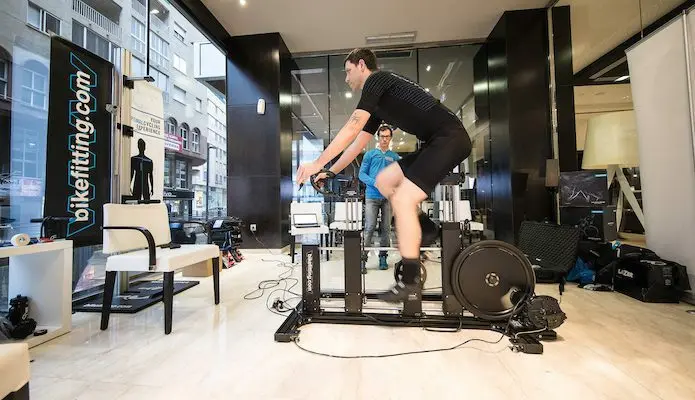
Different systems or franchises exist (Bikefitting.com, Retül Fit, Vélofitting) with different tools, but it is mainly the operator who takes the lead. This service is necessary in case of a particular physical problem (chronic tendinitis, significant leg length discrepancy, pelvic misalignment, recurring back pain, for example) or the pursuit of optimal performance.
Comfort is also a fundamental factor for long-distance enthusiasts and even for others, because there is no real performance without comfort. A bike fit study can also be a good tune-up sometimes necessary for high-mileage riders who change equipment, discipline, and get lost by transferring known measurements from one bike to another, or from one pair of shoes to another.
The principle

Depending on the system, you may be measured (height, limb length, inseam, etc.) or the focus may be more on your flexibility and physical characteristics. In the first case, this allows for basic adjustments based on your morphology and statistical data to guide you towards a bike size, while in the second case, you start with the equipment you are already using. This also depends on your cycling background (beginner or experienced).
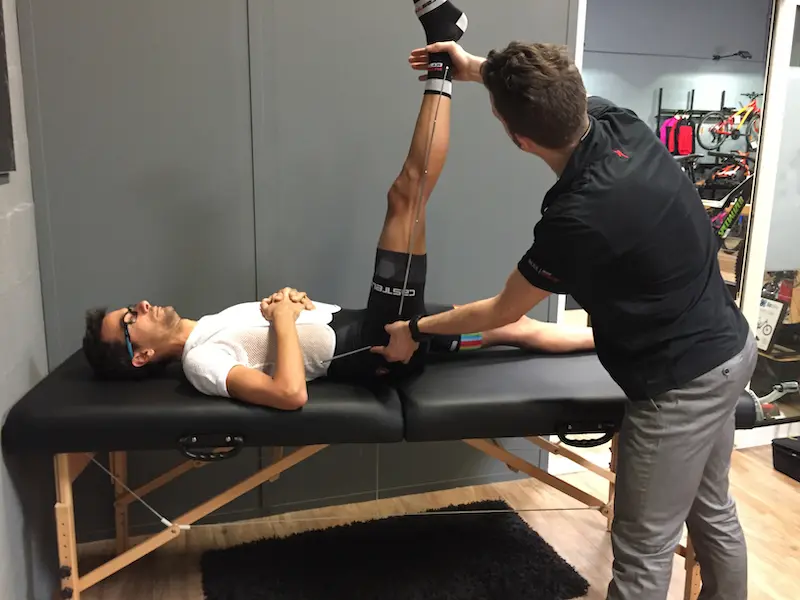
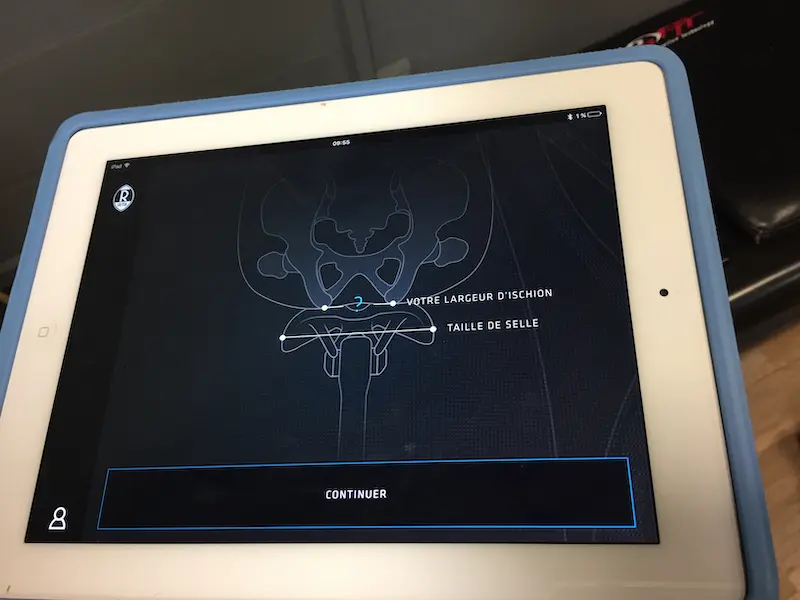
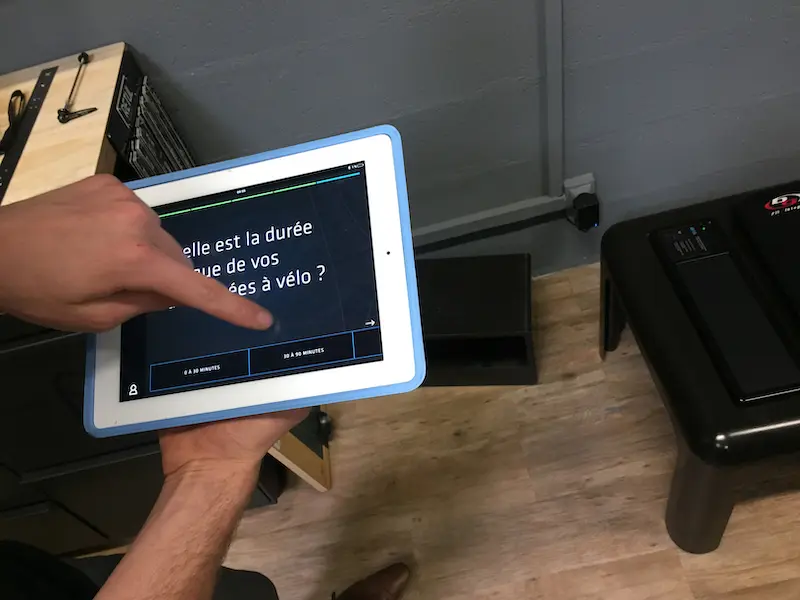
A questionnaire helps to understand your expectations, needs, any pain or discomfort, your riding style, and your goals. Various tools are used to check if you are using a suitable saddle, or the correct shoe width and size. A new type of saddle or insoles may also be suggested (at this stage or later).
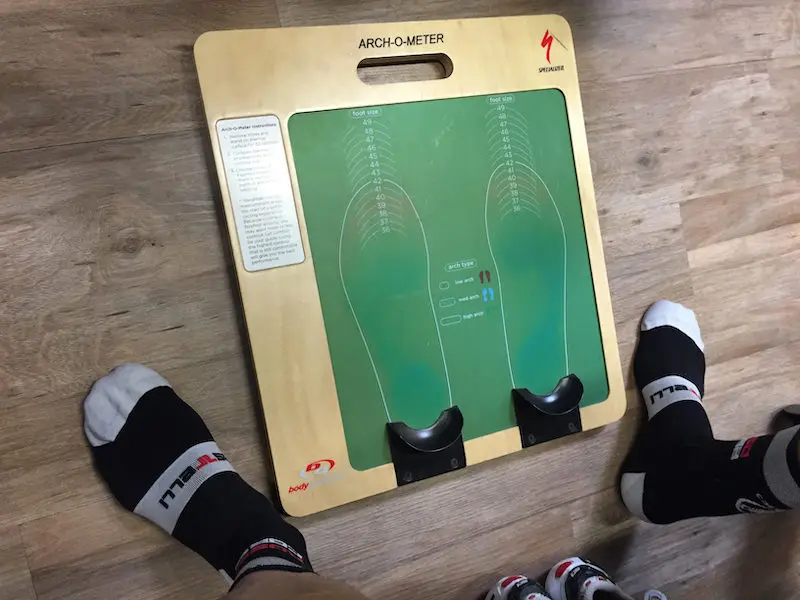
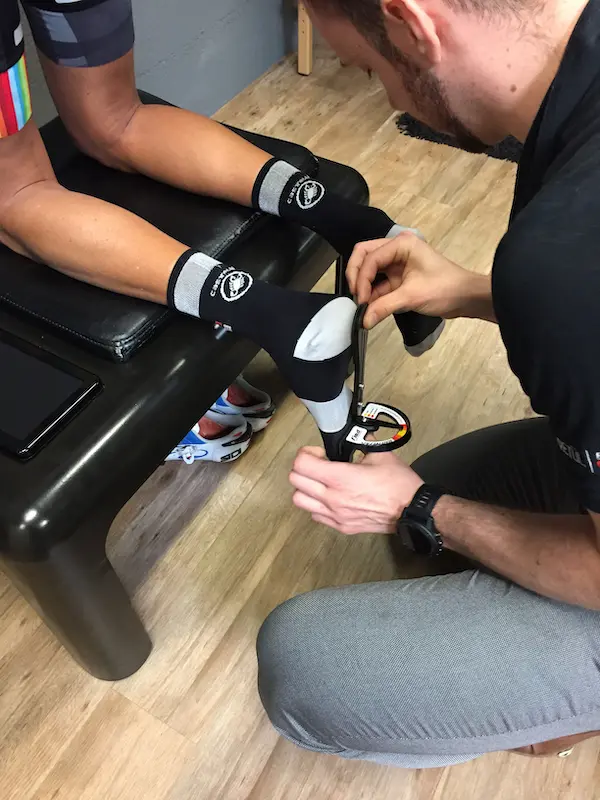
Then the operator checks and corrects, if necessary, the adjustment of the cleats under the shoes. A type of pedal may be recommended depending on certain specificities, but often few real differences are observed in this area.

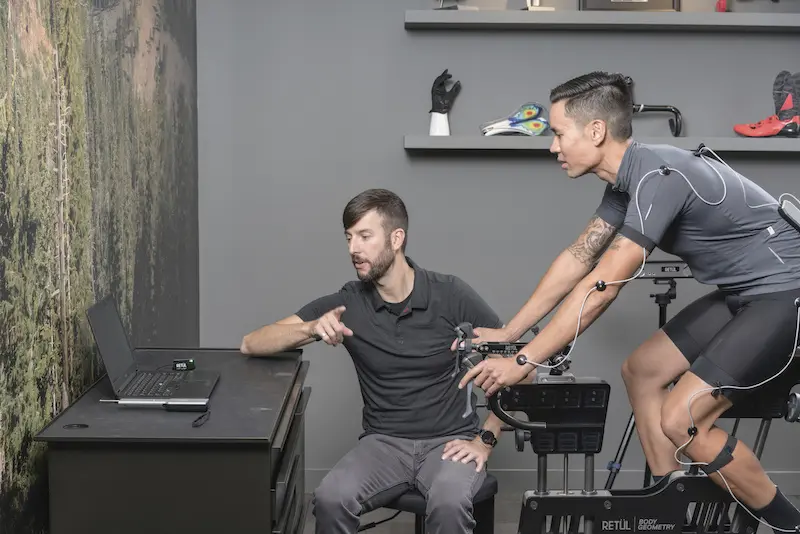
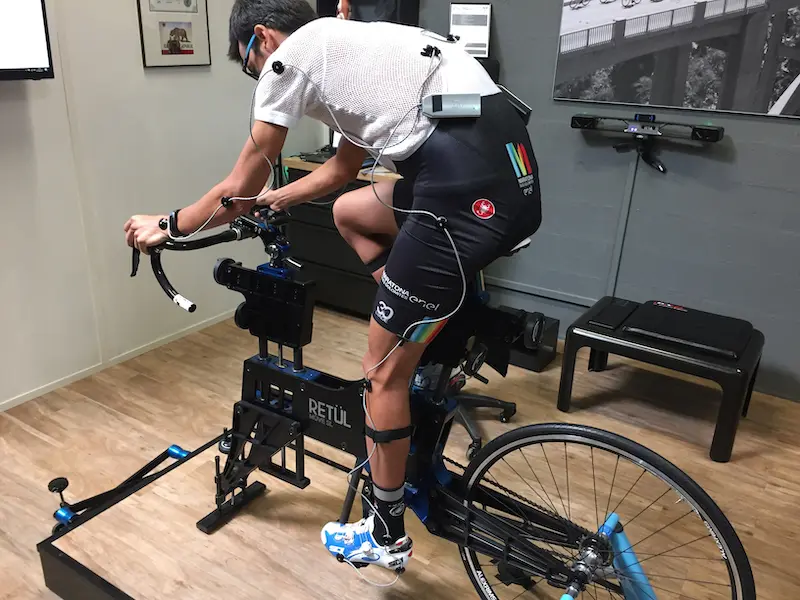
The bike’s initial settings are recorded (with a laser for the most sophisticated systems), or you get on a special, fully adjustable bike with settings derived from statistics. Sensors are placed on different joints, and you pedal while angles and movements are checked. Saddle height and setback are adjusted based on what is observed on the screen.

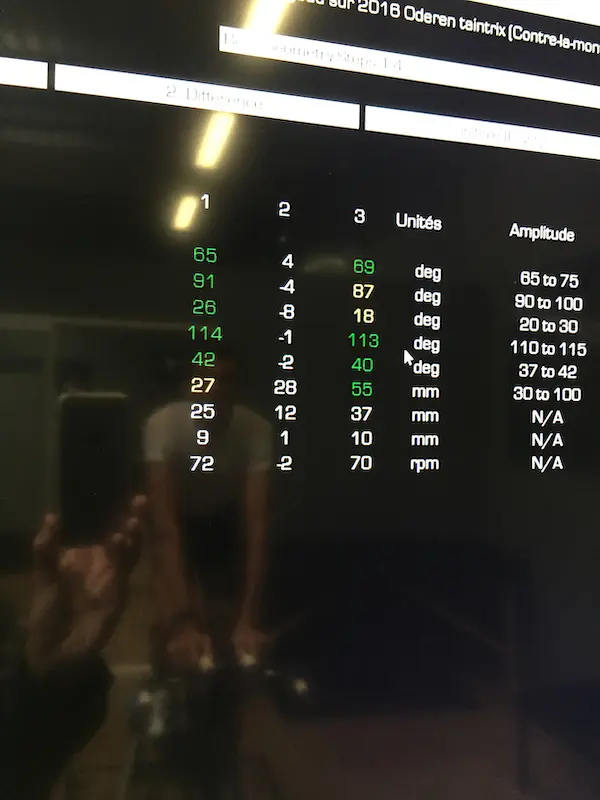
And it is when fine-tuning the adjustments in case of significant imbalance that the operator’s full experience comes into play. They may try several times, testing various solutions and settings to arrive at a satisfactory solution. They generally finish by adjusting the cockpit, which is adapted according to the subject’s age, practice, and flexibility. The new bike settings are recorded again, and you leave with the bike adjusted and ready to ride.
It usually takes a few sessions to get used to some modifications, but it is especially important to persist for a while, allowing the body to adapt to the absence of certain constraints.
The trend of a more forward saddle setback
These new tools reveal a common trend across the three main franchises: saddle setback adjustments that are more forward than in the past, and that disregard the famous plumb line rule. Indeed, the relationship with the plumb line is no longer really relevant when considering the angle formed by the thigh and the torso, and not the position of the saddle relative to the ground.
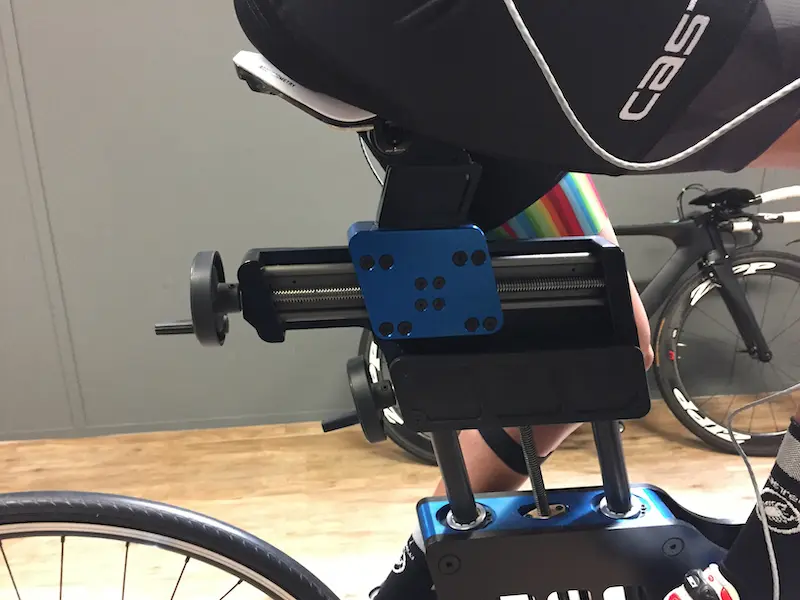
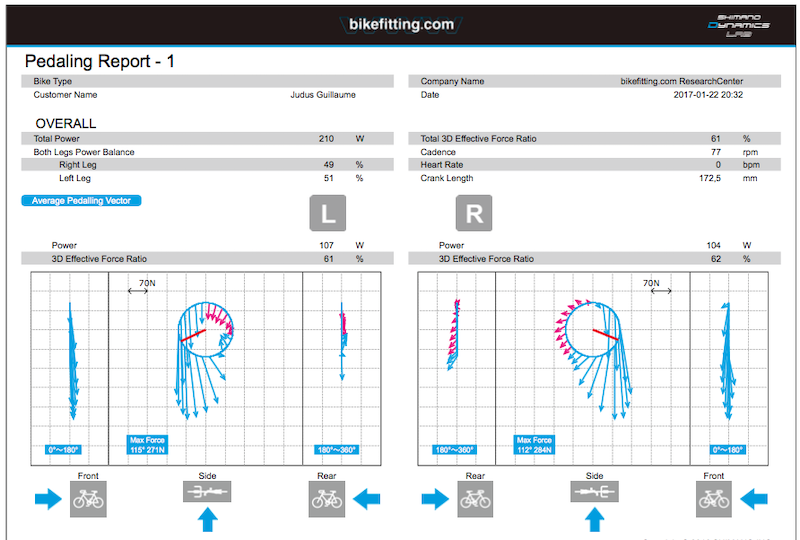
There’s no rule that says the dead spots of the pedaling cycle must absolutely be at 6 o’clock and 12 o’clock when looking at the bike horizontally, and that they cannot be shifted forward (e.g., 7 o’clock and 1 o’clock) while lowering the cockpit to maintain the same hip movement. This is the principle adopted on time trial or triathlon bikes, and most aerodynamic positions in general. And this is where a professional’s tools with sensors measuring the angles of different segments prove particularly interesting. Moreover, for many riders, a low saddle setback combined with shorter cranks would, according to some tools, more effectively eliminate the dead spots of the pedaling cycle. The main benefit of this type of study, of course, is to fully customize the bike’s settings. To ride faster, longer, and above all, with even more pleasure!
François Levy – Cycles Saint-Honoré / Vélofitting:
What type of riders come to you for a bike fit study? Precisely, what is the benefit of a bike fit study for you? Why did you choose to perform bike fit studies using the Vélofitting system? How long does a service take and what is its cost? How do you proceed? What is the main difference between road bikes and triathlon bikes? |

=> SEE ALSO: All our Coaching articles
OUR ADDRESS BOOK: |
Share the post "The Benefits of a Bike Fit"