Share the post "What Gear for Triathlon?"
You’ve discovered triathlon and now you want to get better equipped? Good idea! While not the only factor, your equipment plays a full part in your performance and the enjoyment you feel both in training and in competition. Here are some ideas to complete and/or improve your gear.
By Pierre-Maxime Branche. Photos: 3bikes.fr, Christophe Guiard, Franck Oddoux, Altra, Arena, Garmin, Santini, Met, Speedo, Trek, Unchain.
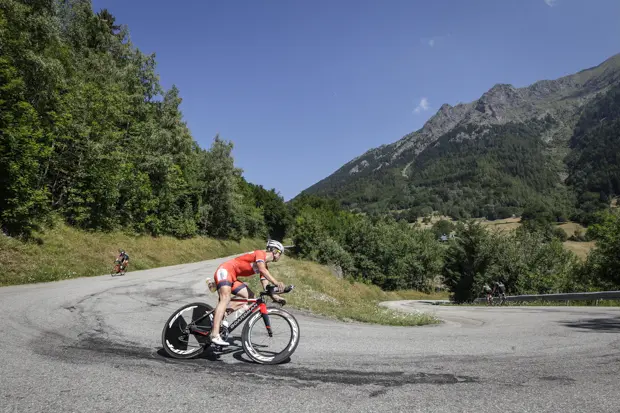
Have you pinned on your first race number, felt your first thrill at the start of the swim, enjoyed the transition to the bike, suffered when you started running, and loved crossing the finish line when you received your medal? While training is the primary criterion for progress, your equipment also has a role to play in the enjoyment factor. Whatever your level and budget, here are our suggestions for optimizing your performance.
The Essentials
Unless the water temperature exceeds 24°C, swimming allows (or even requires) wearing a neoprene wetsuit. To improve your buoyancy, reduce fatigue, and optimize your glide, choose a model made of Yammamoto #39 or Giga #40, the neoprene references for flexibility and lightness. If possible, pay attention to whether your wetsuit has an SCS (Super Composite Skin) coating for its hydrophobic and anti-friction qualities.
Take the time to carefully select your trisuit, which will accompany you under your wetsuit for the swim, but also for the cycling and running portions. With or without sleeves, more or less stretchy and aero fabric, chamois thickness, this second skin must withstand the demands of all three disciplines: notably, good glide in the water and quick drying when you get on the bike. Also, consider freedom of movement during the run. At this stage of the race, comfort is paramount.
Still for the swimming portion, pay particular attention to your goggles in terms of comfort (gasket thickness), field of vision width, tightness, and lens color. For example, if you are registered for a long-distance race with a 6:30 AM start, it’s unlikely you’ll need dark, anti-sun lenses. Clear or transparent lenses will be much more comfortable for orienting yourself in the water.
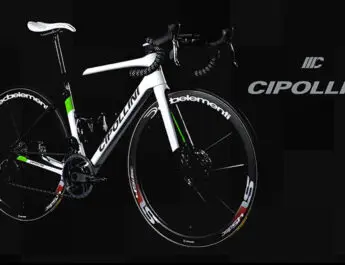
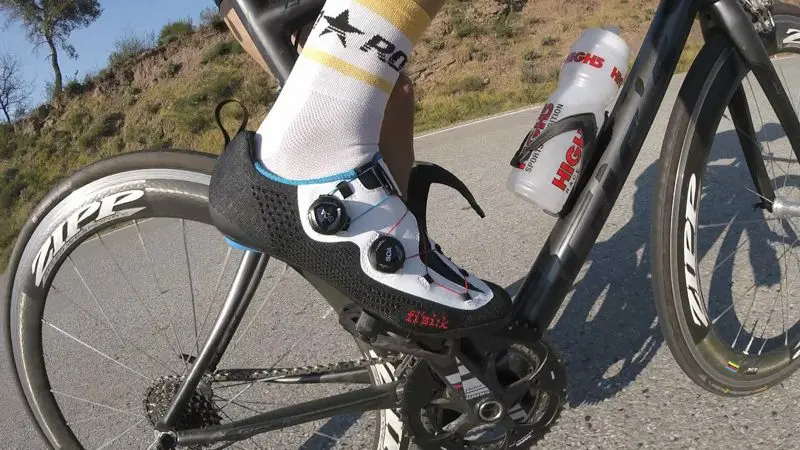
For the bike, opt for a full carbon frame with aerodynamic tube shapes. Research the weight, choose round handlebars that allow for the mounting of extensions, and equip yourself with a pair of carbon wheels with rim depths between 40 and 90 mm, depending on the type of course profile you anticipate. It’s possible to mix depths, for example, a 60 mm rim at the front and an 88 mm rim at the rear to promote air penetration and minimize your aero drag. After selecting your approved helmet in the right size and with good retention, equip yourself with cycling or triathlon shoes (the latter usually have a rear tab for quicker donning and often feature an inverted Velcro closure or Boa dials) with clipless pedals to limit power loss. The last essential bike item (for most of us) is a pair of glasses to protect your eyes from insects, provide better visibility without being bothered by wind or light intensity, and thus ensure your trajectories and choose where to place your wheels.
For running, and after having your stride analyzed in a store or by a professional, choose a pair of running shoes that suits your foot strike (heel/midfoot/forefoot), your characteristics (pronator, supinator, neutral), that combines both cushioning and energy return qualities, and that is obviously adapted to the distance to be covered. Don’t set out to buy the lightest model possible; it’s better to protect your joints.
Finally, the last essential: a heart rate monitor watch (with chest strap or wrist sensor) to optimize your training and regulate your pace during the race so you don’t overexert yourself.
The Optionals
If wetsuits are prohibited, have a swimsuit available, meaning a textile layer without neoprene that is compressive up to above the elbows and knees, which will support you and allow you to glide better in the water.
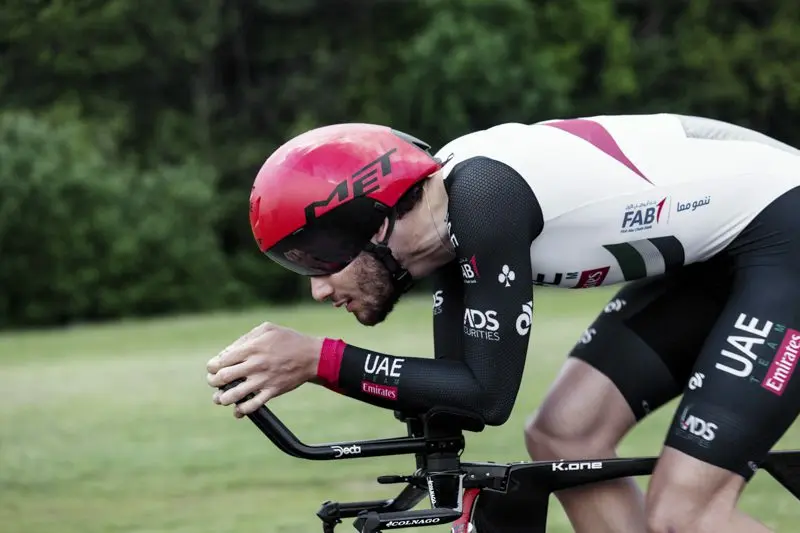
On the bike, invest in an aerodynamic helmet that will optimize airflow around your head, and, if your budget allows, equip yourself with a power meter that will inform you to the second of the efficiency of your pedal stroke, your energy expenditure, and allow you to smooth out your effort, especially for long-distance events. For running, photochromic lenses will be ideal for adapting to all weather conditions, especially if they are changing. And why not elastic laces or silicone laces with memory tension to save time and avoid missing your tightening, which could cause pain on the instep.
The Accessories
Very practical: buy a transition bag to take to your event. The advantage is twofold: firstly, to store almost all your equipment, as these bags are designed for it; secondly, to not forget anything by using a checklist!
Also essential, especially if you’re traveling by plane, is a reinforced bike case rather than a simple flexible bike bag to protect your frame, wheels, cockpit, and your (fragile) rear derailleur hanger. Also consider a double bottle cage mount positioned behind your saddle, which will allow you to carry two extra bottles for optimal hydration during the effort. To avoid sunburn and heatstroke, a cap or at least a visor is welcome to relieve your face and neck in case of a heatwave during the run, as is a gel belt for nutrition.
Don’t Forget
We never think about it, but don’t go to an event without:
– a second spare swim cap or for very cold water;
– two pairs of swim goggles for sunny or low-light conditions;
– a towel for the transition area to dry your feet after the swim before putting on socks and shoes;
– a floor pump equipped with a pressure gauge to check your tire pressure before the race;
– two race number belts (one to wear from the bike, the second to put in your T2 bag just in case) with 3 attachment points;
– a mini first-aid kit;
– toilet paper for emergencies in the transition area;
– Allen keys for adjustments;
– a valve extender, an inner tube, and CO2 cartridges with their adapter;
– tape, scissors for last-minute adjustments to your nutrition, for example;
– elastic bands to keep your shoes flat on the bike;
– safety pins, even if they are usually provided;
– a marker to write your race number on your arms and calves to save time if there are too many people at the bike park entrance;
– a pot of Vaseline for wetsuit chafing, especially around the neck and armpits;
– sunscreen;
– plastic bags to make putting on the wetsuit easier;
– a saddle bag to store your repair kit (inner tube, tire levers, CO2 cartridges).
With all that, and good training of course, no more excuses for riding towards achievement.
SEE ALSO => All our Gear articles
Share the post "What Gear for Triathlon?"