Share the post "Why Cyclists Don’t (Always) Use Bike Paths"
 In this CQFD section (“Ce Qu’il Fallait Démontrer” – What Had to Be Demonstrated), we answer your questions and address your preconceptions about cycling and triathlon. Simple questions, but not necessarily obvious answers for novices or those unfamiliar with our sport.
Among the prejudices many motorists hold against cyclists, there is the use of bike paths, which are supposed to “make way” for motor vehicle drivers, or “protect” cyclists from traffic. But the reality is not so simple.
By Guillaume Judas – Photos: pxhere.com, pixabay.com, flickr.com
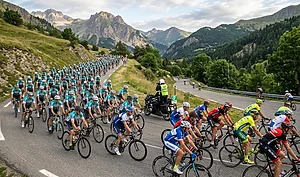
This is one of the main grievances raised against sports cyclists, on the road or on social media, just like riding two abreast or running red lights: why don’t cyclists systematically use bike paths when they are present? Some motorists even justify their dangerous behavior and the risks they pose to cyclists (by deliberately shaving them or slamming on their brakes in front of them to show their displeasure, or even boasting about intentionally causing them to fall) by what they consider to be arrogance, namely the refusal to use a bike path.

An example of a discussion that can be found here on this link, and which shows the disconnect between the perception of road sharing, whether one is a cyclist or a motorist. Let’s note, however, the courage of these potential assassins, who write under a pseudonym.
Most of the time not mandatory
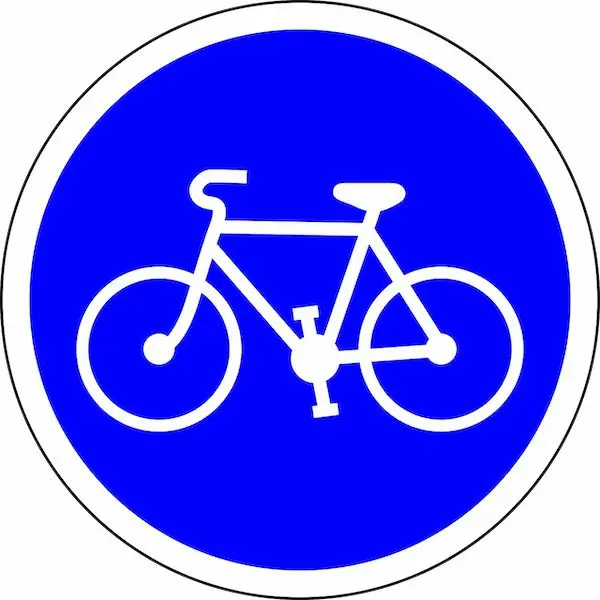
However, and too bad for these angry motorists, in France, bike paths are not systematically mandatory. The Highway Code even specifies that a cyclist must take a bike path if it is indicated by a round blue sign with a white bicycle. The round sign indicates an obligation. This means that paths indicated by a blue square (the most numerous) are recommended, not imposed, and this has been the case since the decree of September 14, 1998. Article R 431-9 of the Highway Code precisely states that “the obligation to use cycle lanes or paths is established by the authority vested with police power after consulting the prefect“.
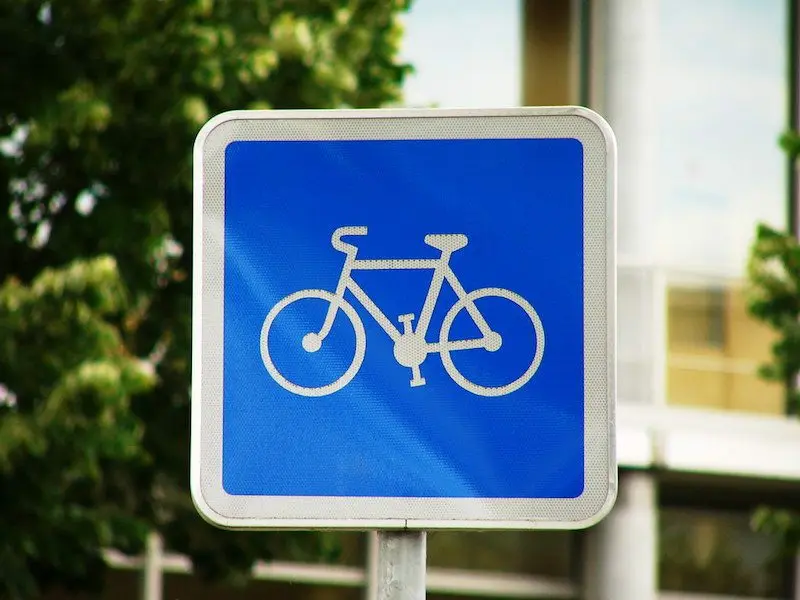
Even better: some round blue signs installed before the 1998 decree are obsolete, because the bike paths do not meet current safety criteria, notably a minimum width of 1.70 meters.
Not only do irascible motorists regularly point out to cyclists that they are not using these paths, but it also happens that law enforcement officers make remarks or threaten to issue fines. This, of course, they cannot do, in the absence of an obligation in the Highway Code. Forcing oneself to ride on a non-mandatory bike path is a bit like forcing oneself to drive on a highway for a motorist. It is certainly a reserved area, but nothing obliges one to use it, for whatever reason.
Why are they rarely suitable?
Motorists can choose not to take a toll highway and instead use a departmental road, and cyclists can choose not to ride on a bike path they deem dangerous for themselves or for the integrity of their equipment (with punctures in particular, as paths are rarely maintained).
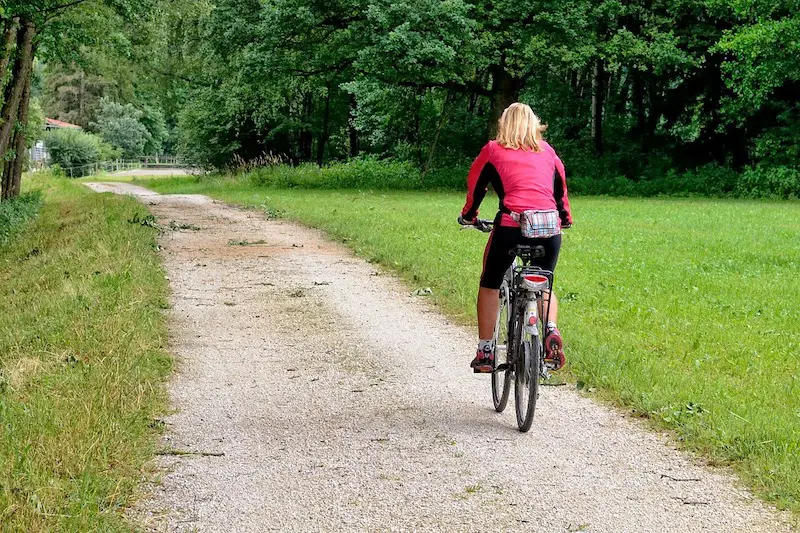
For a fully secure bike path that could be imposed on cyclists, it needs a clean and well-maintained surface, no vehicle parking on this bike-only path, no construction site passages or field exits, no storage of trash cans or debris, and no pedestrians, rollerbladers, or scooters. And since public authorities seem in no hurry to clean up bike paths (in every sense of the word), there is little chance that this will change.
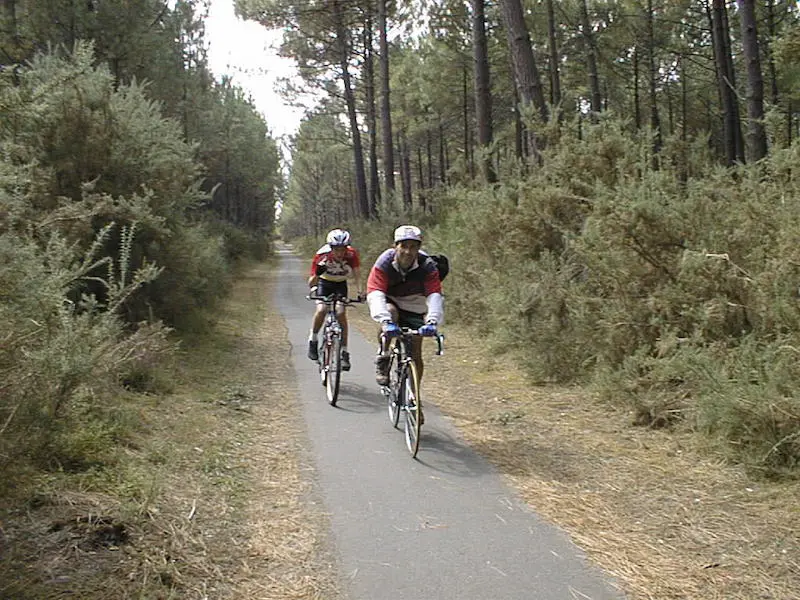
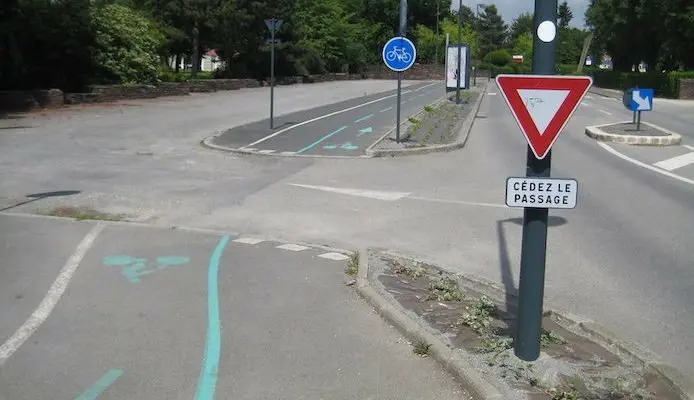
These non-mandatory cycling facilities, although imperfect, certainly have their uses, but it must be acknowledged that they are not aimed at regular or sports cyclists. On many paths, installed despite all logic, one sees numerous lowered curbs, poorly designed routes for a speed barely higher than that of a jogger, or passages in the middle of bus lanes or sidewalks, or even behind parked vehicles, and frequent loss of priority at intersections.
An effective solution
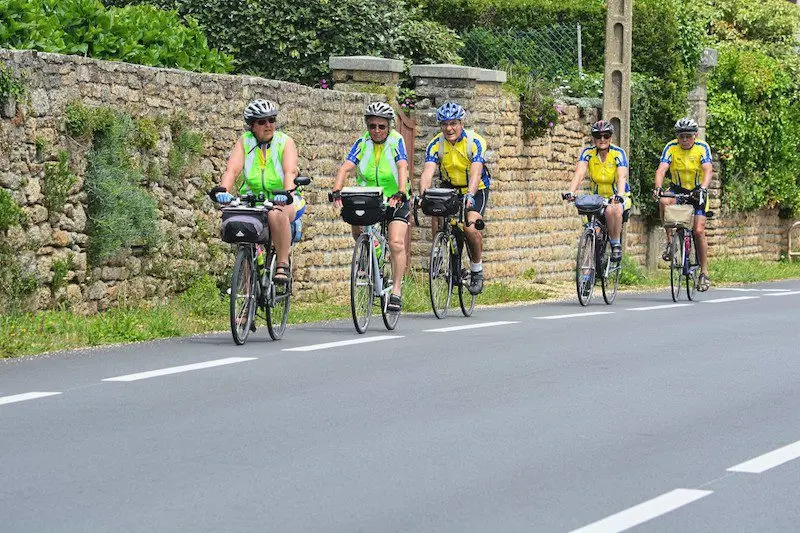
Cycle lanes, present at the side of some roads, have the advantage of usually having the same surface, and the line marked on the ground clearly indicates the space allocated to cyclists for their safety during overtakes. These lanes also have the advantage of benefiting from a coherent layout, as they are parallel to the road, even if sometimes they collect debris and rubbish displaced by cars and trucks as they pass. This is, however, a fairly simple solution to implement, requiring little infrastructure, and which riders willingly use, without feeling cramped or in danger on a too-narrow lane delimited by concrete edges. This space also makes it possible to impose the rightful place of cyclists on the road, who pay their taxes like any motorist, and who have no reason to be rejected or considered intruders (as they are on sidewalks, or on paths where toddlers on rollerblades or scooters practice).
=> SEE ALSO: All our CQFD articles
Share the post "Why Cyclists Don’t (Always) Use Bike Paths"