Share the post "A technique to improve mental strength"
Even if you enjoy cycling, swimming, or running, sometimes after a certain distance, your mind gives up and you get exhausted. So at that moment, how do you make your mind your best partner? We offer you a technique to push your limits and go further in your effort.
By Jean-François Tatard – Photos: flickr.com / pxhere.com / All rights reserved
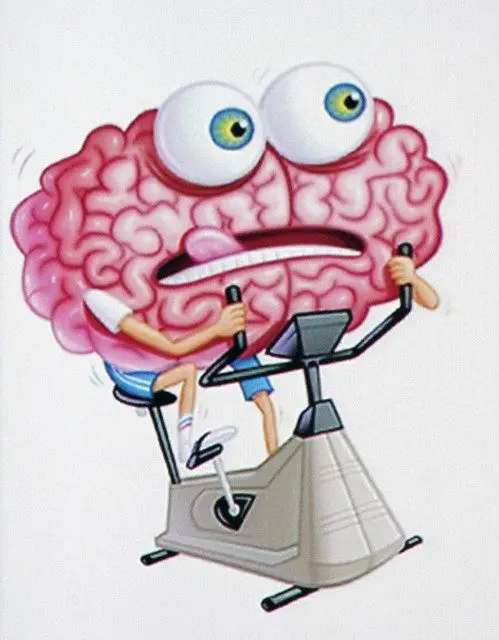
Have you ever heard of peripheral vision? I’ll tell you right away: peripheral vision is the most powerful of all the tools we’ve ever talked about. This is also a state of hypnosis. But while playing sports? Yes, while cycling, running, or swimming!
Stop with the preconceived notions. Hypnosis is not just for Messmer! Stop closing your eyes! And don’t let yourself be lulled by that sweet voice! Get out of your armchair too. Here we are going to learn to enter a dynamic state, by ourselves, without hearing any voice! Ready? Shall we try?
Refocus on yourself
The secret of this concept, which resembles Emile Coué’s technique (you know, the famous Coué method), is that it allows you to refocus on yourself and clear your mind. The goal is to find an incredibly powerful energy resource deep within you.
The technique is one of induction. That is, a phase allowing you to enter a state of hypnosis. It is an excessively powerful motivational tool that can be coupled with other simple self-hypnosis exercises to stimulate your running pace and reduce your heart rate…
The goal is to find an incredibly powerful energy resource deep within you.
How to “defocus”?
First, focus on… defocusing! Come on, I’ll help you! Go for a run at your usual pace. Your legs are fluid, your body is relaxed, your arms remain flexible…
- The first step is to choose a point far in front of you. Fix it without forcing your eyes or the position of your head. So there’s no need to look for a point in the air. You understand, you shouldn’t make any effort to fix this point.
- Then create an imaginary link between this point and your eyes; as if you were connected to it by this imaginary thread. Imagine that this point strongly attracts you, that it pulls you towards it and that nothing and no one can modify this attraction.
- Imagine the color of this thread, give it a thickness, a particular texture, a material you like. Add as much sensory data, as many details as possible, even if they seem superfluous. It’s about imagining, so enjoy yourself!
Now, you’re going to learn to defocus. Let me explain: you’re going to learn to consciously use peripheral vision. This is the opposite of foveal vision and therefore the one that allows you to have a high-resolution view. Rest assured, the less effective visual acuity will be largely compensated by this ability to better perceive moving objects.
Keep your vision on this point and now choose a point to the left and then to the right of the main point. Then you will continue to choose a point even further to the left and another point even further to the right. Little by little you will widen the horizon while remaining focused on the central point. Are you following me?
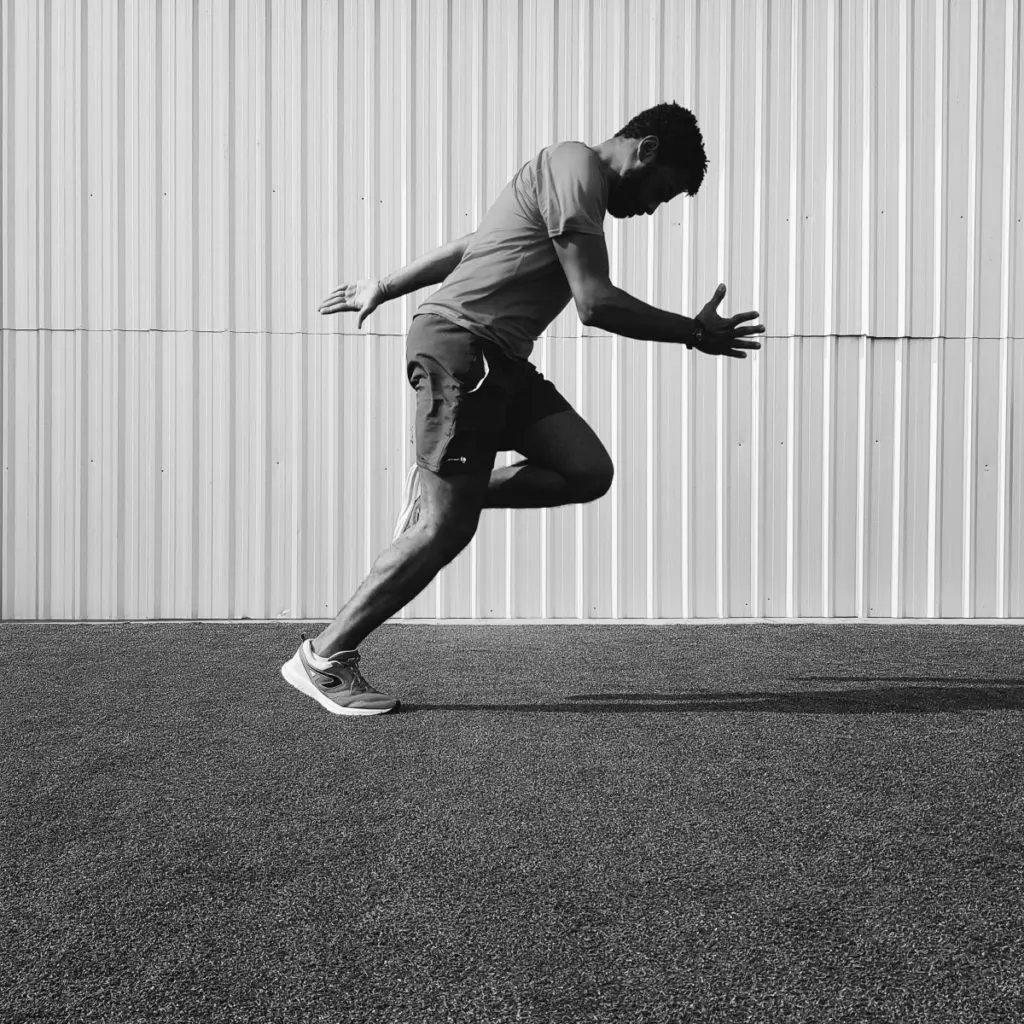
This horizontal defocusing work will be finished when you perceive a roughly 180-degree horizon. However, you will learn in the same way to defocus vertically. The idea here is to repeat the same process and gradually widen your horizon from bottom to top until you perceive a complete panorama allowing you to be totally defocused.
The concrete benefits
When you get close to the main point, you just have to choose another one and start the process again. This will quickly become natural and intuitive with a little practice and repetition. It’s like running: training is what makes you perform.
You’re going to ask me about the benefits? It’s fun to play with your vision for 5 minutes, but what’s the point without concrete benefits? Thus, peripheral vision will offer you many advantages during effort.
- The use of this “tool” will allow you to be much more sensitive to the movements of things and people around you, but also to be more focused on yourself.
- Let me remind you, peripheral vision is an inductive method, meaning it allows you to enter a state of hypnosis. It is often the first step in deeper work.
- In the meantime, simply using this tool is enough in itself to give you pleasure and appreciable comfort in your running, cycling, and swimming practice.
We ask fewer questions
In peripheral vision, if you are very attentive to what is happening within you, you can perceive that the inner dialogue has disappeared and that the train of thoughts is also completely cut off! Goodbye to everything that pollutes your mind! Finished with all those wagons of limiting beliefs! No more bad vibes!
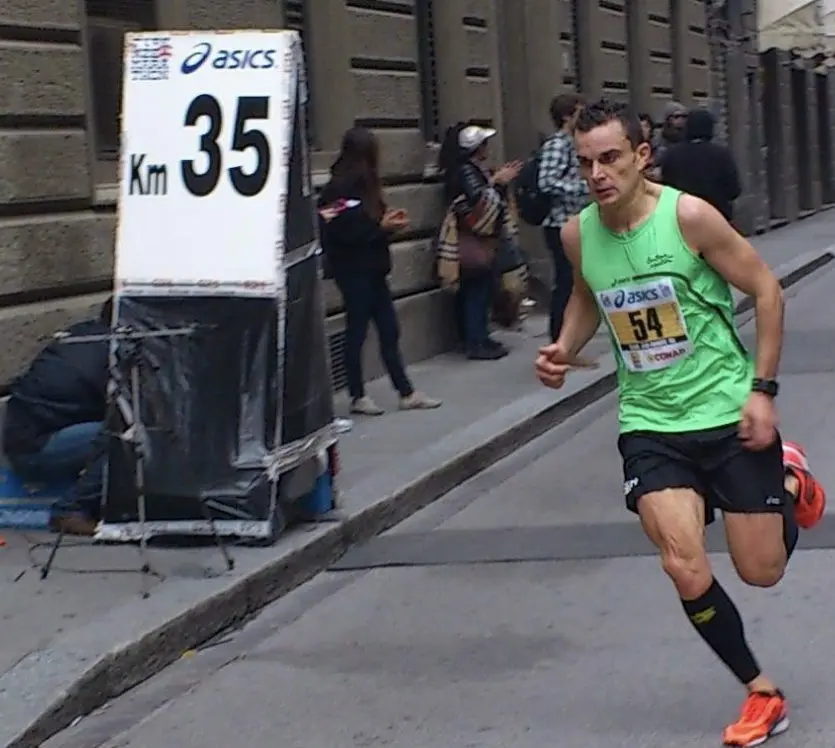
Favoring a sensory channel, such as the visual channel here, leaves less room for kinesthetic channels, and therefore emotions and sensations, and auditory channels.
Many possibilities
The possibilities for using this formidable tool are, ultimately, numerous. So now let your creativity run wild to determine in what circumstances they will be most useful to you! Immediately, I don’t know why but I think of the famous marathon wall. The fact is that with practice, this state will become a reflex. Like an automatism, you will know how to immerse yourself in this state at the moment you have determined it and even better: to stay there to get even more benefit from it. And now that you have the method, go without apprehension to climb the mountains that seem highest to you!
-> SEE ALSO: All our Coaching articles
Share the post "A technique to improve mental strength"