Share the post "How to gain watts"
By Guillaume Judas – Photos: PEdALED / Maratona Dles Dolomites / 3bikes.fr
-> SEE ALSO : Power in cycling
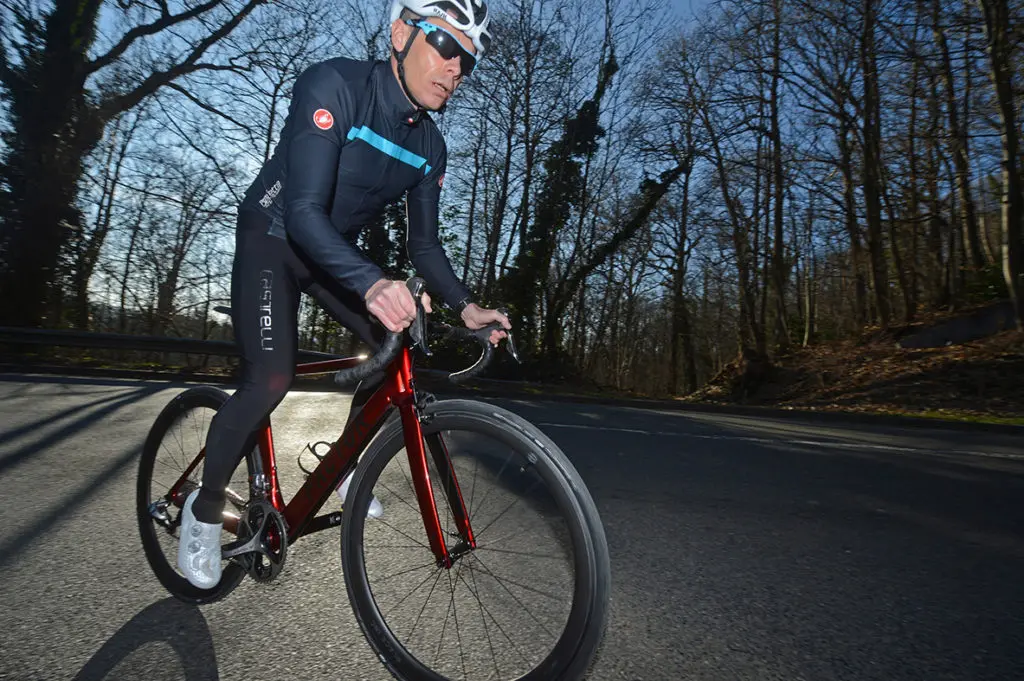
While it’s difficult to determine the extent to which a professional cyclist’s level is innate or acquired, we know that one doesn’t go without the other. Because training alone always reaches its limits if physical capacities are reduced, and because what we call talent can also be an above-average ability to assimilate workloads. It’s impossible to predict an individual’s progression margin, from their cycling debut to the “peak” of their career. Too many parameters come into play.
-> SEE ALSO : Overtraining, recovering to progress
One of the judgmental errors of so-called modern training methods, based solely on the tools available to us today, is to forget the fundamental rules of cycling, which is 95% an aerobic discipline. Trying to gain power by working only at high intensity leads to both stagnation and overtraining in most cases.
-> SEE ALSO : The importance of endurance training
Riding to gain watts
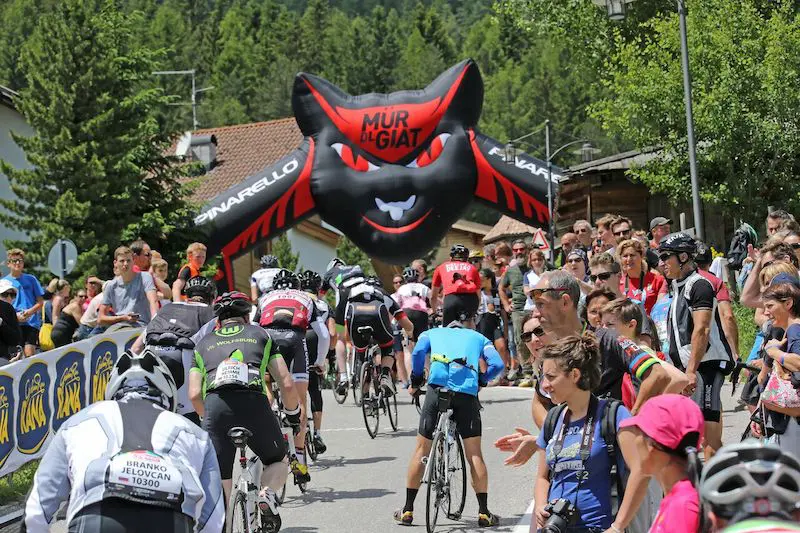
When a modest cyclist seeks to gain power to climb hills, they must first ensure their base training is sufficient. If they arrive at the foot of a climb already over-exerting, they quickly enter the anaerobic zone, an intensity that causes severe leg pain and breathlessness. Hence this sensation of lacking power, which is in fact simply a lack of physical fitness.
-> SEE ALSO : The different training intensities
Base training is fundamental, and it comes through regularity and frequency of sessions, performed at the right intensity, neither too fast nor too slow, hence the interest in using a power meter. Even if indirectly, true base training also improves the famous VO2 Max, and therefore maximal aerobic power, useful for more intense efforts. It’s all beneficial.
Even if indirectly, true base training also improves the famous VO2 Max.
Then, if we understand the principle that power corresponds to the product of the force applied to the pedals by the speed at which they are turned, and that the efficiency of the movement is paramount to mechanical efficiency (only about 25% of the power produced by the human body is actually transmitted to the pedals), it is necessary to do strength, cadence, and motor coordination exercises. This does not directly increase the engine’s displacement, but its productivity.
-> SEE ALSO : Strength training to ride faster
Finally, once all these basics are acquired, aerobic power is improved by working more specifically in a critical zone, just below the anaerobic threshold, in order to push back as much as possible this equilibrium zone where the amount of lactic acid produced by muscle work to function at high intensity is recycled. The higher this threshold is relative to VO2 Max, the longer it is possible to ride at high intensity (as for a time trial or climbing a pass). And the higher this threshold, the less one suffers from attacks or accelerations from competitors or riding companions, which allows one to conserve reserves to make a difference at the end of an event or ride when others have accumulated fatigue. For example, for a regular cyclist, specific sessions can improve them by 10 to 12% in watts at this threshold over two months. But don’t expect to progress indefinitely in the same way. It sometimes takes several years to gain 1 or 2% on one’s best physical condition. And up to a ceiling, which marks your physical limits. This is what defines each person’s level.
For a regular cyclist, specific sessions can improve them by 10 to 12% in watts at the anaerobic threshold over two months.
-> SEE ALSO : Why and how to ride with cadence
Losing weight to gain watts
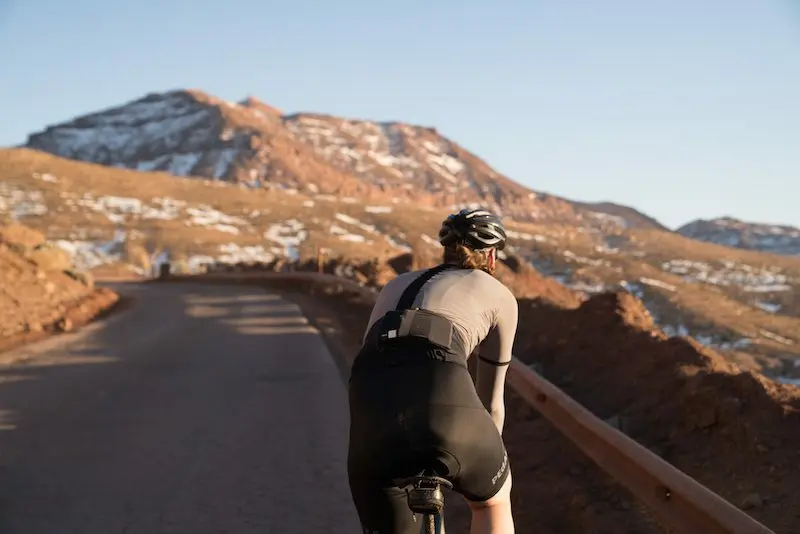
You can also save watts by reducing the forces of resistance. Weight is the enemy of the cyclist who has to fight gravity. At equal power, the less weight you have to carry, the faster you climb a slope, or with less fatigue. However, you have to take into account the total weight to be lifted, not just that of the bike. This includes the cyclist and their equipment. If we take the example of a 70 kg cyclist, with an 8 kg bike and 1.5 kg of equipment (shoes, helmet, clothing, glasses), a 1 kg weight saving on the bike only saves them 1.26% of their total weight. Regardless of the fact that a 1 kg weight saving on the cyclist’s weight is also beneficial for physical condition (which is not the case when acting on equipment), losing the same weight on an 8% gradient at 15 km/h saves approximately 4.5 watts of resistance. That’s a gain of 20 seconds for 30 minutes of climbing. This is small, except in competition where every second counts. Note that the weight saved also has an advantage in terms of responsiveness with each change of pace.
Getting lower to gain watts
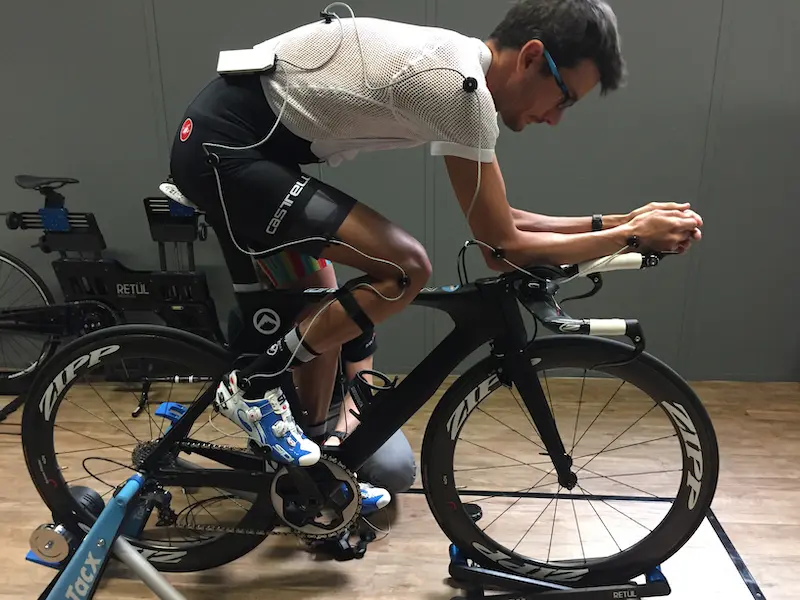
When leaving the percentages, weight becomes less important, because then it is against aerodynamic resistance forces that one must fight. And these are proportional to the square of the speed. 75% of aerodynamic resistance at 45 km/h comes from the cyclist on their machine. By moving from a position with hands on top of the handlebars to the hoods position, you save about twenty watts (depending on the rider’s build). By moving with hands in the drops, it’s almost 40 additional watts. In a “time trial” position with an adequate bike, it’s another 70 to 80 watts more! About fifteen watts can still be gained on clothing (skinsuit and helmet). So, in the end, almost 150 fewer watts for the same speed when you put all the chances on your side.
You can save almost 150 watts for the same speed when you put all the chances on your side.
Without radically changing discipline, an aero road frame already saves approximately 25 watts compared to a frame with round tubes. With aerodynamic wheels, it’s around 10 watts. Because to be a complete road rider, you have to stay in a compromise. And if the speed of 45 km/h frightens the modest cyclist (it’s the aero reference in the cycling industry and can also be considered when the wind is strong and head-on), you should know that the more time you spend on the bike, the greater the time gain (but not in watts). This is indeed the primary factor for spending less energy, or riding faster with the same power.
Overcoming the last resistances
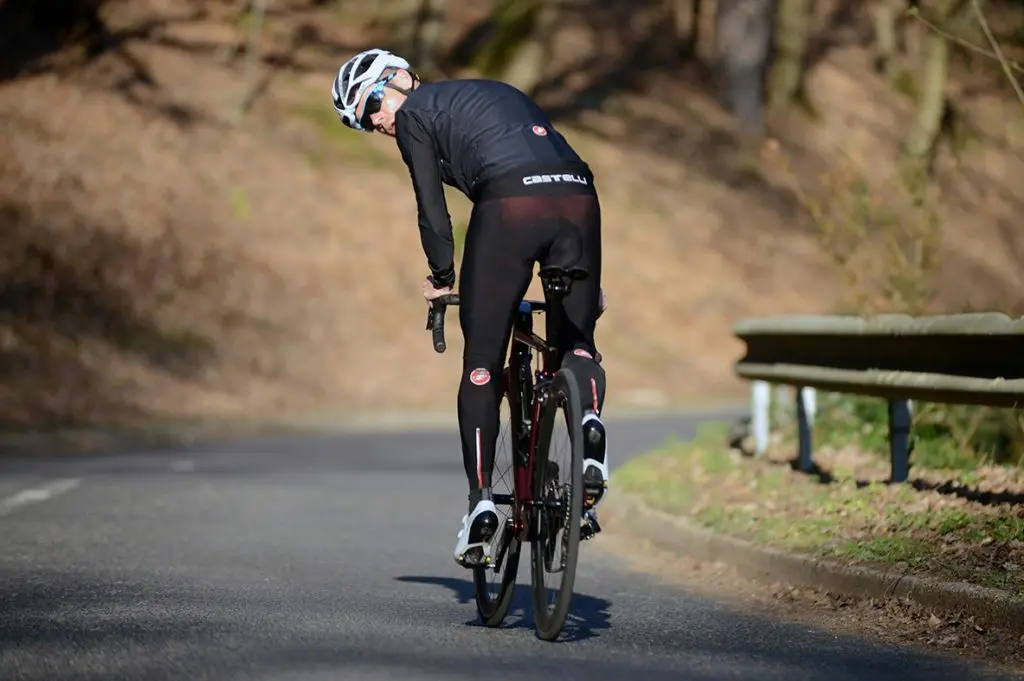
Mechanical friction represents the last forces to overcome. Count 3 to 9 watts by replacing bad bearings with the very best, and 5 to 15 watts for tires (model and inflation pressure), and even up to 15 watts between a dirty, poorly maintained drivetrain and a fluid, well-oiled setup. As for the pure efficiency gain from the rigidity of a frame and wheels, it has not been truly measured under perfectly identical conditions. But what is certain is that when physical condition begins to stagnate or progress at the cost of tedious efforts, equipment also plays an important role in optimizing performance.
-> SEE ALSO : All our Coaching articles
Share the post "How to gain watts"