Share the post "Power in Cycling"
By Guillaume Judas. Photos: Orbea / Shimano / DR
The power of a cyclist or triathlete is their efficiency in producing speed, or the value of the effort they make to overcome the resistances that oppose them when pedaling (gravity, air resistance, and mechanical friction). The level of power supplied over a determined duration allows us to know the qualities of the rider, in terms of explosiveness, endurance, or resistance to very high intensities over several minutes. Power values reported to the duration of effort indicate the cyclist’s engine size, and allow for a fairly precise estimation of their level, and even a prediction of their performance.
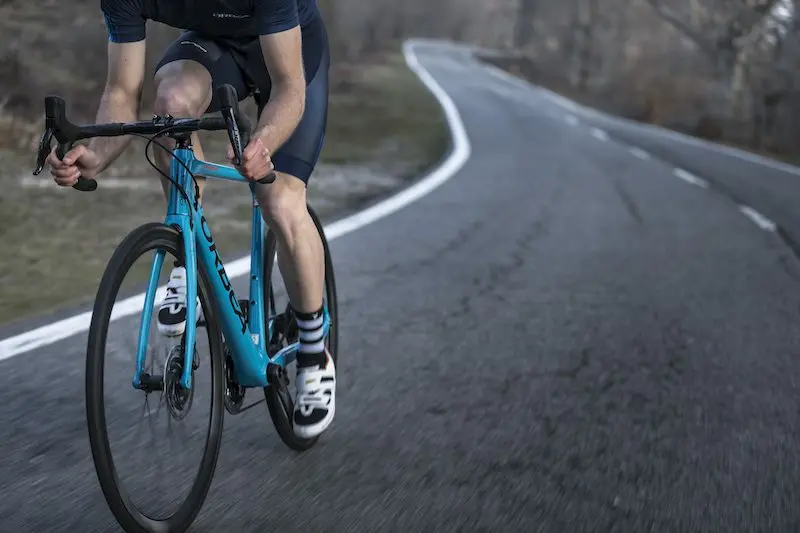
This power depends on innate qualities and adaptation to training loads. Muscle strength, cardiovascular capacities, movement coordination, current physical condition, and effort management all contribute to power production. It is more representative of effort than heart rate, which is only an indirect and delayed measure.
One should not confuse power and strength, even if strength is necessary for power production (but not sufficient).
-> SEE ALSO: Strength Training to Ride Faster
When we talk about watts
The watt is an international unit of measurement to quantify power, energy flow, and heat flow. One watt is equivalent to the transfer of one Joule of energy per second. It is the product of the force exerted on an object multiplied by its speed of displacement.
Producing one watt is equivalent to lifting an object weighing a little less than 100 g at a constant speed of one meter per second. Doubling the power means lifting the same object at double the speed, or lifting an object twice as heavy at the same speed. We can also talk about another unit of measurement for power with horsepower, which is used for motor vehicles. One horsepower is equivalent to 736 watts, a very high power for a cyclist.
In cycling, power in watts is therefore the product of the force exerted on the pedals multiplied by the rotational speed of the cranks.
In cycling, power in watts is therefore the product of the force exerted on the pedals multiplied by the rotational speed of the cranks. To improve the power they deliver, a cyclist can either increase their strength or increase their cadence. The notion of duration obviously comes into play. Producing 400 watts is equivalent to lifting a 40 kg object at a speed of one meter per second, or a 20 kg object at a speed of two meters per second. This is within everyone’s reach for a few seconds, much less so for several minutes. And this is what differentiates the occasional cyclist from the professional racer.
Relative values
Raw power is not enough to classify performance level or physical condition. It is more accurate to relate the power supplied to the athlete’s weight or their drag coefficient. A heavy athlete is naturally more powerful than a light one, but the latter can largely compensate thanks to a more favorable power-to-weight ratio, especially uphill. On rolling courses, raw power is more interesting, but on condition that the surface resisting the air is minimized. To be more performant, in addition to gaining physical power, triathletes and road cyclists must also seek to optimize weight and aerodynamics, in order to reduce resistance forces.
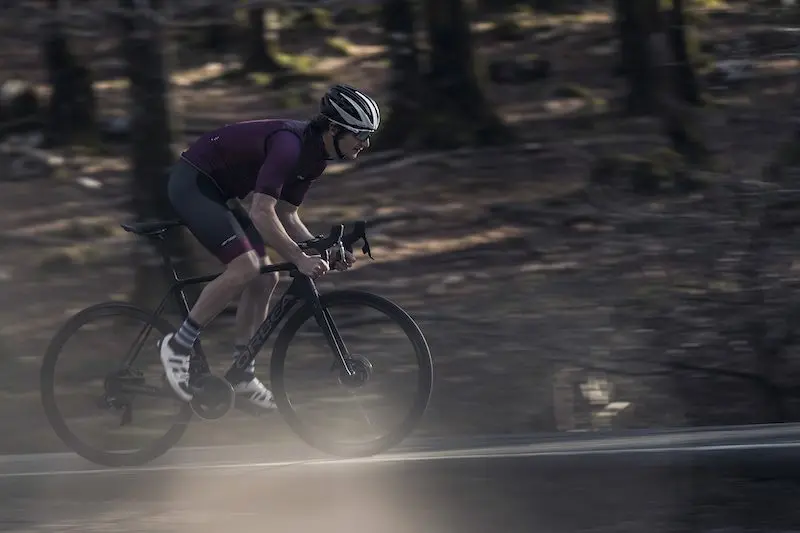
All these parameters related to the duration of the effort make it possible to know the power profile, and thus to determine strengths and weaknesses. Tools allow either to calculate it or to measure it live, in order to precisely work on the power zones that correspond to the physiological parameters that the athlete wishes to develop or optimize.
In running, the concept of VMA (Maximum Aerobic Speed) is used to determine training paces. This VMA on flat terrain is a good indicator because few external parameters modify the runner’s speed of movement. A VMA of 18 km/h, for example, is independent of the athlete’s weight or frontal area. On a bike, you have to face more variations in gradient, wind, and mechanical variables. The notion of MAP (Maximum Aerobic Power) is therefore a much better indication than instantaneous or average speed. But this MAP must always be relativized with the parameters mentioned above (and especially weight).
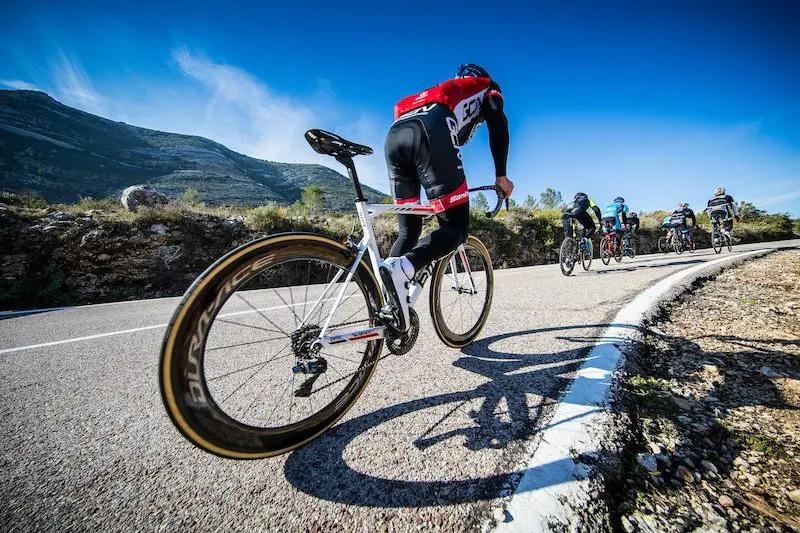
A power meter, or a sophisticated calculation method, delivers wattage data of the effort that provides information on the actual intensity level. A great benefit for the quality of training.
How to measure power?
It is possible to evaluate the power of a cyclist or triathlete and the different associated effort thresholds, in order to know the maximum power according to the duration of the effort, thanks to a laboratory test.
-> SEE ALSO: The different training intensities
This test provides information on the physical level at a given moment, and gives recommendations for training intensities for the following weeks. Precisely monitoring the quality of training therefore requires frequent tests.
It is also possible to use a mathematical formula to determine power, since we know that the speed of movement on a bicycle is equal to the sum of the resistance forces of gravity, air, and friction. Many online calculators allow you to estimate power based on different parameters, with an imprecision that increases as the gradient decreases. It is indeed easy to know the cyclist’s weight, their bike’s weight, and the gradient, but it is more complicated for the drag coefficient and mechanical friction. A bit tedious, even if well conducted, this type of measurement provides good indications of progress, although a simple stopwatch on a test course performed with the same equipment and conditions can also prove very effective.
The simplest method for measuring power is to equip your bike with a power meter.
Finally, the simplest, but not the least expensive, method is to equip yourself with a power meter, placed either at the bottom bracket, pedals, or rear hub. It is a device that measures deformations using strain gauges and deduces a power in watts transmitted directly to the bike computer. The data can be viewed live for good effort management, but can also be analyzed retrospectively and archived. The price of this type of device varies from approximately €400 to €2500, depending on the level of measurement reliability, the brand’s reputation, and its integration on the bike.
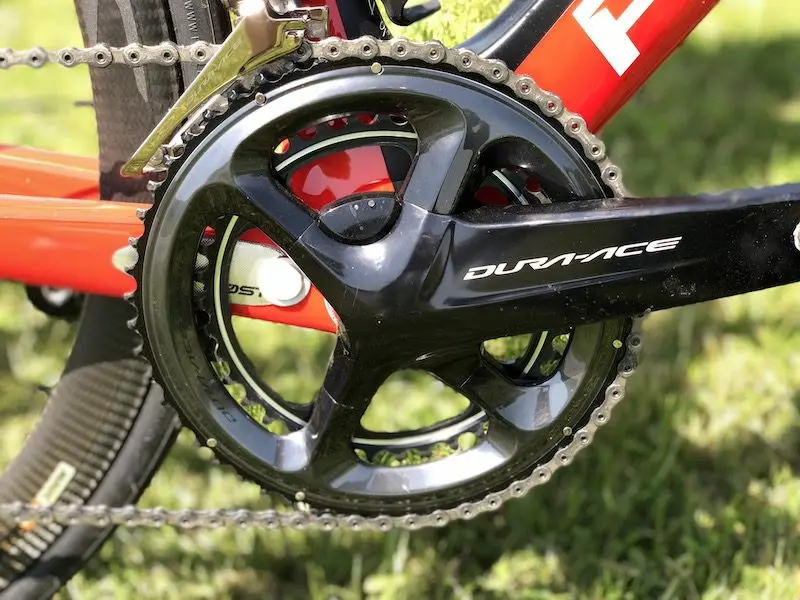
Reliability, as well as proper calibration and temperature change compensation, are indeed essential, because a 5 to 10% discrepancy in the displayed actual power can prove totally counterproductive for training, leading to poorly calibrated sessions, either too hard or too easy compared to the qualities one seeks to improve.
-> SEE ALSO: Shimano Power Meter Test
Thanks to such a reliable and well-calibrated sensor, it is thus possible to perform exercises at a precise intensity expressed in watts, according to the different energy systems you are looking to work on to progress. These intensities are determined by a preliminary laboratory test that evaluates your physical capacities, or by regular field tests using the same sensor. We will discuss this in more detail in a future article.
-> SEE ALSO: All our Coaching articles
Share the post "Power in Cycling"