Share the post "When and why to wash or discard your water bottle?"
By Jean-François Tatard – Photos: Pixabay / Creative Commons / DR
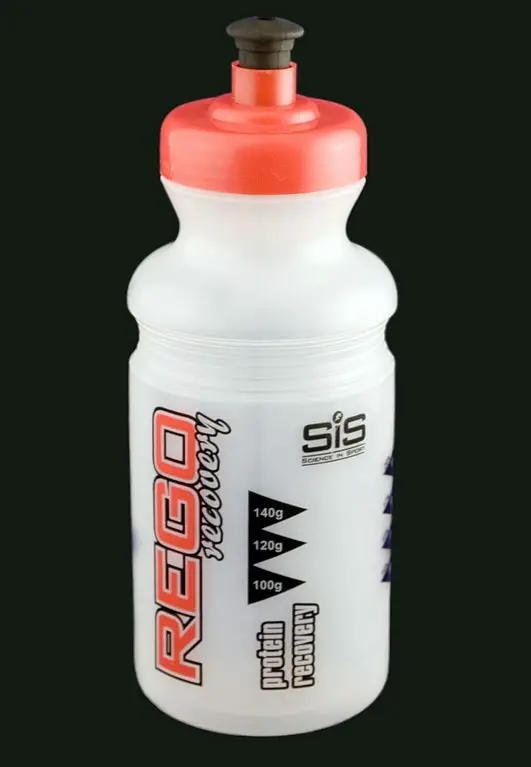
Have you ever been surprised by the taste of your water bottle’s contents? Have you ever smelled a foul odor when opening your “gourde” to fill it or empty it into the sink? And I’m not even talking about the plastic taste. Not long ago, on 3bikes.fr, we shared an article about the different types of water to consume and their benefits for your well-being or health. And to fully enjoy your favorite activity, it’s better to invest in a quality liquid reservoir to hydrate regularly throughout your ride. Beyond the quality of the contents, this time we are interested in the quality of the container in this article.
– > SEE ALSO: Which water to choose for daily consumption?
The container serving the content
What’s the point of your water bottle containing quality water or a quality drink if the bottle itself is full of bacteria? When you sometimes look at what’s in some riders’ water bottles, it can be truly frightening. In some cases, you can almost find food in them.
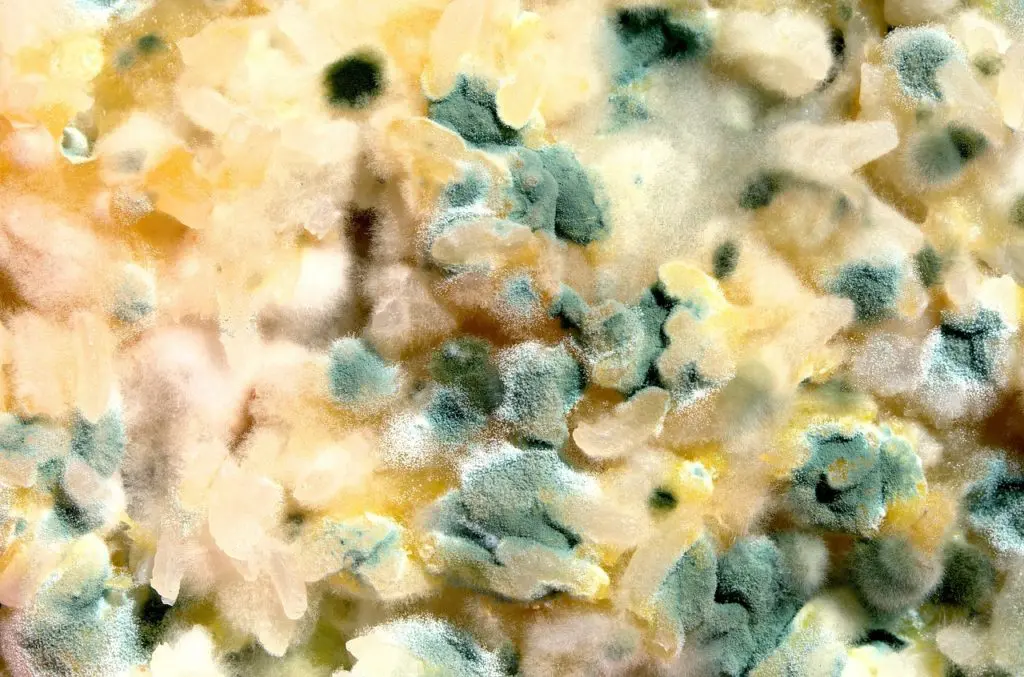
The result is sometimes disastrous. A study by Treadmill Reviews, for example, found over 300,000 units of bacteria per square centimeter inside a dozen randomly tested sports bottles.
When you sometimes look at what’s in some riders’ water bottles, it can be truly frightening.
What is the risk?
More disgusted than fearful, I still took a little interest in the subject of common bacteriology. I even sought information from Doctor Veronique Menichetti, an expert in veterinary services. And my question was to know the level of bacterial contamination on such and such a surface, such and such an object, in such and such a liquid, and what was the acceptable tolerance limit for the organism. And the problem is that this requires real expertise. Because there will always be bacteria. So it requires a bit of discernment.

The goal is not to scare you. However, not so long ago, our ancestors died from bacterial contamination. I’m talking about a time when we were still very exposed to plague and cholera. Nevertheless, that period is over. Bacteria are the simplest and most widespread living beings on Earth. And by far, they are the most abundant form of life. And finally, they are not viruses…
A bacterium is not a microbe or a virus
To put it simply, bacteria are a thousand times smaller than a millimeter, while microbes are even smaller than bacteria. Bacteria propagate by dividing into two identical copies, then again into two, and again into two, etc. Viruses, on the other hand, cannot reproduce by dividing. To do so, they must enter a cell. But most importantly, all viruses cause disease: plague, cholera, typhus, malaria, etc. So you can be less afraid of a bacterium than of a virus... Thus, if we consider the bacterial world as a whole, these living beings are overwhelmingly more beneficial than harmful. In this ecosystem, they actively participate in our biological balance.

A little cleanliness nonetheless
It is, however, essential to clean your water bottles thoroughly. First, to remove dirt, but also to eliminate bad odors. And I remind you that it’s not glass. The material that makes up your water bottle is plastic.
A water bottle that can no longer serve its intended purpose is a bottle that is pierced, cut, or has lost its watertightness.
Beyond the fact that the extraction of petroleum to make the bottle is extremely polluting (but that’s not the subject…), plastic ages very poorly and quickly, and unfortunately, most of the time, it is not recyclable. And if it is, it’s only a few times, unlike glass or steel, which are infinitely recyclable. Its incineration or landfilling as waste also pollutes enormously.
If we agree that most of the time, bacteria are not deadly and also contribute to the balance of your ecosystem, and that in parallel you must reduce your use of plastic while taking into account that it is currently difficult to imagine manufacturing your water bottles with another material, then you will have to preserve them and try to extend their lifespan. Because ultimately, a water bottle that can no longer serve its intended purpose is a bottle that is pierced, cut, or has lost its watertightness. For cleaning, you must first invest in a sponge and a cloth. Cleaning the exterior walls of your water bottle is quite simple.
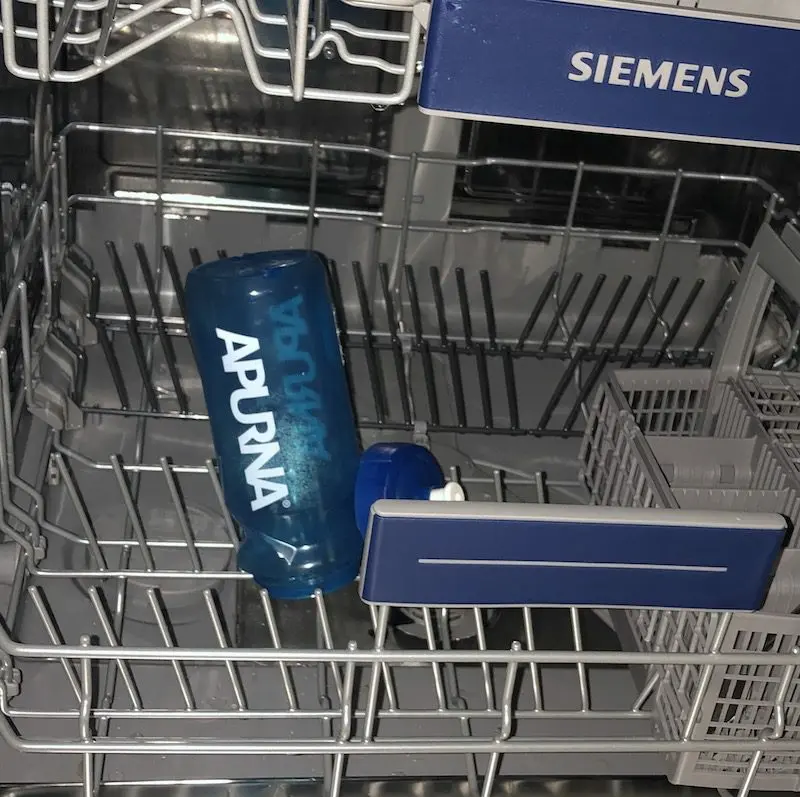
How to clean the water bottle?
You can clean the outside of the water bottle, for example, with a cloth or with hot water and soap. But it’s the inside that you really shouldn’t neglect! First, when you get back from your ride. And then again, by giving it a quick rinse before your next departure. Don’t let liquid sit in your water bottle. When you get back, immediately empty the remaining contents into the sink. Furthermore, impacts, falls, throwing the bottle, etc., can also cause residues to get inside. So there too: rinse your water bottle several times with hot water and let it dry thoroughly. Do this regularly! And if you’ve left energy, energizing, or protein drinks stagnant for too long, it’s highly likely you’ll have black stains inside your water bottle. In that case, you’ll have to clean it more thoroughly and scrub hard, gentlemen (ladies are known to be cleaner, laughs).
Seven cleaning tips for water bottles
|
An eco-citizen gesture
I remind you that your water bottle is made of plastic. Thus, dear cyclist friends, if you want to continue enjoying your beautiful roads of France and Navarre for a long time, for ecological reasons, it is better to try to extend the lifespan of this object as much as possible. Therefore, you should try to take care of it and wash it as systematically as possible, before and after rides. And from what I’ve learned, under these conditions, there is no risk of infection or contamination. As for the lifespan of this essential utensil, its watertightness is the best indication of obsolescence.
-> SEE ALSO: All our Coaching articles
Share the post "When and why to wash or discard your water bottle?"