Share the post "Why finish a strength training session with running or cycling?"
By Jean-François Tatard – Photos: PublicDomainPictures.net / Antony McCallum / All rights reserved
-> SEE ALSO: Strength training: should you train in the gym during winter?
Regardless of your level, strength training can be useful when you run, cycle, swim, or practice all three disciplines as part of triathlon. General physical preparation (GPP) thus has multiple benefits for physical fitness, whether you are a champion, a beginner, or a recreational athlete. Starting with the abdominal core. In addition to allowing you to look good on the beach this summer, the abdominal core is the pivot of performance in most sports, as it is the link between the upper and lower body.
The abdominal core is the pivot of performance in most sports, as it is the link between the upper and lower body.
What is called “being sheathed” between the torso and legs allows you to sag less during effort in running, or to transfer power in critical phases on the bike. The stride is higher, less seated and therefore more efficient, more solid, especially at the end of a race. Pedaling is more powerful, with fewer parasitic movements, and you can ride longer out of the saddle as well as maintain an aerodynamic position without getting out of breath. Everything passes through the lumbar-pelvic hinge; this is where the center of gravity of the runner and cyclist is located.
GPP (or general physical preparation) is also crucial. And for a simple reason: our muscles allow us to mobilize our joints. During effort, the runner or cyclist is thus more comfortable in their movements, more coordinated. Finally, and this is obvious, muscle strengthening limits the risk of injury during your favorite activity, and even more so when it involves combining three disciplines as in triathlon.
-> SEE ALSO: Can you pull a muscle while pedaling?
A question of harmony
Two things need to be differentiated: the upper and lower body, meaning the bust or torso and the legs. The goal is to harmonize the relationship between all parts. It’s math, but it’s also the whole meaning of life. Again, it’s a question of balance. Balance of strength! Balance of flexibility! Homogeneity of muscle groups. For example, lower back muscles in balance with the abs. Hamstrings as strong as quads. Thus, it is important to work the entire body harmoniously.
-> SEE ALSO: Strength to pedal faster
If you only specifically develop one part of the body, the imbalance will only worsen over time. And it’s very tempting! Especially among cyclists, where the vast majority only pedal. The goal is not to “bulk up” with heavy weight training, but to strengthen muscles in a homogenized and balanced way.
- Upper body
Regarding the upper body, it involves working the abs, back muscles, obliques, glutes, and lower back. Athletes should also not neglect strengthening their arms, shoulders, and upper back. It’s easier to use your arms if you have muscles that allow you to use them. Because while runners or cyclists need their legs to run or pedal, they also use their arms.
- Lower body
For the legs, there are all sorts of machines. The leg press, for example, which allows you to work the different muscles of the lower body. But you can also think about jump rope, wall sits, step-ups, bounding, hopping on one foot, frog jumps… There isn’t just one recipe. That’s what’s great! Be creative! Inventive! Imaginative! Even if you have to travel for work, wherever you are, your environment is actually a gym. Look around you. You can easily use a coffee table for push-ups or knee raises. You can do “wall sits” on any wall. You can also go to a stadium and meet a certified coach; they will surely take you up the stands’ stairs.
A long-term plan
Champions all have a plan at this level. Observe the elite returning from rehabilitation. Systematically, when they return from Cap Breton after an injury, for example, for those who are lucky or unlucky enough to have been there, it has transformed them. Their strength training plan then definitively becomes part of their general plan. It is programmed with well-defined exercises in terms of quantity, intensity, recovery, number of repetitions, and number of sets.
For this reason, I recommend coaching. Just as you take swimming lessons or ski lessons to avoid tearing your cruciate ligaments, you also take GPP and strength training lessons. Indeed, it is preferable, even essential, to learn the correct movements. Marc Lozano, an independent coach who has been offering his services for XRUN for several years, tells us that: “The specificity of the exercises corresponds to the specificity of the discipline but also to the practitioner’s abilities.” So, dare! And treat yourself to five or ten lessons; the coach will set up adapted circuits with small workshops to repeat three or four times. They will also know how to judiciously place the sessions in your week in relation to your preferred discipline.
The ultimate goal
I haven’t forgotten the initial question, and so: why finish your GPP session by returning to your favorite activity? Here too, the coach’s role is to educate you on proper organization and planning. The idea of this article is not to create anxiety or to get you lost in what you are looking for. What you want is to run or ride (or even swim), I understand that. And so, at the end of a strength training session, it is imperative to “transfer” the benefits of this last activity to your running or cycling practice.
All these sensory informations you sent to your entire body during the strength training session, they need to take a specific place.
All these sensory informations you sent to your entire body during the strength training session, they need to take a specific place. And in your cortex, there are small receptors that need explanations. Don’t believe it, you are not constantly aware of your movements, and that’s good: a part of your brain is entirely dedicated to listening to these afferent messages. Thus, it is important to make the neuro-muscular link between what you have just done and why you did it at the end of the strength training session.
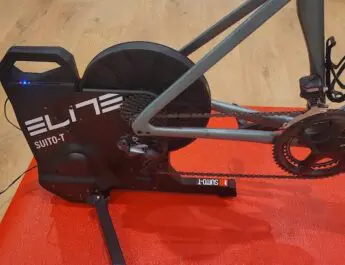
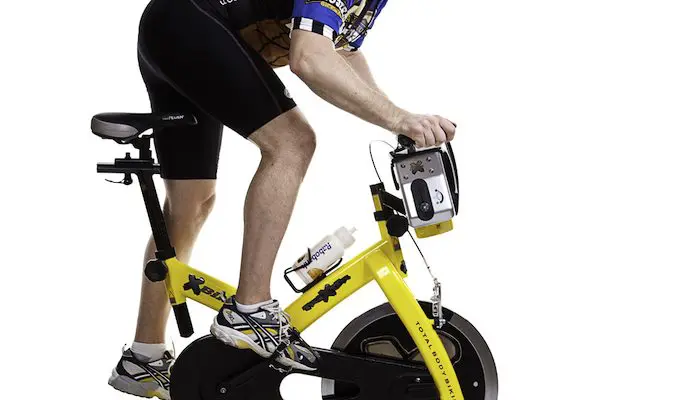
Thus, if you go for a ten-minute run and finish with short accelerations of 15 to 20 seconds after the session, your body and brain will immediately make the link between what you have just worked on and the benefit you wish to gain in your running practice. The same, or even easier, applies to cycling, since you just need to get on an exercise bike, or better yet, your bike on an indoor trainer, to transfer the benefit of strength training to the specific pedaling motion. Well, let’s admit it’s more complicated when it comes to swimming. But it just takes a little organization, doesn’t it?
– > SEE ALSO: 8 indoor trainer workouts
– > SEE ALSO: All our Coaching articles
Share the post "Why finish a strength training session with running or cycling?"