Share the post "The Secrets of Child Prodigies"
By Jeff Tatard – Photos: Pixabay / DR
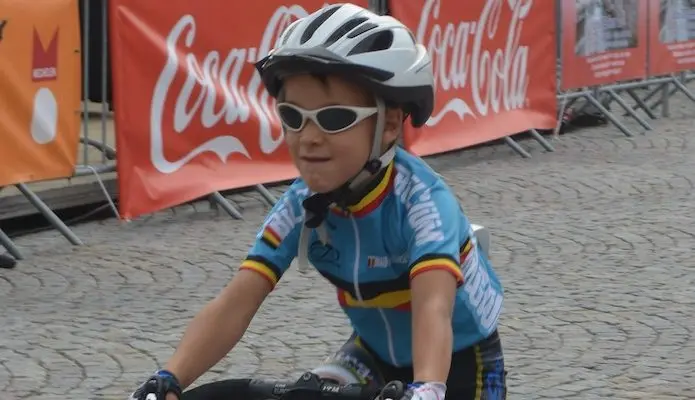
When you look at all the cyclists who ride fast and win races today, you realize that most of the time, they were already riding fast and regularly bringing home bouquets when they were children. And if they weren’t cycling, then at the very least, they were already receiving an education intimately related to physical effort.
Almost no champion discovered the taste for effort in adulthood. The body was systematically shaped by various intensive physical activities during the subject’s childhood and adolescence. A “physiological modulation” through regular sports practice from an early age. This means that riding fast is already determined very early on.
If today’s champions didn’t cycle when they were young, then at the very least, they were already receiving an education intimately related to physical effort.
And not necessarily only through cycling. This is always true: the body adapted very early on through exercises that allowed it to develop muscle, strength, coordination, flexibility, proprioceptive and neurotransmissive qualities. And just as many stimulations that allow the body to become strong and resistant. On the other hand, the opposite is not guaranteed… Just because you are strong as a child doesn’t mean you will be strong as an adult!
| Bridges between disciplines Remco Evenepoel, the new prodigy of world cycling, was still playing high-level football not so long ago. To say that PSV was eyeing him… While others were running. Bernard Hinault and Laurent Brochard, for example, were among the best French runners in the youth categories. We know some who were even gymnasts or practiced martial arts… We also quite often see Scandinavians who practiced high-level cross-country skiing. In his time, Thor Hushovd, the Norwegian cycling champion of the early 2000s, had a skiing level that could very well have allowed him to embrace a skiing career as illustrious as his cycling one. In the same way, many Estonian cyclists went through “speed skating” before having a cycling career. Even the brother of Dutch champion Theo Bos. Jan Bos must be one of the rare athletes to have won medals at both the Winter Olympics (silver medal in the 1000m in 1998 and 2002) and the Summer Olympics (team sprint in 2004). |
The right balance
The parents of high-level athletes, or those who directly or indirectly supervise them, have often played a crucial role in the success of young prodigies. And what is certain is that to act as balanced companions, parents and supervisors must maintain the right distance.
To act as balanced companions, parents and supervisors must maintain the right distance.
“Accompany without overprotecting or overexposing” could be the magic formula. And ultimately, when we look at those who succeed, everything is decided very early, and much depends on the family environment. To be a champion, you need to enjoy yourself and be driven by a desire to succeed and achieve. But support is crucial. It is often the context in which the child grows up that shapes them. They need to be taken in hand. A hand that allows the child to explore and guides them at the same time, accompanies them without overprotecting or overexposing them. Some parents do this naturally. But not all are capable, especially those who consider their offspring an extension of themselves or a substitute for who they would have wanted to be.
Not always an ideal environment
The family offers an anchor, a support, all the more essential as, from a certain age, high-level sports hopefuls are grouped in institutions such as sport-study programs, training centers, CREPS, or even Insep, for the best. Adolescents are subjected to a particular lifestyle that can have detrimental effects. Most of the time, reasonable parents continue to support their child from a distance to prevent them from suffering from family displacement and the sum of constraints they are subjected to: training load, strict lifestyle, relative confinement… But some adults are willing to do anything to see their child succeed, to the point of becoming abusive or toxic parents, sometimes without even realizing it.
Among the possible abuses, overtraining the young person at home, which can induce a form of mistreatment, but also the instrumentalization of the child when the family wants to appropriate their success, to enhance their own value, earn money, or compensate for what one of the parents could not achieve themselves, in other words, the “vicarious achievement syndrome.” Another more insidious but no less violent behavior, parental love can be conditioned by the child’s sporting successes. With this injunction, more or less formulated: “You must succeed, otherwise you will disappoint us.”
Only pleasure should guide the trajectory.
And then there are the encounters, the temptations. Even if we strongly believe in the values of parental education and the guidance offered to the child. Sometimes, life makes us lose champions who prematurely abandon their careers because they did not follow this destiny. Or simply because they did not want this destiny. Only pleasure should guide the trajectory. Otherwise, one will inevitably be exposed to an escape… Another reason for an athlete to drop out: missteps, abuses of authority in a period of concern regarding the protection of minors. With the underlying idea that it is better to prioritize studies or move towards a more lucrative and less risky profession than that of an athlete. In short, the future is also built on trust.
Managing defeat
And speaking of trust, what do you say to a child after a defeat? There is no training to become parents of champions. But it’s never good not to train or to train them for failure early enough. That too must be learned as a child. Too late, it risks creating frustrations that will eventually lead the child to give up. Some wonder how to react after a defeat or what to say to their child and how when they are afraid of doing it wrong or alienating their child. Yet, the focus should be on the progress made. Failure is constructive. It allows for a better restart. It is what drives progress. Parents want their child not to suffer at all, when they need to be allowed to experience their emotions, accept their disappointment and tears.
A path full of pitfalls
Many things are decided in childhood. Just as the solidity of a building is built on its foundations, if you want to perform, it is crucial to invest in your activity very early on. Nevertheless, not everything depends on physical ability alone. Far from it. Indeed, learning to manage failure young enough will certainly allow you to go even further. You have to give yourself the right to make mistakes. You also have to learn to weigh the results and, above all, not to overinvest. A child’s victories, if poorly managed, often compromise their future.
A future champion combines talent, precocity, a benevolent environment, and surely a bit of luck.
A future champion combines talent, precocity, a benevolent environment, and surely a bit of luck. And the good news is that in this game, we are certain that you, who only discovered sports very recently and who tell yourself that you will never be good anyway, well, ultimately you may be even better prepared than you thought. You are even ahead of these early champions… Because you know that after even the darkest night, you will know how to get back up!
-> SEE ALSO: All our Mag articles
Share the post "The Secrets of Child Prodigies"