Share the post "Riding solo or in a group?"
By Guillaume Judas – Photos: Oakley / RH+
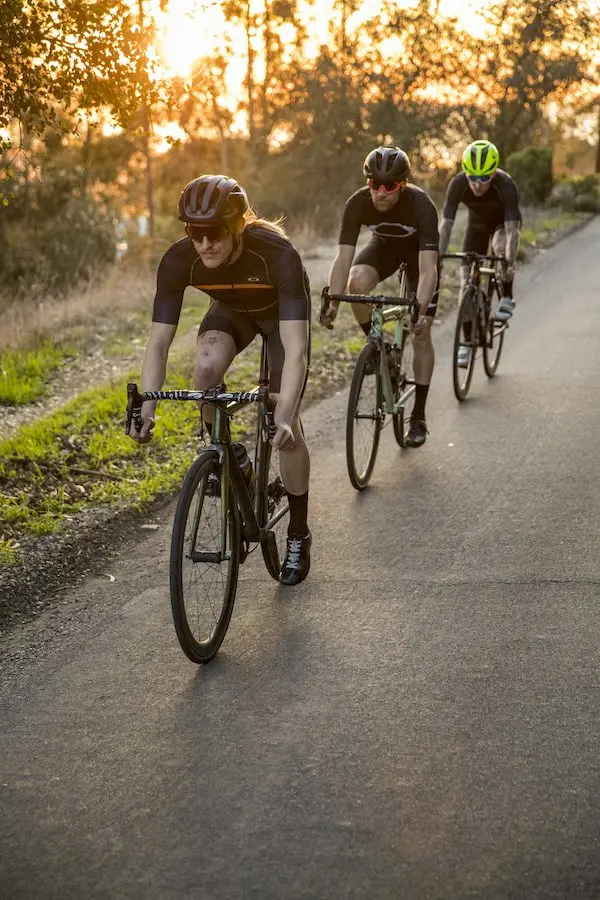
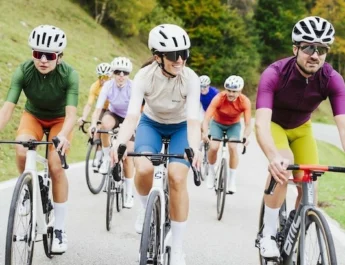
Riding in a group is often the easy solution. Meeting up with friends to share a ride is a good motivation, even if the weather isn’t very inviting for a bike outing. Not necessarily friends, for that matter. Around the Longchamp racecourse, many cyclists don’t know each other. And yet they tend to group together in a peloton, sometimes to get acquainted, but mostly to benefit from the shelter of the wheels in front of them. Because drafting behind one or more cyclists in front can easily save between 20 and 30% of energy to maintain the same speed. Several cyclists riding together and taking turns at the front of the group to face air resistance will go faster and further than a single cyclist.
Drafting behind one or more cyclists in front can easily save between 20 and 30% of energy to maintain the same speed.
Of course, if a few troublemakers decide to only benefit from the draft of their riding companions, it can create discord in the group. In a race, it’s a game, a tactic like any other, to play your best cards at the end. In training, at best it’s frowned upon, or at worst totally counterproductive for someone who decides to shelter from the wind for the entire ride. Riding in a group can also be dangerous on the road. When you’re in the wheels, you’re often less vigilant, and there are many obstacles on the road that you only see at the last moment when you’re riding behind other cyclists. A group of regulars uses codes; the riders at the front warn those behind, and a minimum of experience is required before joining a group.
-> SEE ALSO: The importance of endurance
Individualized progression
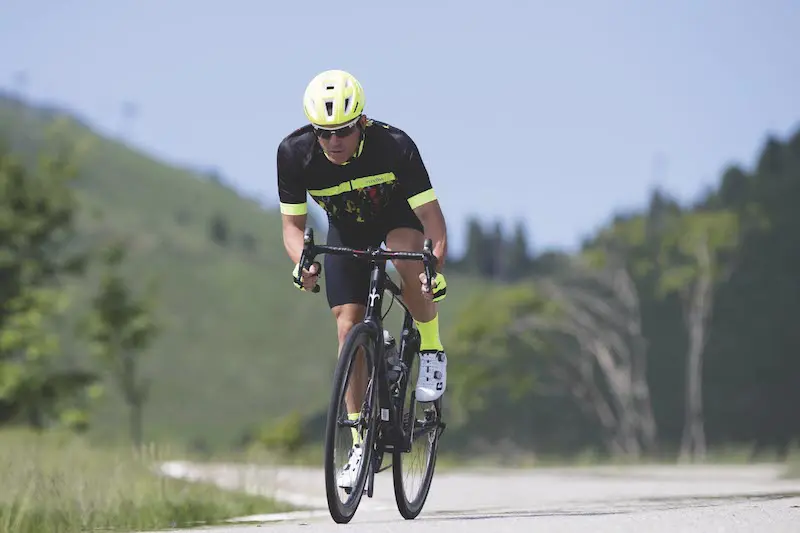
Riding alone is less fun, but at least you can leave at the time you want. You can warm up at your own pace, choose to change your route at the last minute, and let your thoughts wander. It takes a good dose of motivation to get started, especially in bad weather, but some tools can keep your mind occupied. A bike computer, for example, with all sorts of useful indications like speed, heart rate, cadence, or power, can quickly set objectives. Riding alone means being free to ride where and how you want. But it also means being able to follow a training program to the letter. Because with these tools, you can refer to precise data, and thus work on your weaknesses, or your strengths. This type of ride, alone but connected to data displayed on a screen, is actually in contradiction with the notion of freedom of pace or route. Following a plan means giving yourself constraints, often more severe than those you would accept from a group. But at least you’re sure not to bother anyone if you decide to climb a hill at full speed, or on the contrary, to dawdle on the road. Riding alone is also safer. You can keep to your right and not take up too much space on the road, while anticipating all obstacles.
-> SEE ALSO: The different training intensities
A different purpose
A priori, riding alone is therefore more interesting from a progression standpoint. You face the wind, the climbs, the distance alone, and you can precisely follow your heart rate monitor, in effort zones or rest zones. But you don’t train just to improve statistics. Except perhaps for beginners who need to follow a slow and steady progression, or who need to lose weight. For others, the ultimate goal of cycling as a sport is also, at some point, confrontation with other cyclists, in competition, in a sportive, or with friends.
The ultimate goal of cycling as a sport is also, at some point, confrontation with other cyclists.
And you have to get used to this confrontation. Because apart from the fact that by riding in a group you benefit from drafting, the effort required is always different from the one you provide alone. By benefiting from the slipstream, you save between 20 and 30% of energy, as we saw above. When it’s time to take your turn at the front of the group, you lose the shelter and suddenly find yourself facing the wind, at a higher speed than you would adopt solo. With your riding companions following closely. The difference in intensity is high and sudden. It’s uncomfortable and causes pronounced shortness of breath and leg pain. It’s the same within a group that accelerates, climbs a hill, or rides in a crosswind. You go from a comfortable position sheltered from the wind to a big difference in intensity. You have to hang on, and it’s particularly difficult to bear if you always ride at your own pace. But this is also exactly what happens in competition, or in a sportive if you want to catch the right peloton at the top of a climb, in order to then benefit from the draft on the flat, to ride easily and faster than if you were alone.
These successive accelerations, these violent jerks that are endured because the group’s movement dictates its law, are also part of training when you want to perform well. Not only because they push you to your limits, and force you to surpass yourself for a few moments, but also simply because they are part of cycling.
-> SEE ALSO: Town sign sprints, why challenge your friends?
Alternating
So how do you combine group rides and solo rides if you want to progress? It’s simple, you have to do both. After all, don’t they say that cycling is an individual sport practiced as a team? However, prioritize solo rides in winter, during the recovery period, or for beginners. It’s ideal for building your base, learning to manage and calibrate your effort, gradually increasing intensities, and riding safely. By riding alone often, you are also more consistent in your effort, you can ride longer at an intermediate, and relatively economical, speed. It is common to say that those who ride alone all the time are “diesel” cyclists, while those who only ride in groups are “dragsters”. You need to introduce group rides to start getting into a rhythm, training for changes in pace, but also for positioning and tactical aspects.
Ideally, Sunday club rides are interesting, but on the condition that you ride alone during the week.
Ideally, Sunday club rides are interesting, but on the condition that you ride alone during the week. Only doing these rides, which often start too slowly and often finish too fast, is unproductive and severely limits progression. To realize the impact of group or solo rides, there’s nothing better than a heart rate monitor or a power meter. Because the main thing to remember, and what should determine the choice of your rides, is that you must be an actor and not a spectator of your practice, if you want to progress or maintain a good level.
-> SEE ALSO: All our Coaching articles
Share the post "Riding solo or in a group?"