Share the post "Garmin Edge 520 Plus / Varia Radar Review: Safety and Accuracy"
After 6,500 kilometers covered with the Garmin Edge 520 Plus and the Varia radar, it’s time for a review. In tropical climates (and their rains), or in the harshness of winter, this duo has not failed. It has become our faithful road companion, for discovery or focused training.
By Sylvain Pigeau. Photos: Garmin and @3bikes.fr.
The American firm Garmin is constantly expanding. The world’s leading GPS manufacturer is present in all sectors, especially outdoor. And the cycling segment is no exception to the permanent updating of its products. Thus, the very popular Edge 520 underwent a small update in April 2018. We therefore began testing the 520 Plus, accompanied by the new Varia radar, in June.
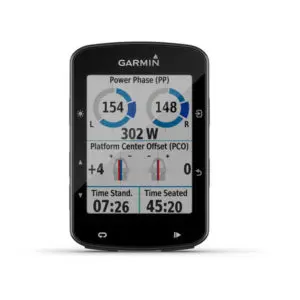 The acquisition of a bike GPS remains a significant investment. In triathlon, for example, it sometimes duplicates the use of a multisport watch. It is also difficult to choose between entry-level models with basic functions and devices offering full mapping. Because it must be admitted, for triathletes or avid cyclists, only 30% of the GPS functions are used most of the time.
Until now, the Edge 520 answered some of these questions. By combining the “vital” functions for rigorous training enthusiasts (cycling data, power) or for technology enthusiasts (livetracking, Bluetooth). But the mapping part was reserved for higher-end models, easily exceeding 400 euros and therefore often confined to adventure seekers.
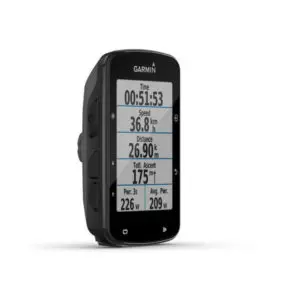
The 520 Plus inherits some technologies from higher-end models, in the same casing and at the same price (starting from 299 euros for the kit without sensors). The interface is redesigned and the screens are more readable. You can display up to 10 pieces of information on one page, but above all, prioritize several (heart rate or km, for example), which makes it more readable.
The 820’s mapping
On the mapping side, the 520 Plus adopts some techniques from its elder, the 820. This time, with real navigation, like a regular GPS. You just need to program a route on Strava (via the Strava Routes function) and let yourself be guided. Connected functions like Grouptrack, for interacting with training partners, have also been included, and the Strava Live Segments screens have been “refreshed.”
You just need to program a route on Strava
(via the Strava Routes function) and let yourself be guided.
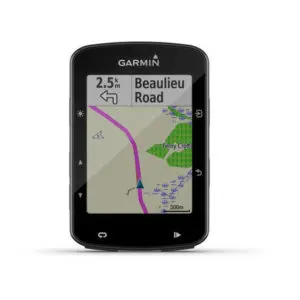
The interface is therefore more readable, less “spartan” than the 520, and meets the expectations of athletes who want to train with precision (the Edge is, of course, compatible with all Ant+ sensors), but also demand useful functions when discovering unknown territories. It’s perfect when you’re looking to do an opener ride the day before an event on the other side of the world and want to find the right route.
The Edge 520 Plus on the road
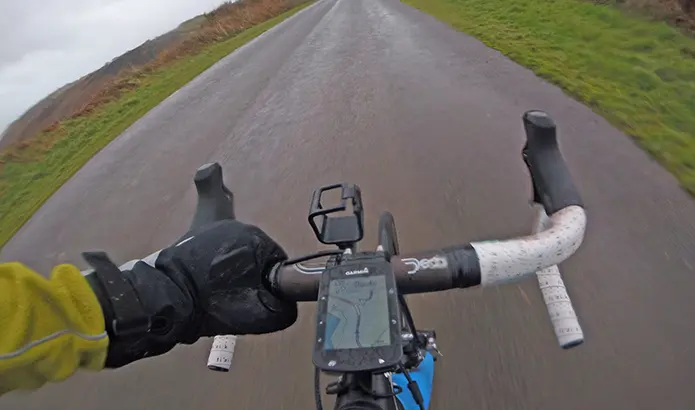
We performed the “eyes closed” test many times, trusting the GPS completely. It paid off! The few small route errors we observed were human. Because sometimes, in doubt, we hesitated about which road to take. Immediately, the 520 Plus asks you to turn around and brings you back on the right path.
When discovering new territories, this function is an impressive gain, especially in winter. No more stopping and taking off thick gloves to check the route on your smartphone. Everything is there, within reach. If you happen to be doing a series of exercises, the GPS warns you of the next change of direction. So there’s nothing else to worry about.
A small drawback, however, on some rides in the cold, the altimeter sometimes underestimated the elevation gain. Sometimes almost by half, forcing us to make a correction on Strava.
The Varia, our new road companion
Far from being a gadget, the creation of the Varia radar stems from the observation of the high number of accidents involving cyclists, caused by cars approaching from behind.
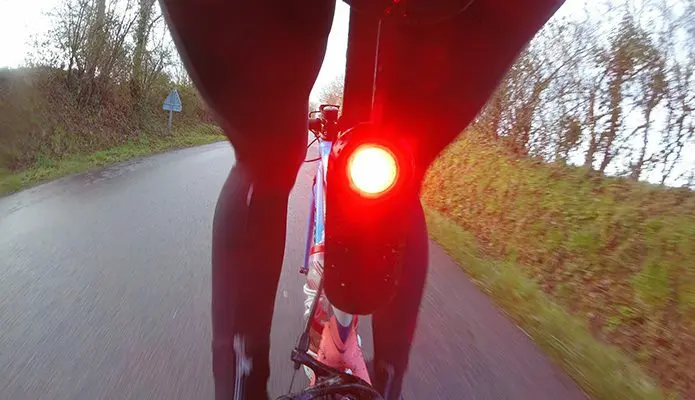
Until now, you needed an additional unit on the handlebars to use the Varia, but it is now compatible with the 520 Plus. Approaching vehicles, from 140 m away, are displayed on the screen until they pass. In addition, during the approach phase, the light intensity increases, even in broad daylight, encouraging drivers to be extra vigilant.
It’s difficult to estimate the change in driver behavior, but the Varia is an additional safety feature for cyclists, very useful in groups, in particular, to be warned of an approaching vehicle and to organize yourselves in time.
The Varia on the road
It goes without saying that in urban areas, the Edge beeps almost constantly. But the small cursors on the sides warn you of approaching vehicles. No, the best part is in the open countryside. When you “forget” about vehicles that might be coming up behind you. It’s useful when riding two abreast, for example. You’re chatting, the Varia warns you, and you have time to move over. What’s more, the light increases in intensity and the flashing becomes more insistent for the approaching vehicle. Relatively prominent on the seatpost, it has made itself forgotten and has become our indispensable road companion. Furthermore, after 6,500 km, we have detected no breakdowns or bugs. Recharging is easy, and after these 5 months of intensive use, in extreme heat and humidity conditions (in the West Indies), or in the cold of winter in mainland France, the Varia has not budged and shows no battery life defects. A guarantee of reliability for a device that is very exposed due to its placement on the seatpost (it receives all water and mud splashes). And an excellent rating compared to many competitors, who very often fail over time when water manages to get into the casing.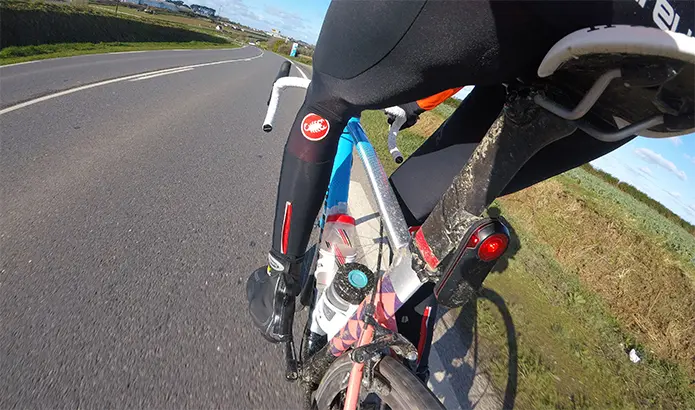
Battery life in question
Used at full power, the Varia is quite power-hungry. Not for itself, but for the 520 Plus it’s paired with. For a ride of about 5 hours, plan to fully charge all components to avoid surprises, especially if your phone is connected for live tracking.
| Garmin Edge 520 Plus |
| Rating: ** Pros : 520’s structure and power, navigation, higher-end model technology in the 520, more readable screens and more elements on the screens, pre-programmed routes on Strava. Cons : Advertised battery life of 15 hours but significantly decreases when all elements are connected (Varia + live tracking phone, for example). – Dimensions (mm): 49.0 × 73.0 × 21.0 m – Display format (width by height): 35.0 × 47.0 mm; 2.3-inch diagonal – Screen definition (width by height): 200 × 265 pixels – Battery life: up to 15 hours – Weight: 62.5 g SUGGESTED RETAIL PRICE : from 299 euros (without sensors) |
| CONTACT: www.garmin.com |
| Garmin Varia Radar |
| Rating: ** Pros : Vehicle detection, flash power, universal Garmin mount, round and aero seatpost compatibility, mounting stability. Cons : Bulk, weight – Dimensions: 98.6 x 19.7 x 39.6 mm – Weight: 71 g – Modes: solid, night flash, day flash – Lumens: 20 in solid mode, 29 in night flash mode, 65 in day flash mode – Battery life: 6 hours in solid mode, 6 hours in night flash mode, 15 hours in day flash mode – ANT+®: yes – Water resistance: IPX7 – Viewing angle: 220 degrees – Visible up to 1.5 km. SUGGESTED RETAIL PRICE : from 199.99 euros |
| CONTACT: www.garmin.com |
SEE ALSO => All our Gear reviews
Share the post "Garmin Edge 520 Plus / Varia Radar Review: Safety and Accuracy"