Share the post "Why and How to Spin: Pedaling Cadence Explained"
By Guillaume Judas – Photos: Wouter Roosenboom/Irmo Keizer/Shimano – Campagnolo – Retul Fit – 3bikes.fr

The old-timers never got tired of saying: “Spin your legs faster and use a lighter gear!” It is the basic lesson of cycling training. Coaches and experienced racers have passed on this message for decades, as the one indispensable piece of advice for a career. And it is quite true. Modern training methods have certainly brought plenty of progress for everyone, but they have sometimes relegated the most basic principles of caution and consistency to the back burner. Spinning your legs faster at the same power output and speed was not invented by Lance Armstrong in 1999, nor brought back into fashion by Chris Froome since. They simply adapted the concept to their own abilities, and with tools such as the power meter they demonstrated that spinning quickly can be far more efficient than pushing big gears.

What Is Cadence?
Pedaling cadence is the number of crank revolutions per minute. It is simple to understand at first glance, and naturally, to keep their balance or manage an effort over time, any beginner settles on a cadence that is neither too high nor too low. If they spin their legs too fast, they run out of breath. If they spin too slowly, either they don’t move forward or they feel their muscles and joints even more. They quickly understand that Like the engine speed range of a car, there is a good cadence range depending on the terrain, the intensity of the effort and the conditions. And that a derailleur and a range of gears suited to their level can be very useful.

What Is the Right Cadence?
Let’s deliberately generalize to give an idea of the numbers. On the flats, the “ideal” pedaling cadence is around 90 rpm. On climbs, it is more like 75 rpm. This depends above all on the rider’s level and the intensity of their effort, and on their style too. A cyclotourist uses a modest gear to save energy and persevere over the long haul, but turns their legs more slowly than a pro in the final kilometers of a flat stage with a 53×11. “Spinning”, implying “spinning faster than average or faster than what would come naturally”, is therefore just a reference to the figures above. Below that, we speak of pushing with force. The right cadence is not necessarily the same for everyone. It is a rough guideline rather than an absolute rule.
From a Physiological Standpoint
According to various studies on the energy cost of pedaling, the most economical cadence would lie well below what people naturally adopt, at least for regular riders. In fact, it would be around 60 rpm that pedaling efficiency is at its best. The values mentioned above correspond to a balance zone with a good ratio between breathing and muscle tension. For some, however, it naturally seems easier to roll along in a big gear at a low cadence than to force yourself to spin, with that unpleasant feeling of not feeling any resistance through the pedals. But riding too hard in a gear, with too low a cadence, induces more muscle tension and stiffness, and thus hinders recovery after effort.

Why Cadence?
Riding with a high pedaling cadence at the same speed has mainly five advantages:
- Preserving the fast-twitch fibers in the leg muscles. And so saving them for the key phases of the route or the event, often at the end of a ride. Paradoxical as it may seem, it is by pedaling with more force that the fast-twitch fibers get used up at the expense of the slow-twitch ones.
- Making rhythm changes easier, sudden accelerations and re-accelerations out of corners. A high pedaling cadence, or at least the ability to adopt one, is essential to feel at ease amid the jolts of a bunch with many surges. Enduring them with a too-forceful pedal stroke risks a premature blow-up, because the muscles are overworked.
- Optimizing muscle oxygenation as well as the relaxation of the fibers through the pedal cycle. By multiplying pedal revolutions, and therefore passing through the top and bottom dead centers, however briefly, the muscles are less stressed than when pedaling with force and constant pressure on the pedals. This is an undeniable advantage for long efforts, regardless of power output.
- Saving energy. Because at the end of a mountain race, running out of strength in too big a gear severely limits climbing speed. A lighter gear lets you go further, conserving energy despite the intensity of the effort.
- More room for progress. Power is force x cadence. At some point, we are all limited in our progress by the strength of our muscles (but we will come back to this soon, it deserves its own article!). By working on cadence, you can still progress in power.

Cadence and Power
Many people make the mistake of confusing force and power. The power a cyclist produces is the product of the force applied to the pedals and the speed at which they turn them. You can therefore produce the same power (in watts) with a lot of force and a low cadence, or with relatively little force and a high cadence. Take two riders of the same weight climbing a pass side by side: they produce the same power even though one spins at 85 rpm in a small gear while the other rides at 65 rpm in the big ring. In both cases, their progress is limited neither by instantaneous force nor by cadence itself, but by their ability to produce power. To ride with force, you need solid muscles and tendons, whereas to spin, you mainly need optimal coordination. To progress in power, it is necessary to work on both qualities.
Cadence and Equipment
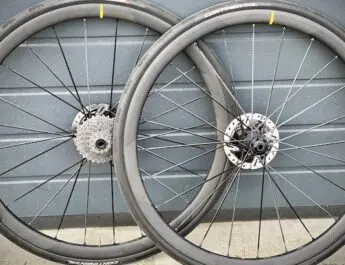
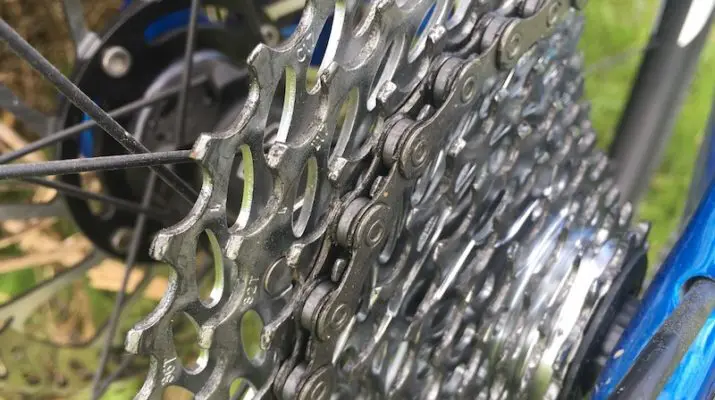
When you look at today’s professional riders, you notice they spin faster than they used to, especially in the mountains or during intense phases of a race. Riders now have a wider range of gears available than before, with cassettes starting at 11 teeth (even 10) and large cogs up to 28, 30 or even 32 teeth, and chainrings from 34 to 55 teeth. This is an advantage for adapting to all terrain, but also a necessity for coping with the harshness of the equipment. Indeed, frames and wheels are now much stiffer than in the past, which makes them far more efficient at high speed but also much more demanding at low speed. With a “supple” steel bike and flat rims as in the 1980s, the flex of the whole setup let you ride with force in the mountains, for example, without being limited by frame stiffness. It also helped you get past the dead points at the top and bottom of the pedal cycle, thanks to the lateral flex of the bottom bracket. With a stiff bike, it is essential to stay perfectly aligned and coordinated to benefit from its efficiency. Hence the importance of lighter gears. But although they spin faster, today’s pros produce as much or even more power, and climb at least as fast as before. And they are injured less, too, since tendinitis, for example, is rarely mentioned anymore.

Cadence and Effort Intensity
In light of what we have seen above, it appears that optimal pedaling cadence also depends on the intensity of the effort. Whatever their level, cyclists instinctively seek a comfortable and/or efficient cadence. For a very long effort, they lower their cadence to optimize the energy cost of pedaling while avoiding muscle tension. They push bigger gears. The shorter and more intense the effort, the more they raise their cadence, in order to produce power, since muscle force alone is not enough. In a time trial, the cadence generally adopted by strong time triallists is around 100–105 rpm. On a long endurance effort such as an ultra-distance event, participants tend to be around 80 rpm. In the mountains, values are lower, because you have to apply torque throughout the whole pedal cycle to be efficient.
| PEDALING CADENCE ON CLIMBS This is on climbs that the notion of power truly makes sense, since above all you have to fight gravity. On short rises, you can afford to push with force and punch, like in a long sprint, because it is often the only way to erase the difficulty. Long rises or passes, on the other hand, are tackled differently, to find a balance between intensity and duration of the effort. The right pedaling cadence takes on its full meaning here, even if the reference points differ from those on the flats. First and foremost, because the cyclist is climbing, looking for good traction, and cannot simply rely on the inertia of the rotating pedals in this case. During the pedal cycle, when the leg comes back up, you need to help it by pulling on the pedal while the other leg pushes on its crank. This sequence makes coordination harder. The exercises to improve cadence on climbs are the same as those you could imagine on the flats. But on the right terrain, of course. |
How to Gain Pedaling Cadence?
A well-chosen pedaling cadence for the circumstances depends on intrinsic neuromuscular qualities as well as good movement coordination. Note, however, that the room for maneuver is not that large. Gaining 10% in cadence over your natural rate has no impact on the energy cost of pedaling, but beyond that, it is not worth the effort. To progress in this area, your position on the bike must be perfect.

It starts with cleat placement under your shoes: not too far back, which would lock the ankle, and not too far forward, which would destabilize it. Next, saddle height and setback must keep the pelvis stable during both forceful pedaling and high-cadence spinning. As for training, you can start the first hundreds of kilometers of the base period with a medium gear and limited pedaling cadence. Paradoxical? Not really, because this easy-spinning style lays the foundations, builds automatic movements, gets the muscle chains used to working together, and validates the position.

Only then do you gradually shorten the gear in some sessions or in some intervals within sessions. By breaking efforts into intervals, aiming for a cadence of 110 to 120 rpm at a heart rate around 80% of max HR, so you can repeat the exercise without excessive fatigue. A training plan that alternates this kind of technical work with strength or specific on-bike weight training is therefore entirely feasible for working on and maintaining pedal stroke coordination. Other exercises can improve muscular coordination too, such as short sprints in a small gear, or sequences at maximum cadence on descending false flats.
| MEASURING YOUR PROGRESS To improve average cadence, you have to work on your maximum cadence. Several exercises are possible with a speedometer and a cadence sensor. A power meter is a must that serious professional riders cannot do without. At cyclosportive or regional racer level, however, it is still possible to measure progress simply. Short sprints in a limited gear are one option: you can see your top speed improve week by week. The other option is to pedal as hard as you can in a limited gear on a slight descent (always choose the same one, and take the weather conditions into account), and measure the maximum cadence reached with the sensor. For reference, the best track riders and BMX racers exceed 200 rpm in maximum pedaling cadence. |
Frequent Reminders
During the season, frequent reminders keep this reserve of leg speed available, which is useful for overall muscle tone on the bike. If we consider that the ideal cadence on the flats is between 90 and 100 rpm to produce the most useful power, then it is by training at both higher and lower cadences that you get the best results. To ride faster and/or longer, it is always power that you need to develop. Pedaling cadence is quite simply one of the fundamental components of that same power.
| MYTHS ABOUT SPINNING AND SMOOTH PEDALING Spinning takes your breath away. False: if your body is well trained, shortness of breath means your power output exceeds what you can sustain. You can also be out of breath when riding in too big a gear. If I stay in the small chainring, I spin. False: some gears with the small chainring and a small cog are actually bigger than some gears with the big chainring and a large cog. For better efficiency, chainline matters above all. Only recreational cyclists spin. False: racing cyclists, all the more so pros, spin their legs quickly, even if they can produce a lot of force in a short effort to make the difference, which makes the action spectacular. In reality, the higher the rider’s level, the greater their room to maneuver in either direction (force/velocity). If I use a pro’s gearing, I’ll ride as fast as a pro. False: you don’t have a pro’s strength and power. At least not yet. If you want to emulate pros, copy their pedaling cadence instead, especially at the end of a stage of the Tour de France. If I spin all winter, I’ll be stronger when summer comes. False: performance only comes from developing the full range of your qualities. Cadence is one component among many and cannot be enough to win races or cyclosportives. It’s better to spin when riding alone than in a group. False: spinning in a group, drafting and reacting to the changes of pace set by the front riders, builds sharpness and replicates race conditions. Training alone, however, lets you work specifically at a predetermined pedaling cadence (with a cadence sensor, an option on many computers). To spin in races, you should never use the big ring in training. False: being comfortable and able to spin your legs in a race to save energy requires, above all, a reserve of cadence as well as a reserve of force. It is by working the extremes that you optimize your pedal stroke. By riding for long hours at a touring cyclist’s pace, I’ll learn to spin. False: to learn and build good leg speed, it is more effective to spin very fast for short periods than for long stretches at low intensity. For any kind of progress, interval work proves the most productive anyway. |
-> SEE ALSO : All our Coaching articles
Share the post "Why and How to Spin: Pedaling Cadence Explained"