Share the post "Your weight in questions"
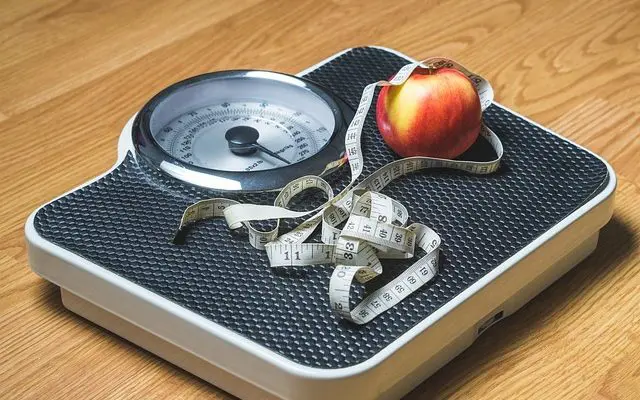
Gaining weight in winter to face the cold, or losing weight in summer to perform better… The number on the scale is often at the center of cyclists’ and triathletes’ concerns. It is mainly by avoiding excessive body mass variations that you will achieve the best long-term results.
By Guillaume Judas – Photos: PeDALED – DR
Weight is an obsession for many athletes, as soon as they aim for performance. The need to optimize the famous power-to-weight ratio, but also the desire to belong to the caste of “true athletes” (who are noticed by their lean calves) push racers, amateurs, sportive riders, and triathletes to seriously consider their diet. Sometimes, the pressure from those around them or from the stakes becomes so strong that during the off-season, they indulge in the opposite excess. This leads to very large weight variations between winter and summer, and above all, perpetual physical and psychological suffering. Of course, we have rarely seen a cyclist who is both heavy and performs well, especially in the mountains. All sorts of recipes circulate for losing weight. Many have tried diets as outlandish as tomato or grape mono-diets. But the best long-term solution is indeed not to gain weight. And for that, to adopt a balanced diet to be established as a rule of life.
For what benefit?
Losing 3 kg from the combined weight of the cyclist and their bike for a rider weighing around 70 kg offers a gain of one minute over 10 km of climbing at an average gradient of 7%, at equal power. Not much for some, a huge difference for competitors. The latter are all the more sensitive to a small weight variation because we are not just talking about pure efficiency during a long, steady climb. With every acceleration, re-acceleration, or start that occurs dozens of times during a competition, excess weight translates into inertia that ultimately weighs very heavily in the long run. The lower the speeds, the more important the notion of weight. The steeper the climb, the more significant the changes in pace, the more optimized the weight must be. A well-managed weight loss also generally leads to an improvement in overall physical condition, which only amplifies the phenomenon. The whole challenge of weight loss is to preserve one’s muscles and not lose power, in order to optimize the famous power-to-weight ratio.
Towards race weight
What is called race weight is explicit enough for us to understand its importance. It should not be dictated by theory, but by your experience. Race weight is the weight at which you feel best on the bike. The one that allows you to perform best, and be in full physical and mental health. It’s not necessarily about being as lean as possible. Losing weight, or at least the pursuit of leanness, is a widespread phenomenon among endurance athletes, and particularly among cyclists and triathletes. To what extent is this reasonable?
Losing weight, or at least the pursuit of leanness, is a widespread phenomenon among endurance athletes, and particularly among cyclists and triathletes.
You must arrive on the day of your objective with as much desire as possible, a desire maintained by logical progression and pleasure on the bike, which is the opposite of all the deprivations you sometimes have to impose on yourself to lose one or two extra kilos. Ideally, race weight is achieved by eating a balanced diet, and above all, never neglecting proteins and starches in your diet. The former maintain muscles, while the latter are daily fuel. As for pleasure, it is cultivated through small treats that you allow yourself from time to time. The key is never to overdo it and to avoid snacking. Experience is a great help for this: note in a notebook the weight you believe to be the right one on the day of a good performance. And use it as a reference.
What about winter kilos?
Some believe that a few extra kilos protect against winter aggressions. In reality, while excessive leanness causes a deficit in immune defenses and can lead to frequent illness, fat is not an assurance of better thermoregulation mechanisms. Riding with excess weight is primarily detrimental to physical condition. And what must be remembered is that it is very difficult to combine dieting and actual training, because the former causes fatigue and the latter requires its dose of fuel to be effective. If you truly have excess weight, lose it before considering a specific sports program. You can ride regularly, but at a reasonable pace and without a direct goal of progression. Rapid weight loss causes double fatigue, because certain chemicals are stored in fat mass and are then released into the blood. Ideally, limit yourself to a loss of 2 kg per month. However, a “normal” weight gain of 2 to 4 kilos has little impact on balance and health. It is explained by a slightly less intense activity. In this case, training normally by alternating endurance rides with intensity rides is enough to regain race weight at the beginning of spring.
And how to avoid gaining weight?
Do not change your eating habits adopted during the season, when everything is going well. This should not be too difficult if you do not have to adopt too strict an attitude eight months out of twelve. A kind of virtuous circle where mental balance influences dietary balance, and physical balance. However, slightly reduce quantities, while maintaining foods of high nutritional quality (vitamins and minerals). A reasonable weight gain is simply due to a decrease in the level of physical activity. Therefore, take advantage of it in your daily life to resume habits that you set aside during the season for energy-saving reasons (which you then reserve for training). So, avoid the elevator and take the stairs, walk to work, garden, take long walks. Also prioritize endurance sports whose technical movements you may not necessarily master: swimming, running, mountain hiking, cross-country or touring skiing, are endurance activities that allow you to regenerate from a long season, while increasing your resting basal metabolism. The recipe for a healthy and balanced diet, in a way.
| Key takeaways |
|
-> SEE ALSO : All our Coaching articles
Share the post "Your weight in questions"